


| FAQ classification | Main questions answered |
| Basic knowledge and product comparison | What is a chemical filter? What is the difference between activated carbon, HEPA, ULPA and other purification methods? |
| Pollutant identification and gas filtration | How to identify the source of gas? How should acid gas, ammonia, amines, organic gases and odors be dealt with? |
| Filter material parameters and selection configuration | How to compare filter media, efficiency, capacity, penetration, air volume, size and resistance? |
| MAU, FFU and equipment side matching | How to divide the work between fresh air, circulating air and equipment-side chemical filtration, and how to match the installation and fans? |
| Industry applications and clean environment | How to determine filtration requirements for semiconductor, panel, optics, electronics, computer room and medical projects? |
| Installation testing and effect acceptance | How to confirm the air flow direction, sealing, bypass, sampling and trial effects? |
| Lifetime maintenance and troubleshooting | When will it be replaced? How to judge pressure difference, odor, outlet concentration and operating abnormalities? |
| Renovation energy saving and operating costs | Can the original system be retrofitted? Does the fan need to be adjusted, and how do you compare the long-term costs? |
| Program decision-making and manufacturer selection | How to deal with multiple pollutions in combination? How to check manufacturer recommendations, product information and supporting capabilities? |
| Compare items | chemical filter | HEPA filter | ULPA filter |
| Main control objects | Specified gaseous pollutants | Corresponding particulate matter | Corresponding particulate matter |
| Main processing mechanism | Adsorption or chemical reaction, etc. | particle capture | particle capture |
| Key points in selection | Gas composition, efficiency, capacity, environment and air volume | Particle efficiency, air volume, resistance and sealing | Particle efficiency, air volume, resistance and sealing |
| Effect judgment | Corresponding gas detection and applicable capability assessment | Corresponding particle performance and installation testing | Corresponding particle performance and installation testing |
| Can they be substituted for each other? | One type of filter cannot replace another type of task | Tongzuo | Tongzuo |
| Application scenarios | Main needs | Selection points of concern | System supporting direction |
| Semiconductor and wafer fab | Process Dependent AMC Control | Sensitive ingredients, low concentration targets and detection capabilities | Fresh air, circulating air and equipment end protection |
| Panels and precision optics | Related gas and material release controls | Material sources, air paths and clean compatibility | Air conditioning system, local circulation and equipment matching |
| Electronics and Data Center | Related Gaseous Corrosion Pollution Control | Equipment environmental requirements, temperature and humidity and monitoring trends | Fresh air or circulation system |
| Pharmaceutical and packaging area | Designated gas and external odor control | Source identification, regional division of labor and product protection | Fresh air, regional ventilation and local treatment |
| General factory buildings and air conditioning systems | Reduce specific gas input or odor | Composition, loads, ventilation conditions and operating costs | Air conditioning box, filter box or zone treatment |
| Selection conditions | What needs to be confirmed | Selection conditions | What needs to be confirmed |
| target gas | Specific ingredients, single or mixed contamination | Processing air volume | Total air volume, single module air volume and actual distribution |
| inlet load | Concentration range, peak value and frequency of occurrence | Temperature and humidity | Normal ranges, seasonal variations and condensation risk |
| Source of pollution | Outdoor, indoor materials or inside equipment | Fan margin | Added air volume and operating capacity under resistance |
| protection goals | Process, product, preservation or deodorization | Installation interface | Dimensions, orientation, sealing, compression and support |
| performance basis | Test conditions and reports for corresponding gases | maintenance conditions | Operating hours, replacement space and spare parts |
| Acceptance requirements | Methods, points, working conditions and criteria | cost of use | Energy consumption, replacement frequency and maintenance workload |
| Supporting location | Main function | Conditions to watch out for |
| MAU or air conditioning box | Reduce the load of external gas entering the system | Fresh air composition, temperature and humidity, droplets, air volume and filter section position |
| FFU circulated air | Process the relevant gases that pass through the filter section | Circulation path, wind speed, resistance and particle filtration coordination |
| EFU or device side area | Provide matching gas filtration for designated local areas | Equipment space, internal releases, airflow coverage and maintenance interfaces |
-
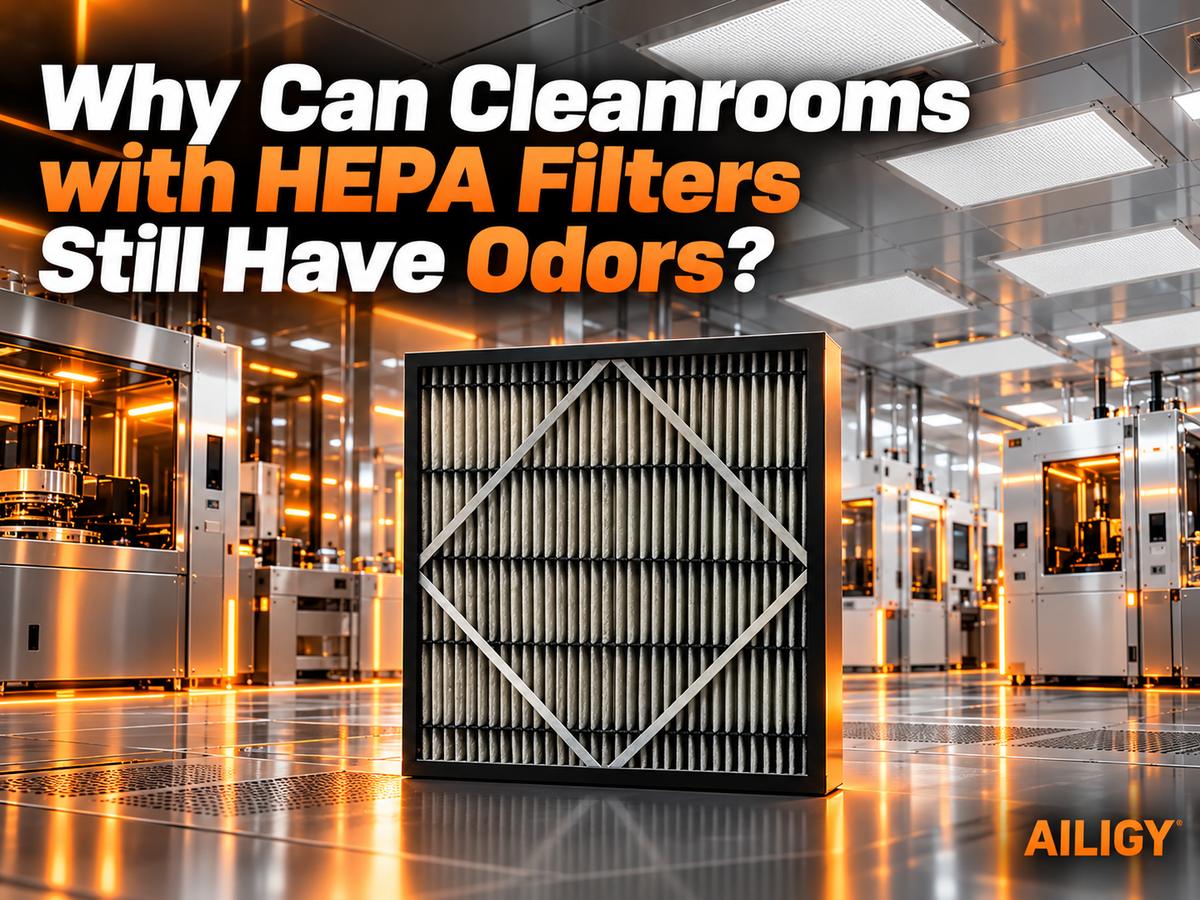 This article explains that there is still an odor after installing a high-efficiency filter in a clean room. The common reason is that the odor comes from gas or steam, and HEPA is mainly responsible for particle filtration. The article is divided into four links: qualified particles do not mean gas control, locating the source along the air path, application check points, verification and subsequent use. It points out that increasing the particle filtration level cannot automatically solve molecular pollution, and requires separate detection objects and treatment plans.
-
 Chemical filtration versus photocatalytic air treatment should be compared for actual removal of specified contaminants, ongoing operating performance, and possible by-products. The two names cannot directly judge the effect and need to be verified according to the same goals and working conditions.
-
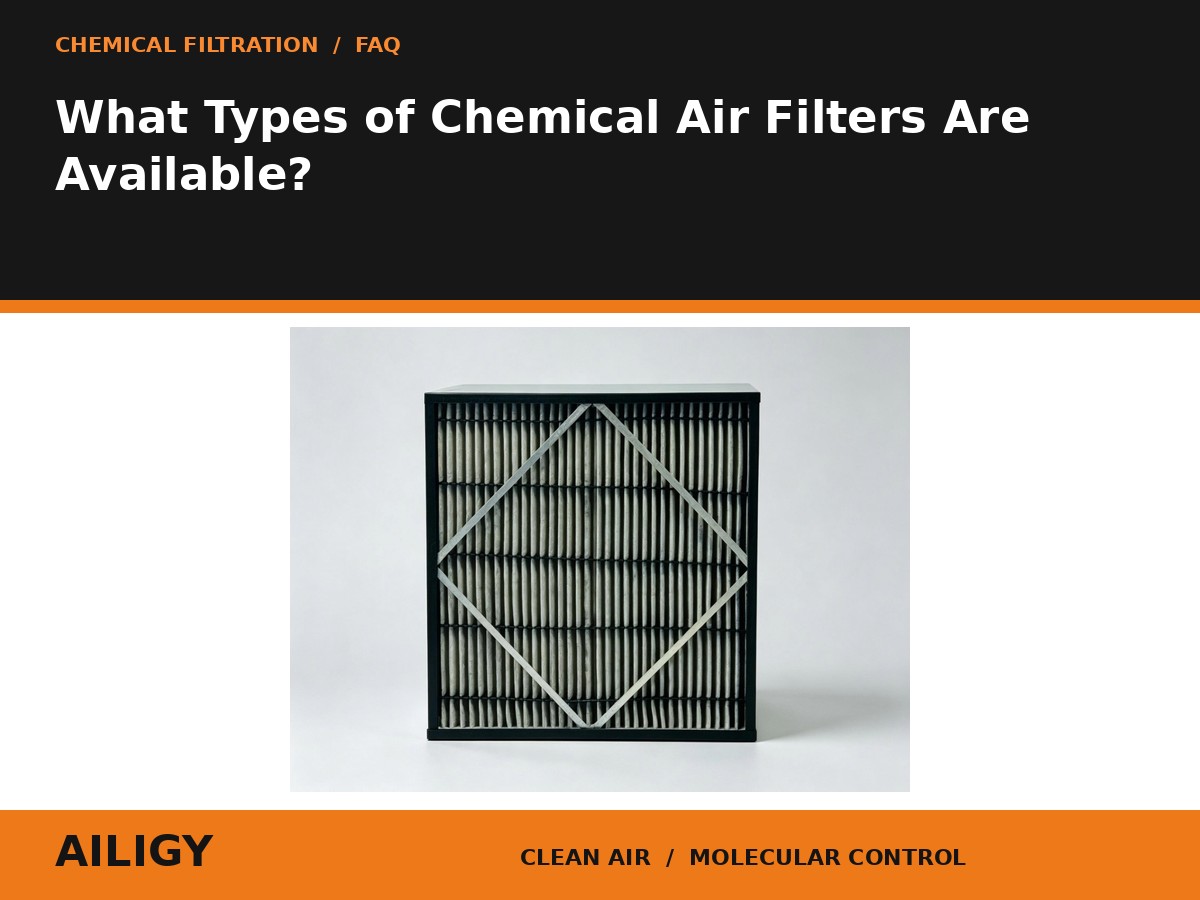 Common chemical filtration products include flat plate, box, V-type, cartridge filter and equipment matching modules. Structural selection should serve air volume, media capacity, space and maintenance needs, and applicability cannot be judged based on appearance alone.
-
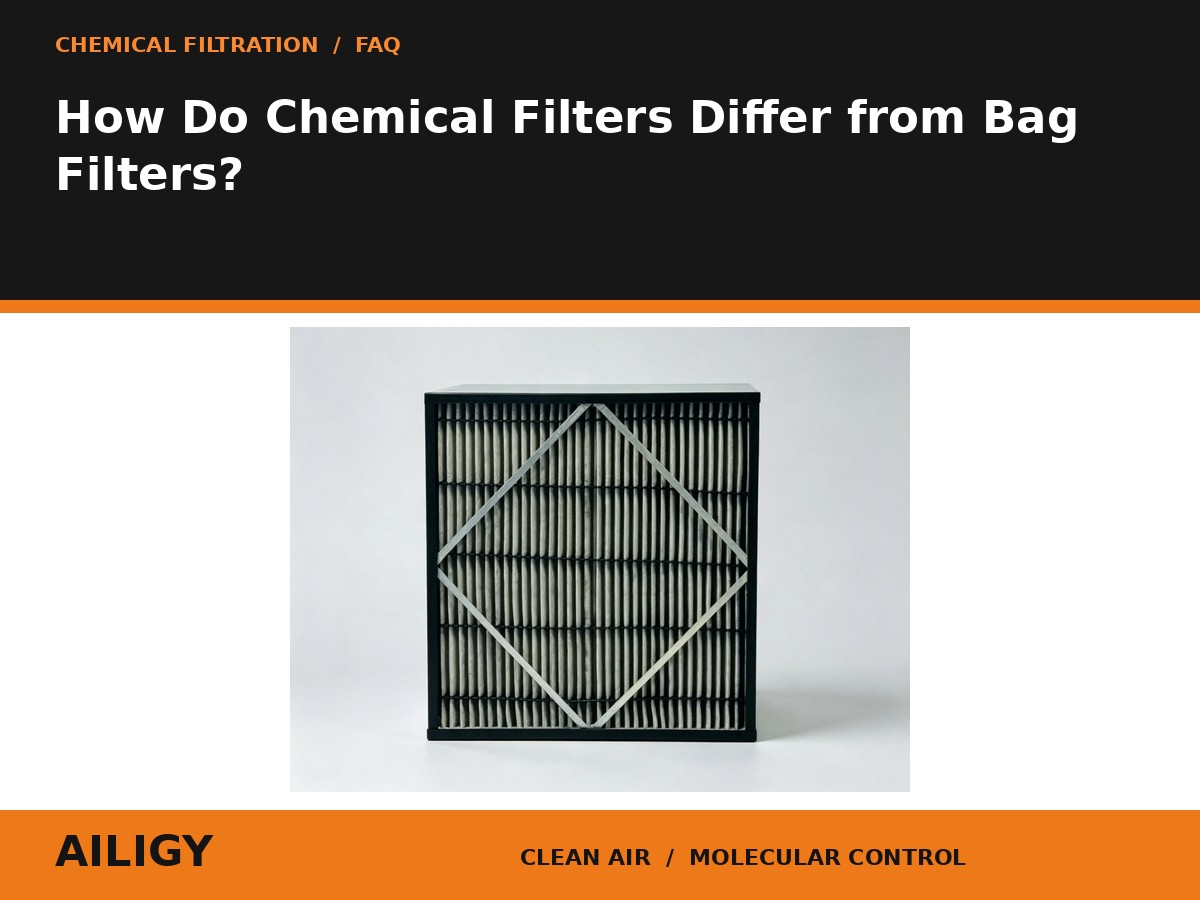 Medium-efficiency bag filters typically handle particle loads, and chemical filters handle designated gases by media. The bag shape does not determine whether it has gas function, and composite products still require independent gas data.
-
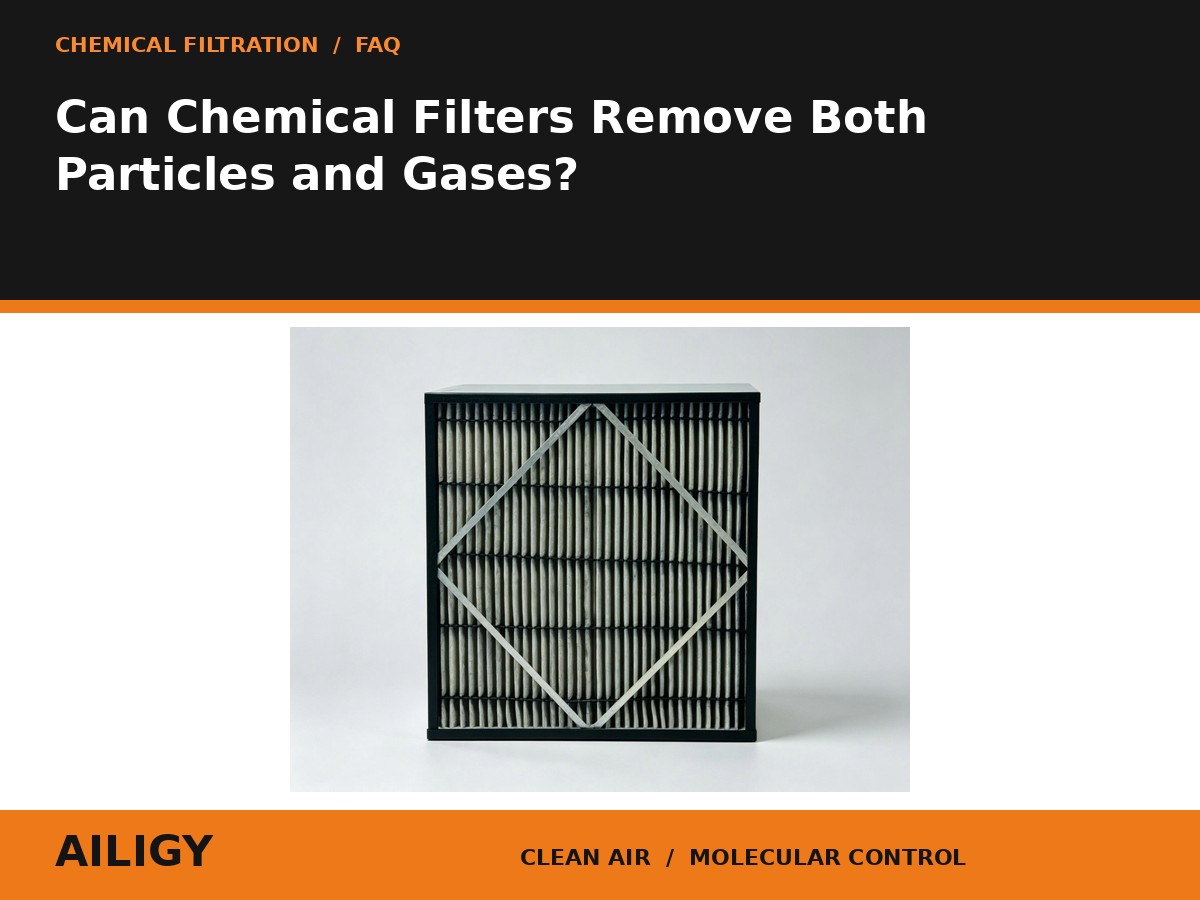 A purely chemical filter layer that primarily handles a given gas is not automatically equivalent to a qualified particle filter. When it is necessary to control particulate and gaseous pollution at the same time, graded combinations or composite products with proven performance of both types can be used.
-
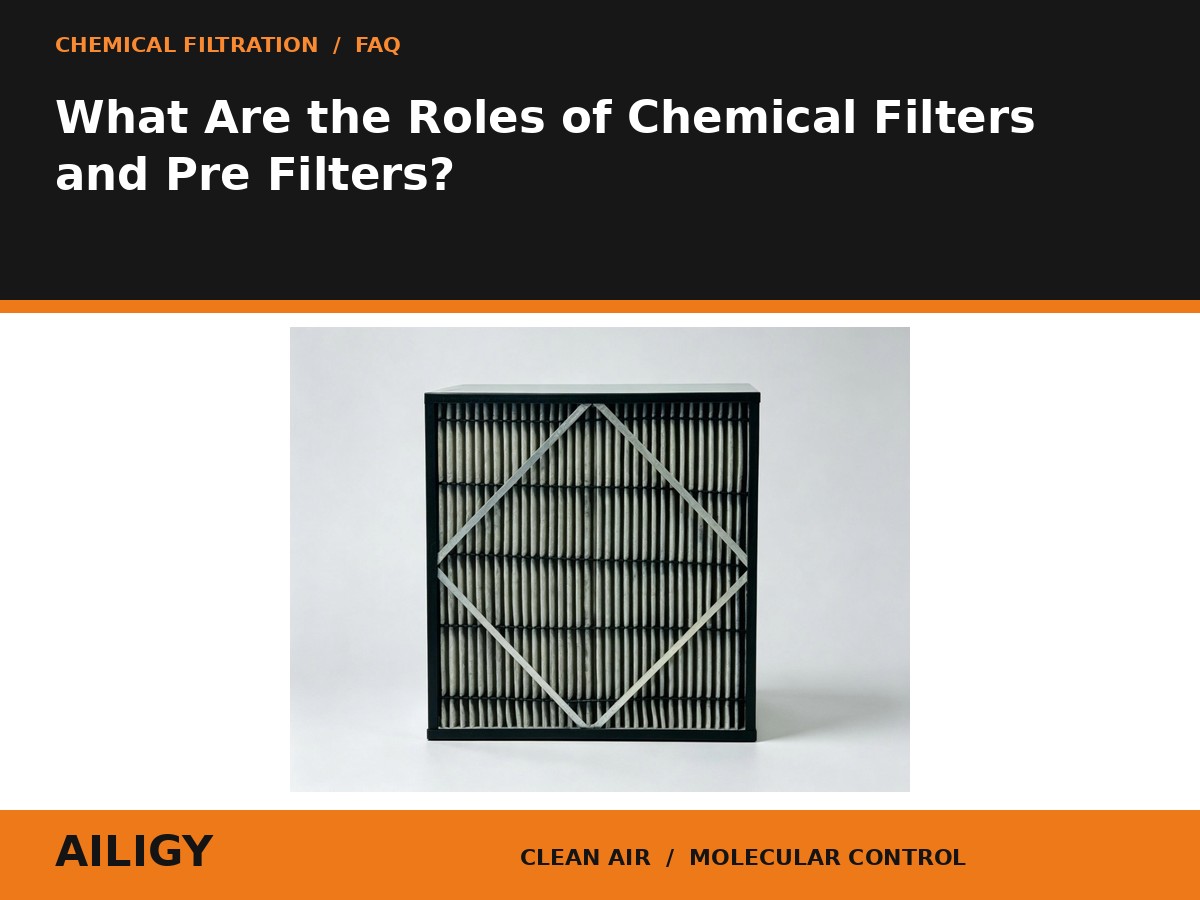 The primary filter is mainly responsible for coarser particles and upstream dust load, and the chemical filter mainly handles the adapted gas. Reasonable cooperation can reduce dust covering the media, but pre-filtration cannot replace gas treatment.
-
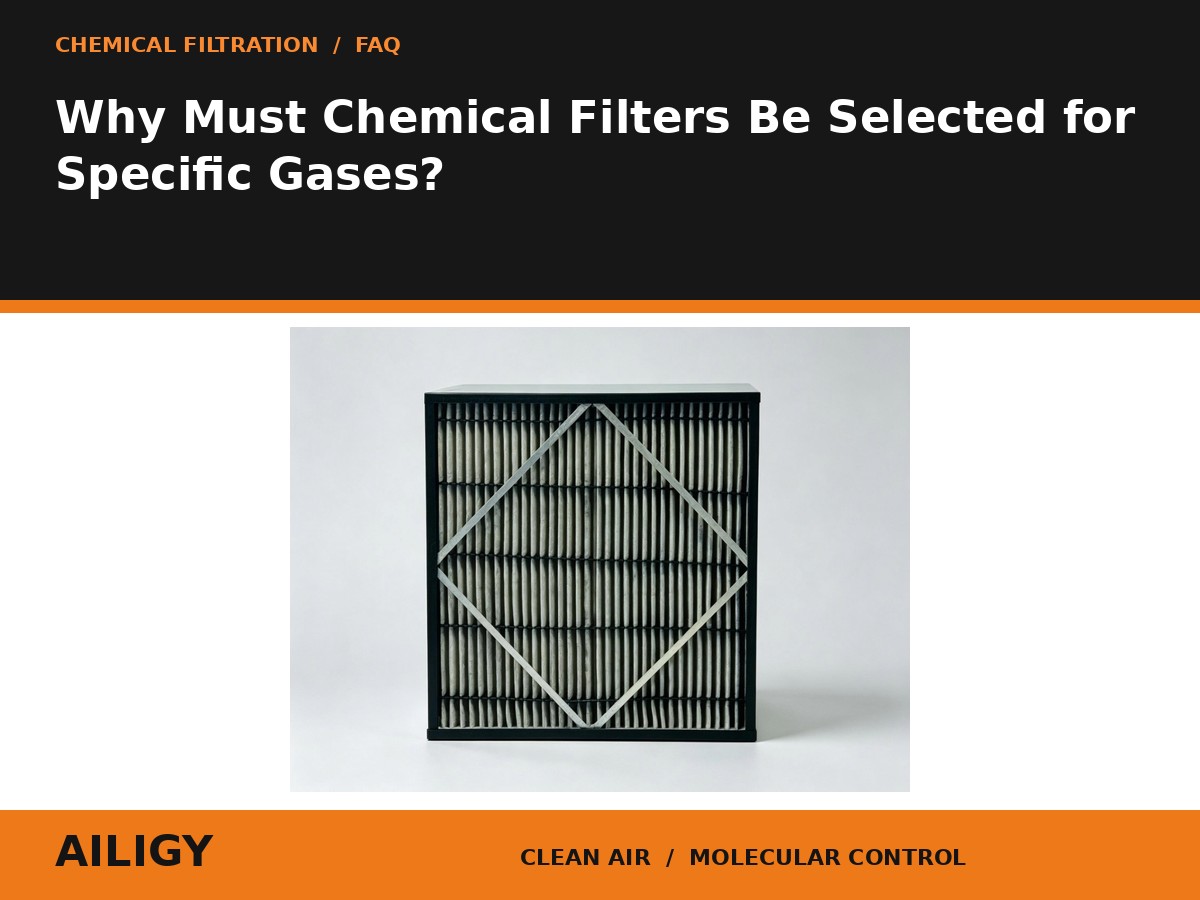 Chemical filters must be selected according to the target gas, because different adsorption or reaction media have different application ranges for pollutants. Just because a filter material can handle certain organic matter does not mean it will have the same effect on ammonia, acidic gases or other components.
-
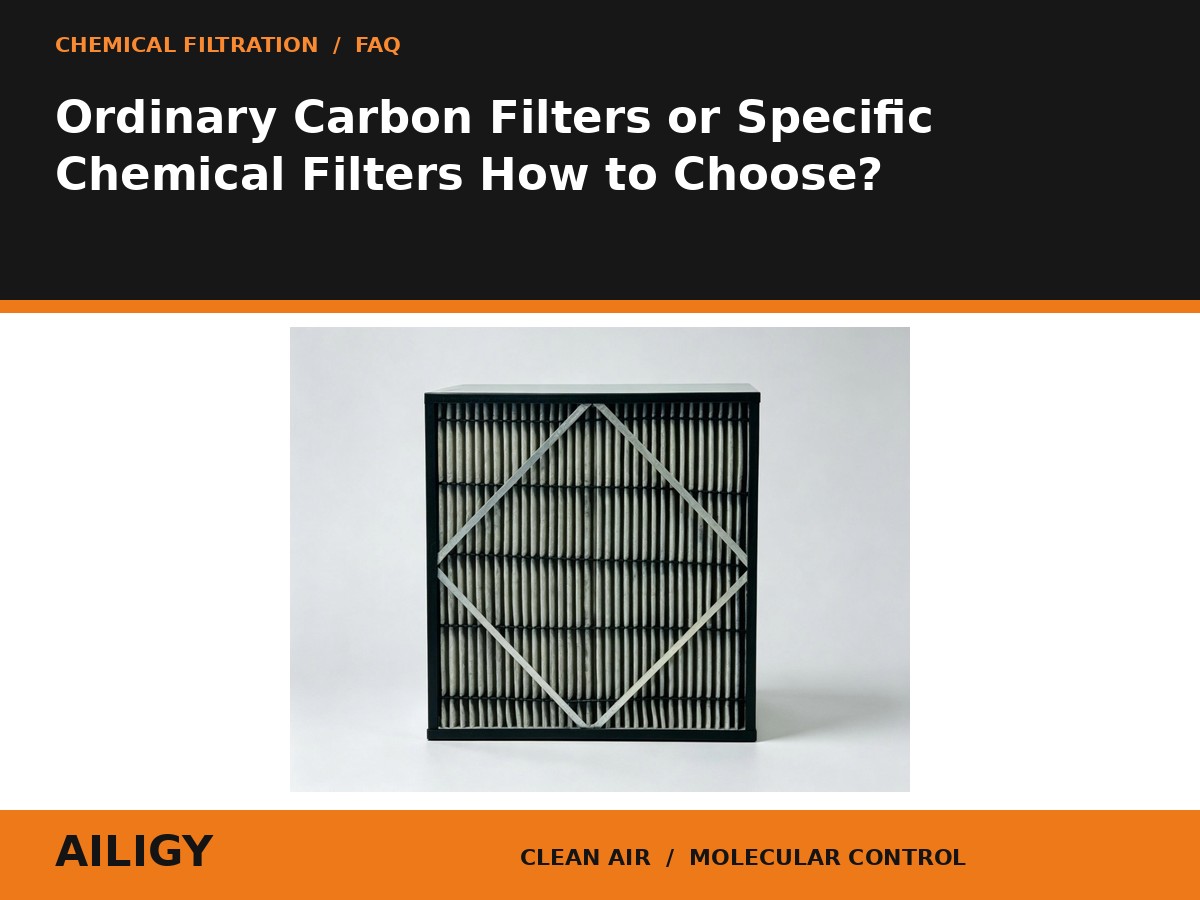 Ordinary activated carbon filter layers and special chemical filter layers should be compared based on pollutant composition and usage objectives. Ordinary carbon can adsorb some organic matter, but when dealing with acid gas, ammonia and other components, special media and corresponding conditions need to be confirmed.
-
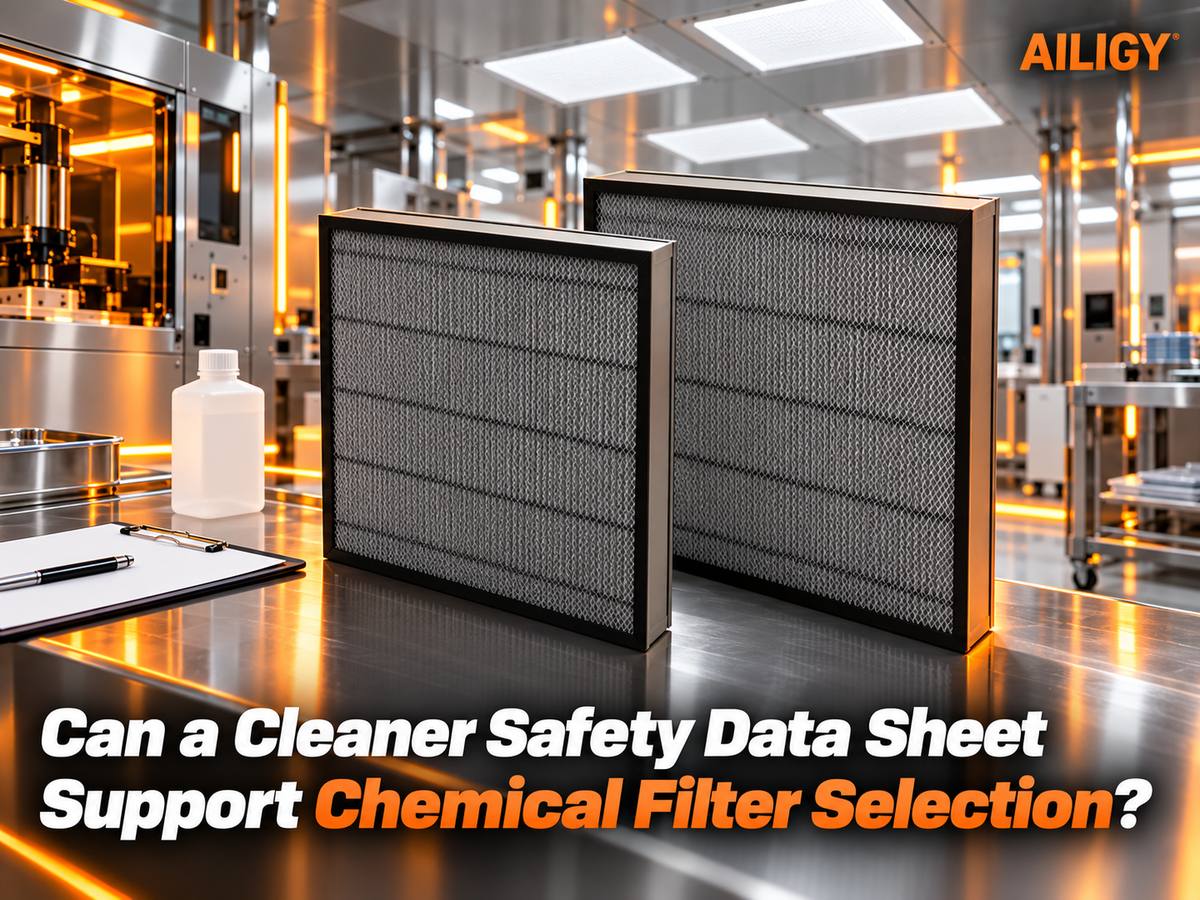 This article explains that cleaning agent safety data sheets can provide clues to the composition and properties of chemical filters, but they cannot replace on-site air testing. When selecting, you also need to understand the cleaning method, temperature, dosage, exhaust air and the actual gas entering the filter section. The article follows four steps: forming an investigation direction from chemical information, connecting documents with actual use, applying check points, verification and subsequent use. It points out that the occupational exposure limits in SDS cannot be used as filter outlet concentration targets.
-
 Raw material inventories can be used to initially identify potential gaseous contamination, but they do not directly represent the actual composition and concentration in the air. Preliminary hypotheses should be formed based on material usage, temperature, storage conditions and ventilation paths.
-
 Chemical filters can reduce some odors from bathroom-related gases, but exhaust, drain seals, and return air paths should be checked first. Deodorizing filters cannot be used as a substitute for necessary independent exhaust and air path management.
-
 For toluene pollution, organic gas chemical filters should be selected based on the inlet concentration, treatment air volume and cumulative load, and the efficiency and capacity corresponding to toluene should be checked. You can't decide on a configuration based solely on room size or a generic deodorizing label.
-
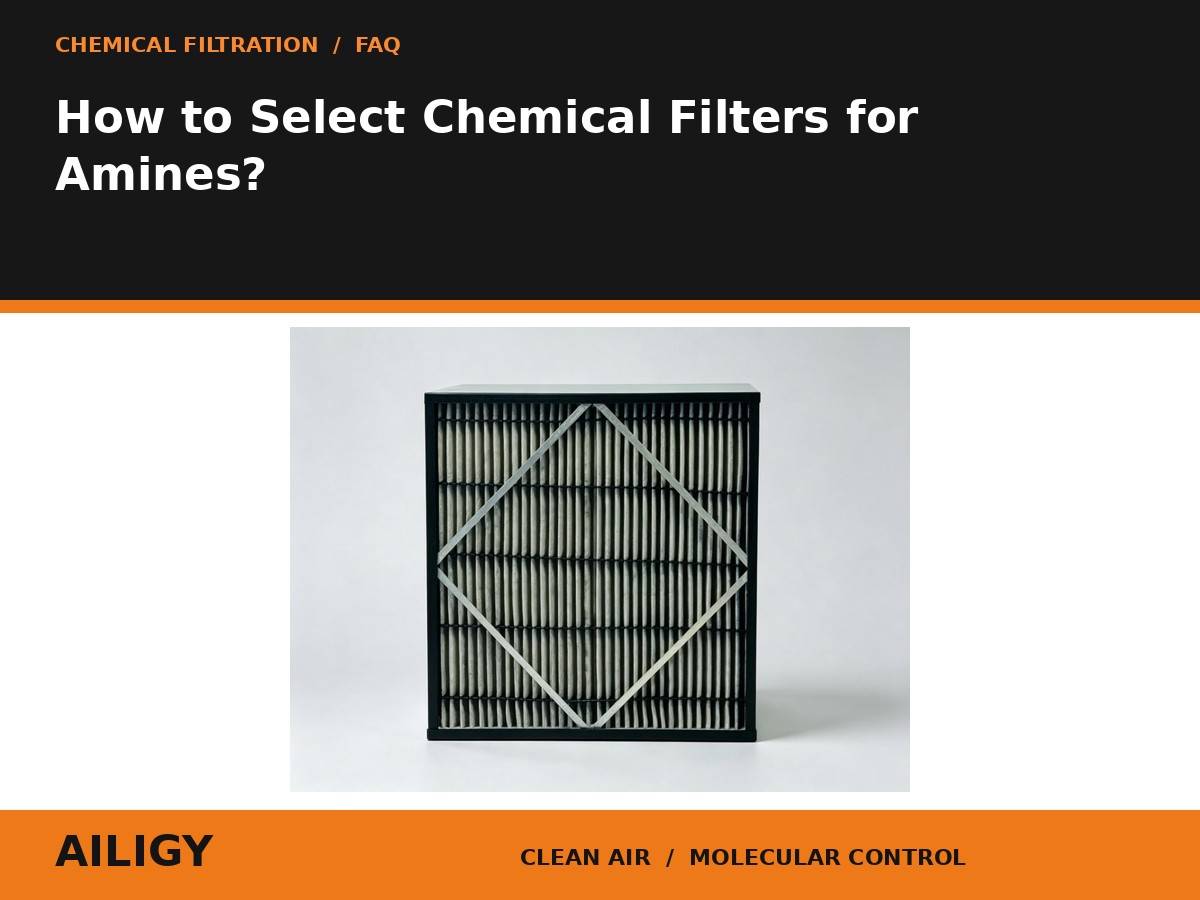 Amine gases require chemical filters selected based on specific composition, concentration, and protection objectives. Amines contain different substances, and it cannot be assumed that the same filter material will have the same effect on all components based on the alkaline gas classification alone.
-
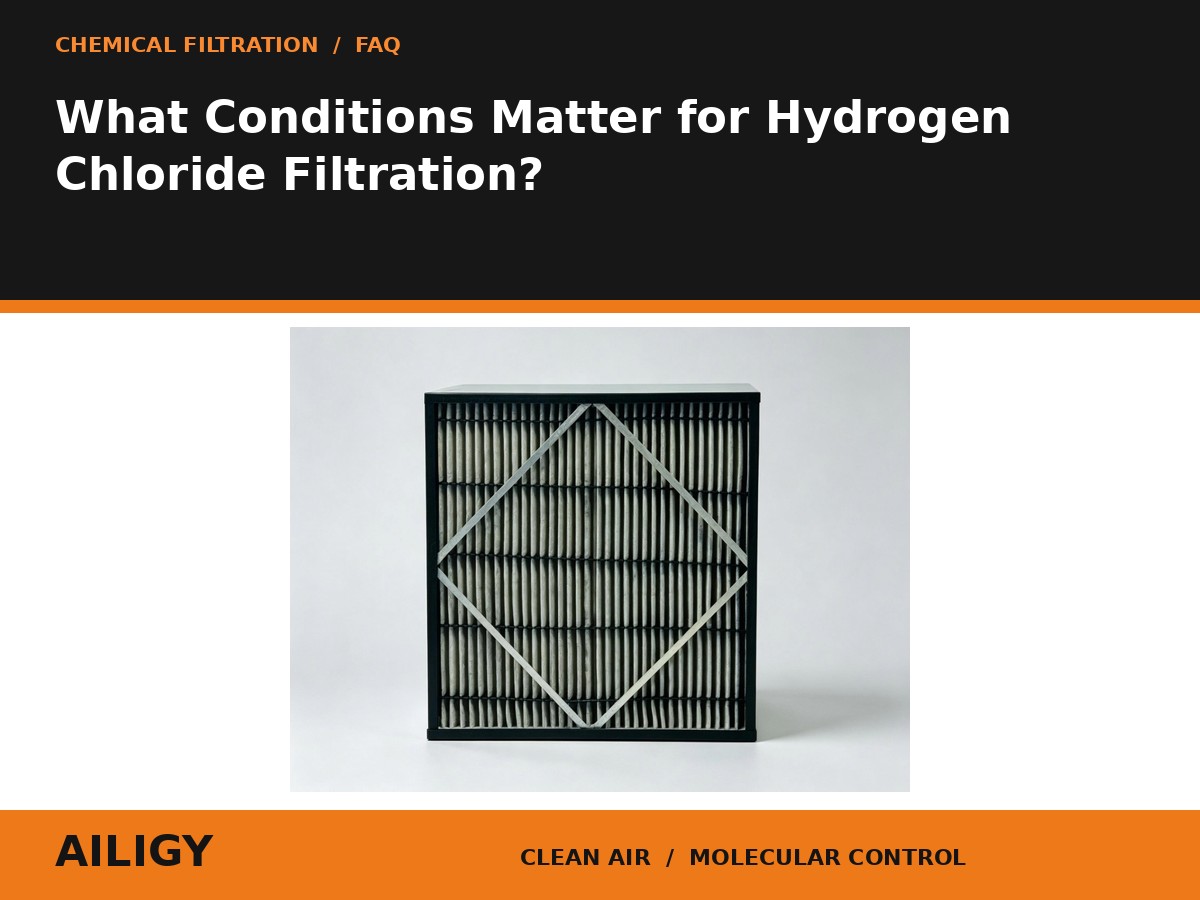 Hydrogen chloride gas filtration requires checking the gas concentration, humidity, temperature and whether it is accompanied by acid mist droplets, and then selecting a chemical filter with corresponding applicable evidence. Gas handling and droplet capture should be evaluated separately.
-
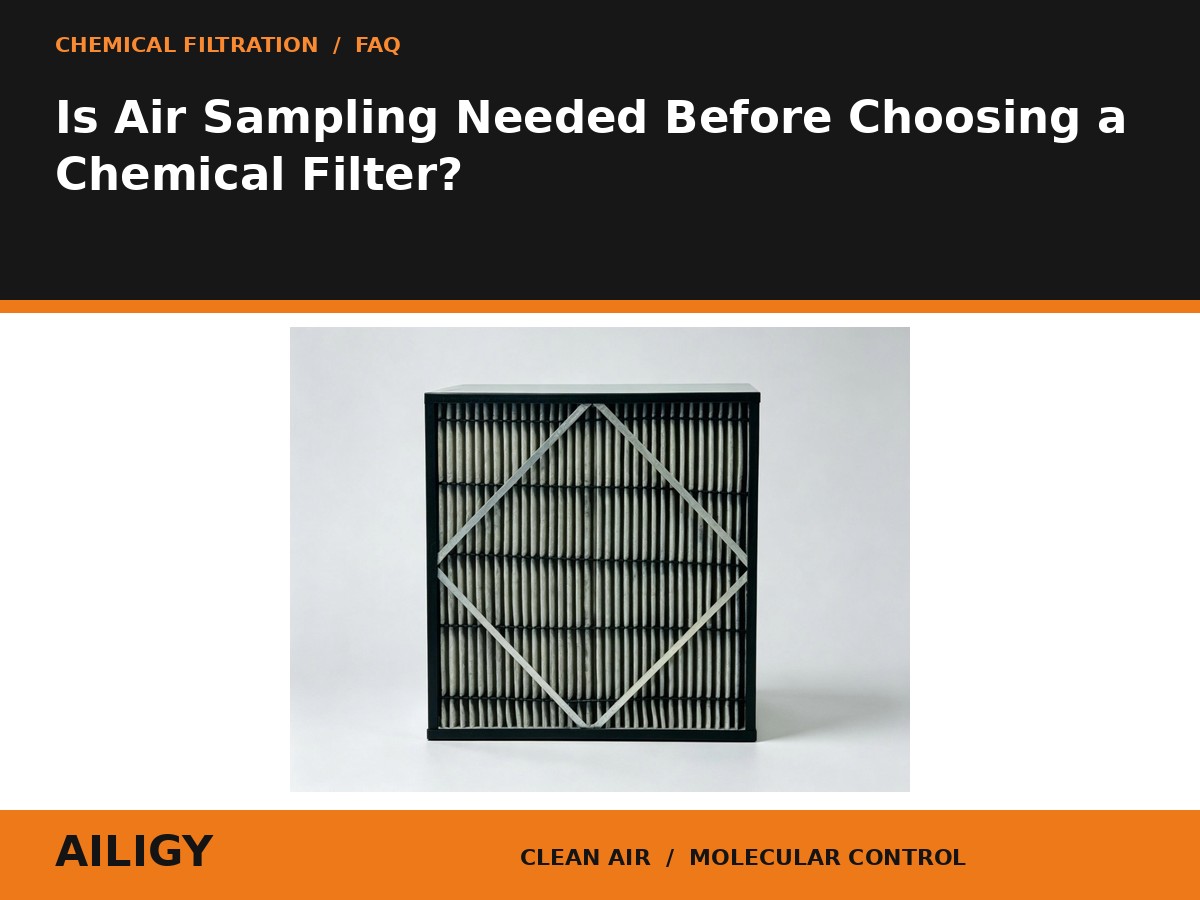 Whether to take samples before selecting a chemical filter depends on the clarity of the pollution components and the control objectives. When critical workstations, corrosion risks, or multiple unknown gases are involved, representative air sampling can reduce the risk of selecting the wrong filter material.
-
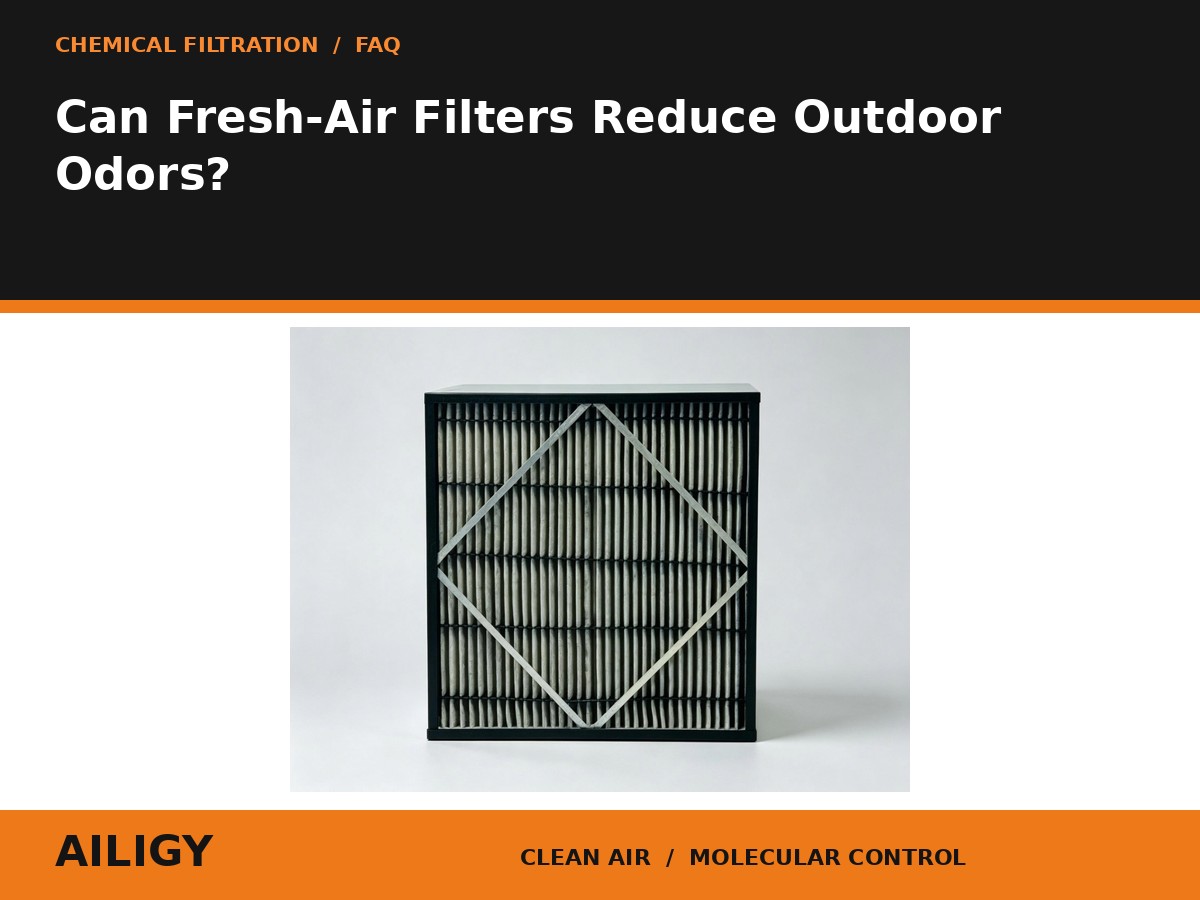 Fresh air systems can reduce some outdoor odor input through chemical filters adapted to target components. The premise is to identify the main polluting gases and their entry paths, and at the same time check the location of the new air outlet, particle pre-filtration and operating load.
-
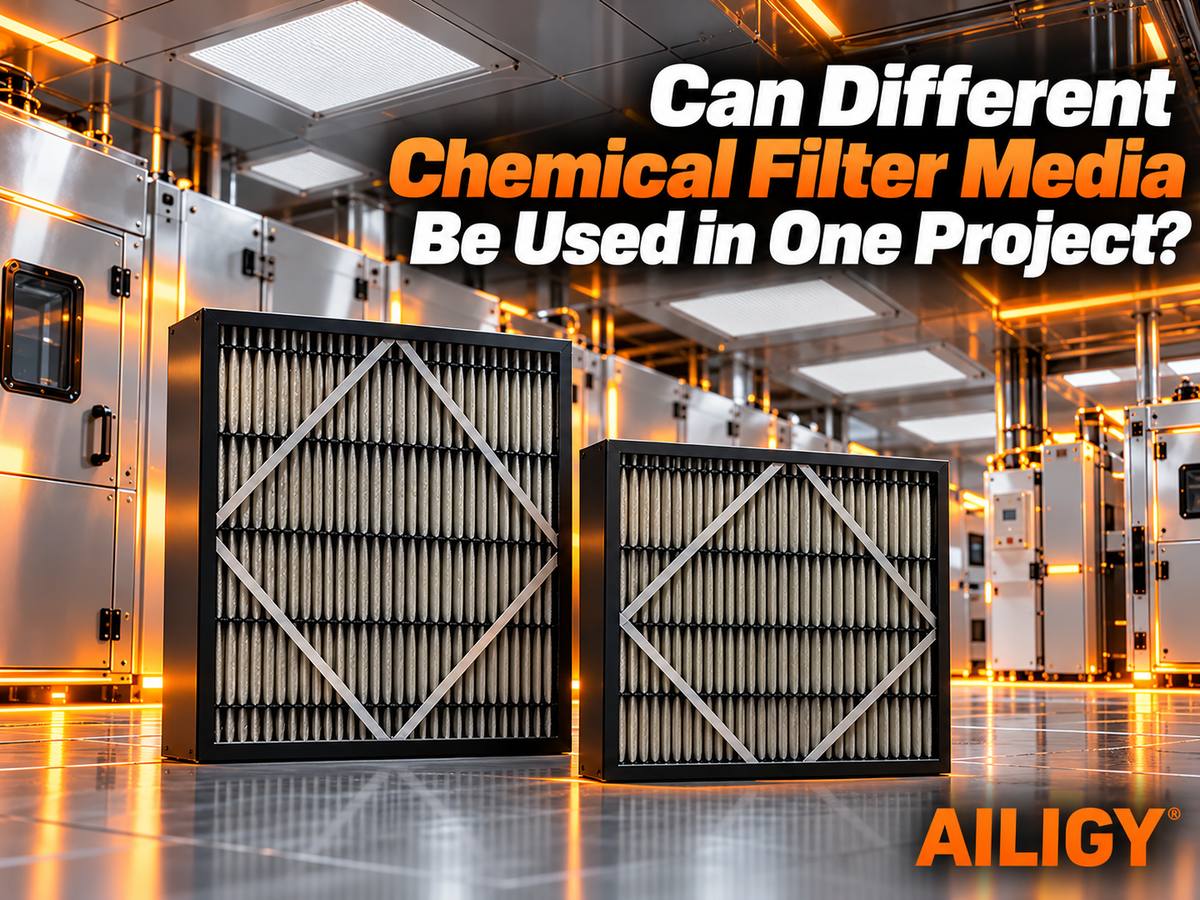 This article explains that the same project can evaluate the use of different chemical filter media, but their respective goals, combination sequence, environmental suitability and maintenance methods should be clearly defined. Putting different media together does not mean that the efficiency and capacity of mixed gases can be simply added. The article is divided into four links: distinguishing stratified and mixed configurations, verifying target gases item by item, application check points, verification and subsequent use, and points out that the combined configuration needs to be confirmed separately for each target gas.
-
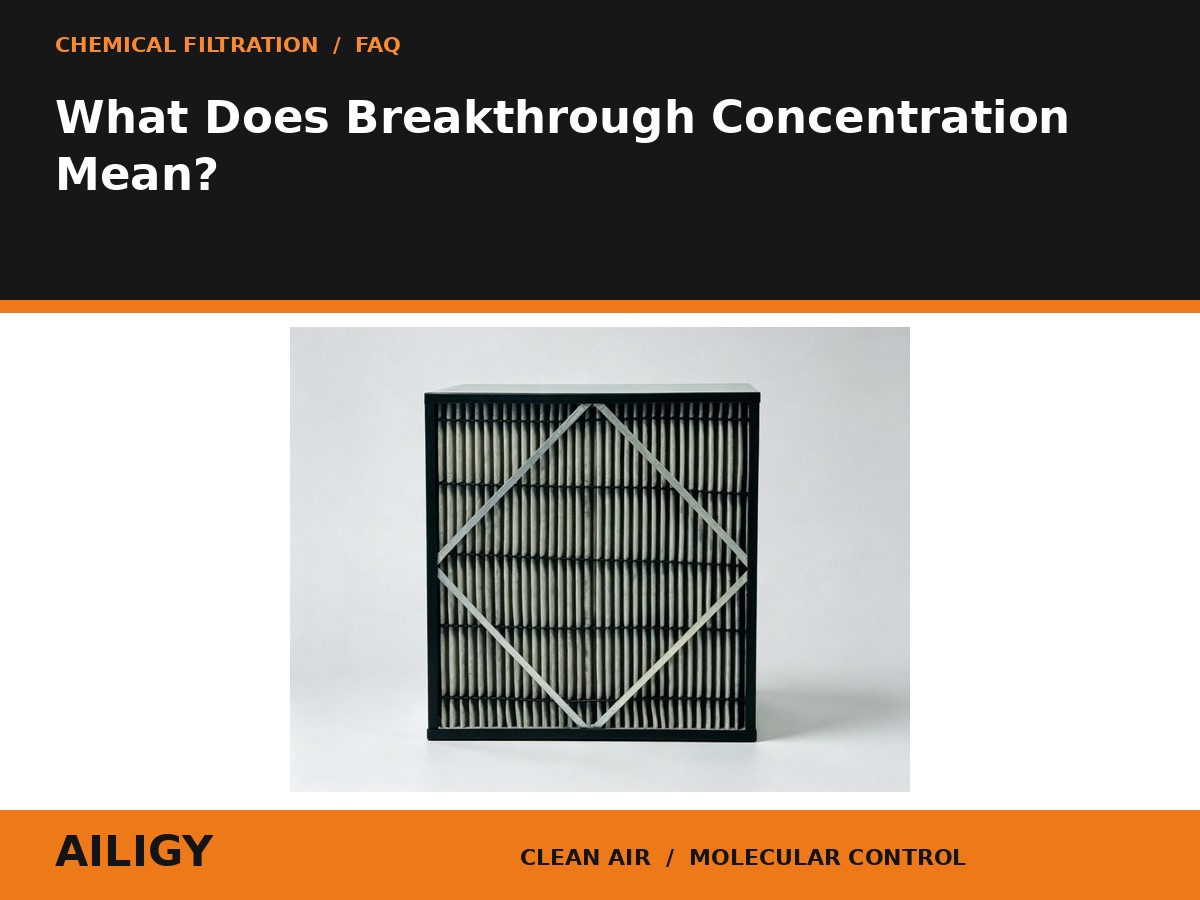 The breakthrough concentration usually refers to the target gas concentration measured at the filter outlet; in the life test, the breakthrough criterion is also set to reach a certain outlet level or inlet ratio. The report should indicate which definition and threshold it uses.
-
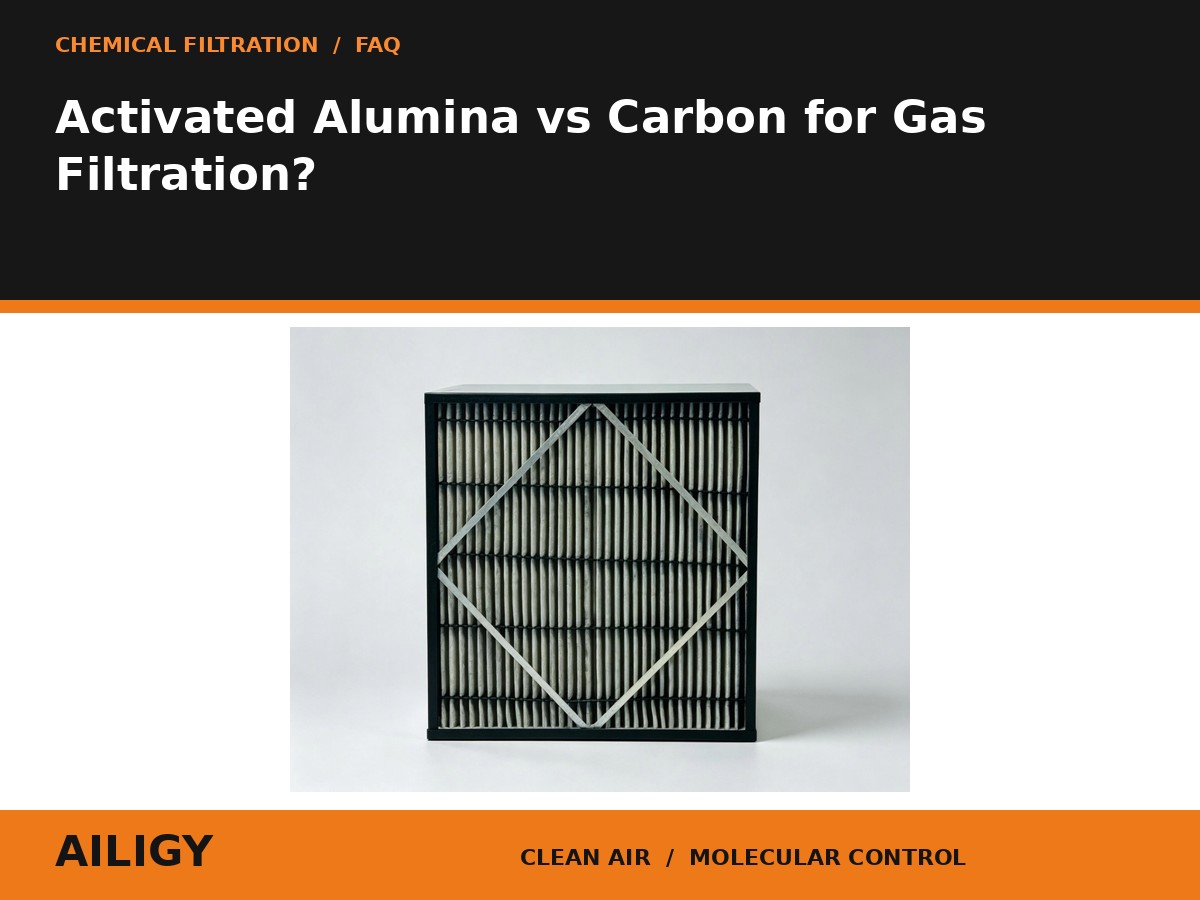 Activated alumina and activated carbon should be used according to the specific medium configuration and target gas comparison. The carrier name cannot directly represent the final treatment function. Surface treatment, environmental conditions and test objects are equally important.
-
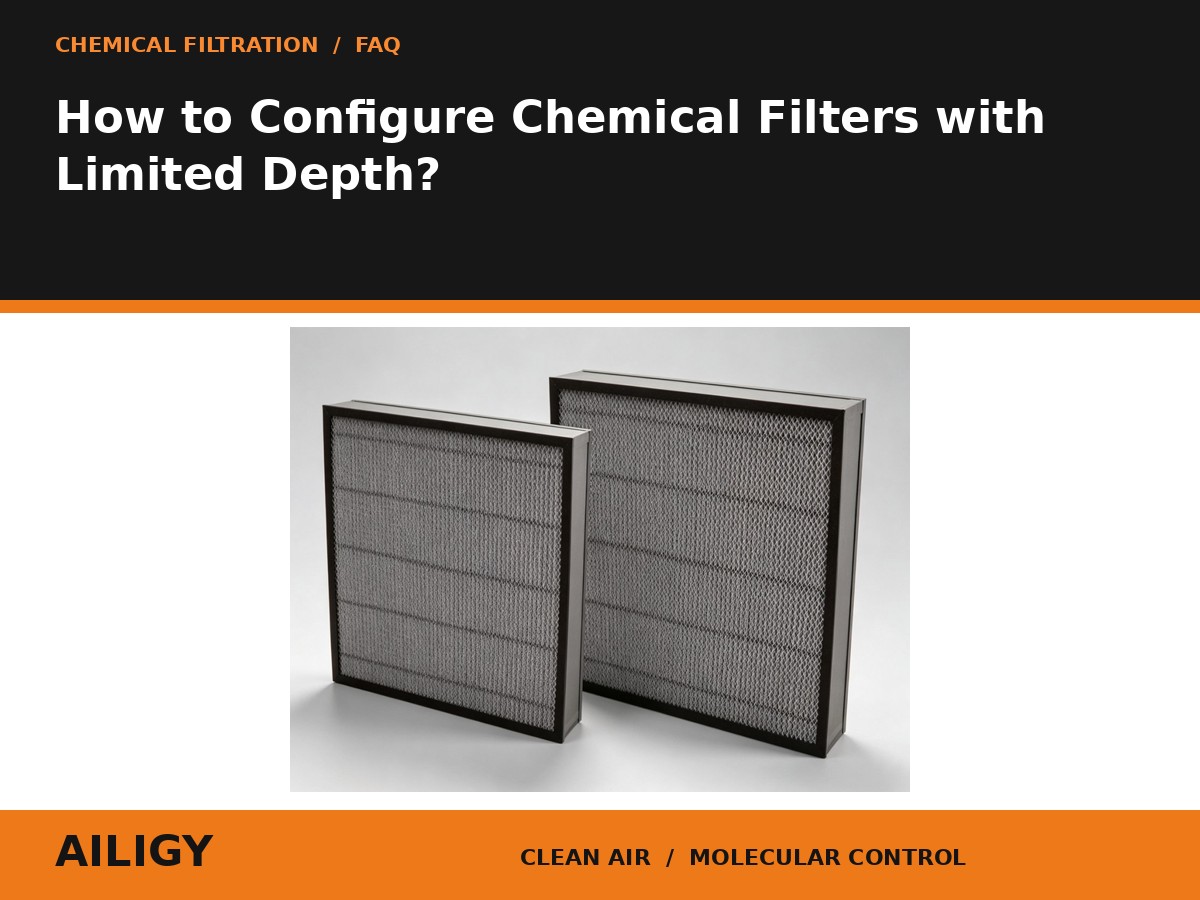 When chemical filter thickness is limited, air volume, media capacity, resistance and maintenance methods need to be considered within the available space. A low profile product cannot be considered to have the same processing capabilities as a deep bed product just because it can fit inside.
-
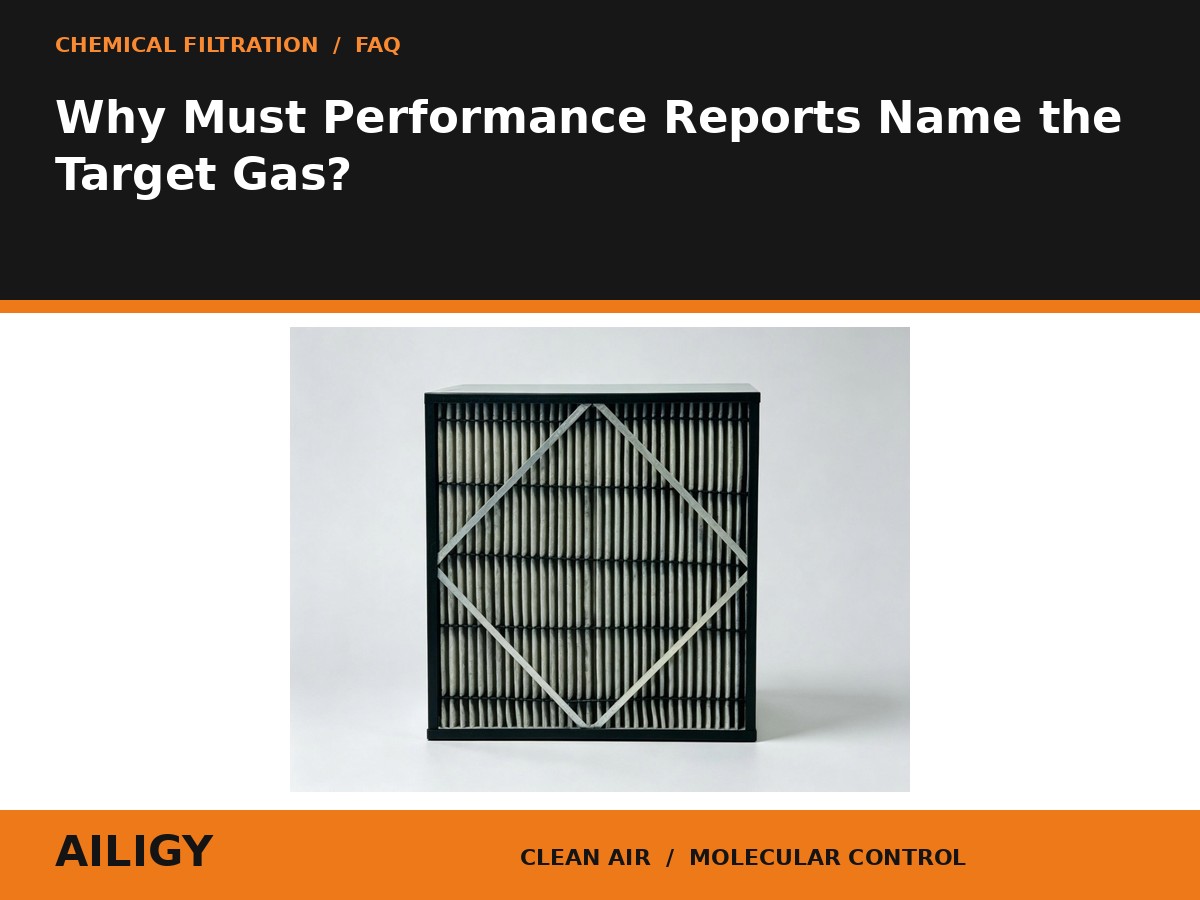 Chemical filter performance reports must list specific target gases because different contaminants may have different efficiency, capacity, and penetration performance on the same media. Without high efficiency values for gas objects, they cannot be used directly for project selection.
-
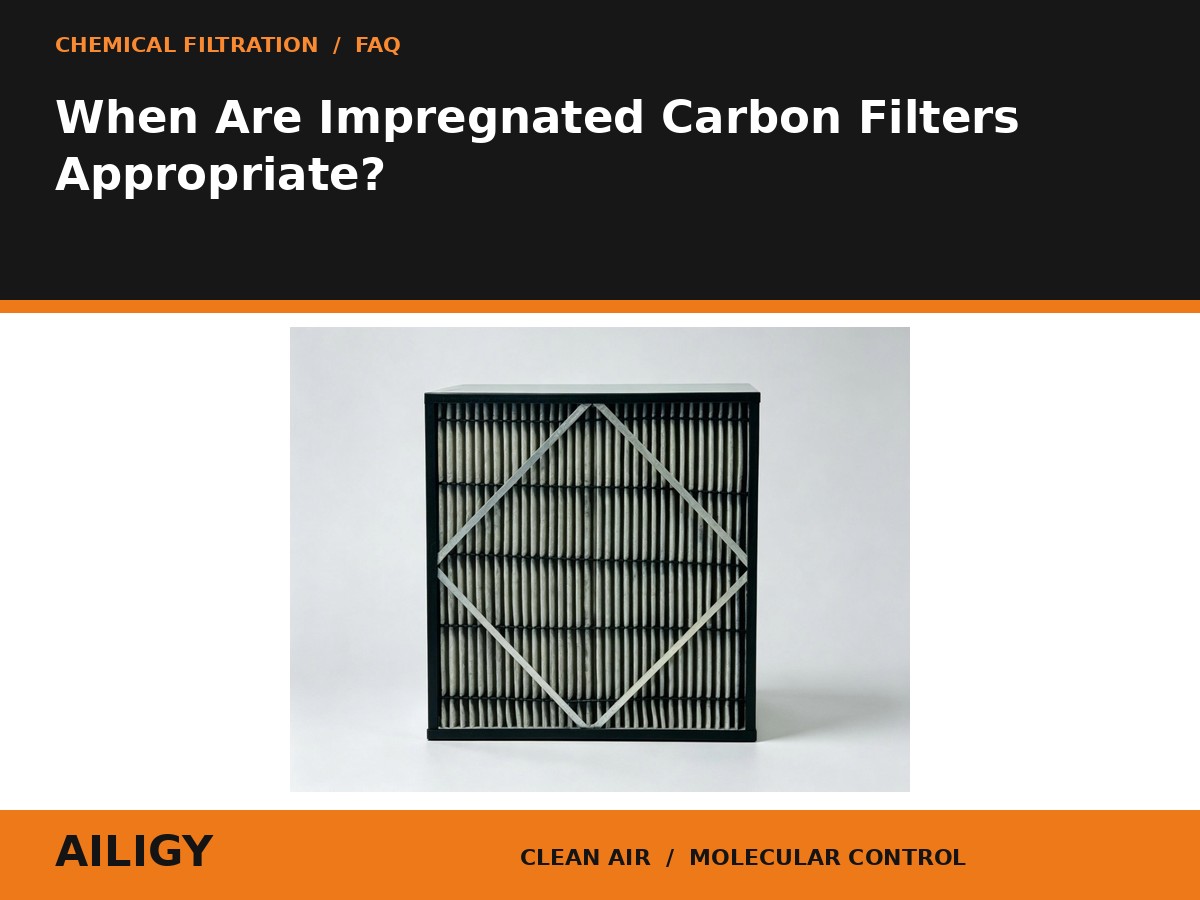 Impregnated activated carbon filters are suitable for projects that require enhanced processing capabilities for specific gases, but the specific scope of application is determined by the formulation and testing conditions. The name impregnation cannot be understood as being effective for all gases.
-
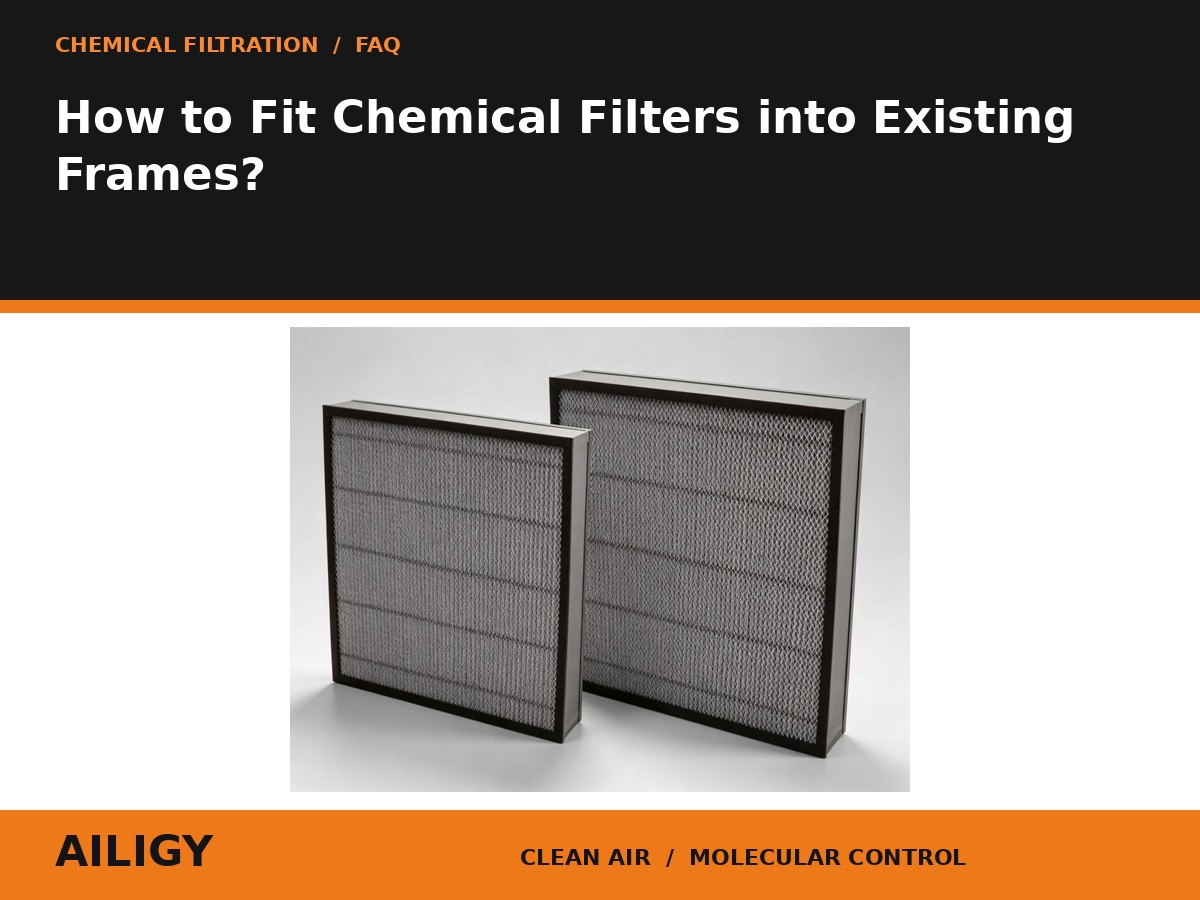 When matching a chemical filter to an existing frame, the shape, sealing contact surface, compression method, air flow direction and maintenance space need to be checked at the same time. Just because the shape can be put in does not mean that there is no bypass after installation or that it can meet the gas treatment goals.
-
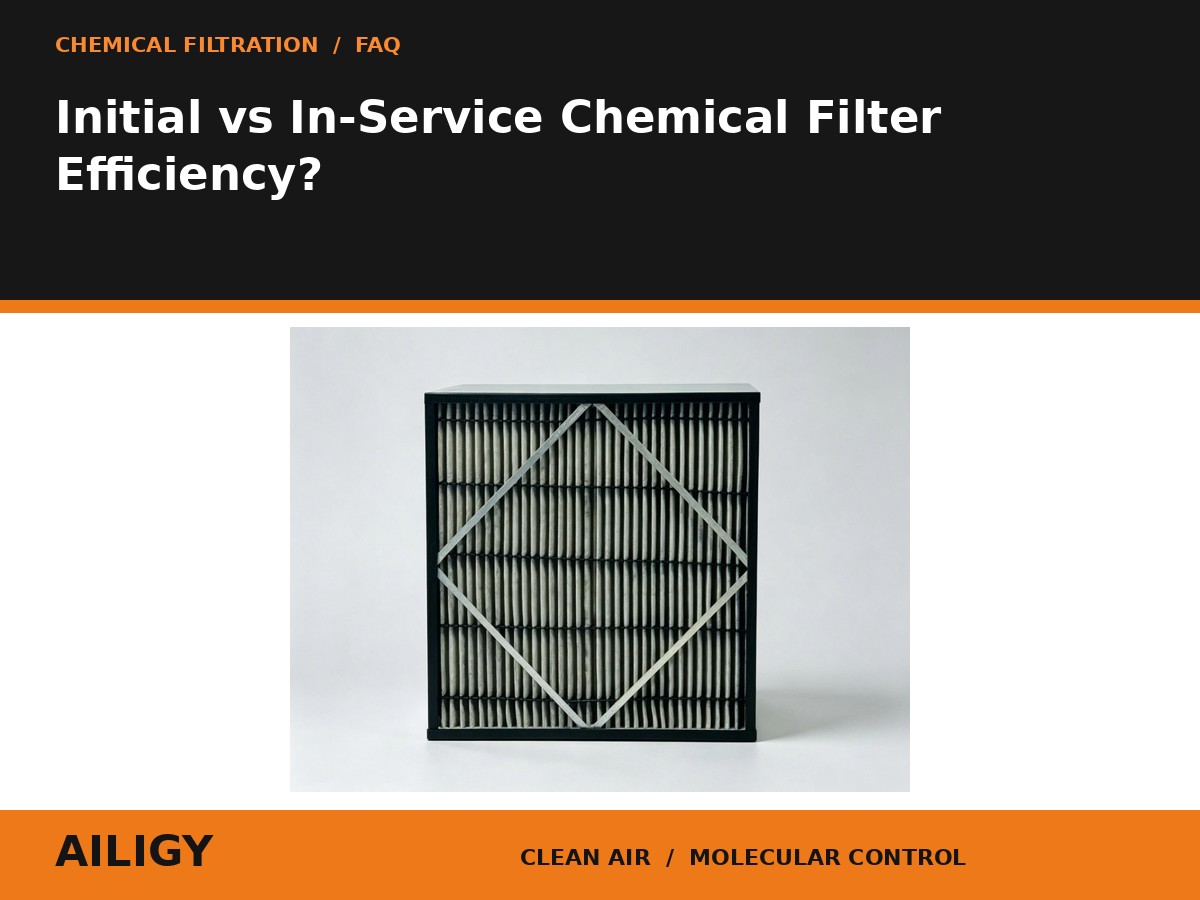 Initial efficiency describes how a new filter element performs under specified conditions, while lifetime efficiency changes with pollution load, media consumption and operating conditions. When selecting models, initial data cannot be directly regarded as a full life commitment.
-
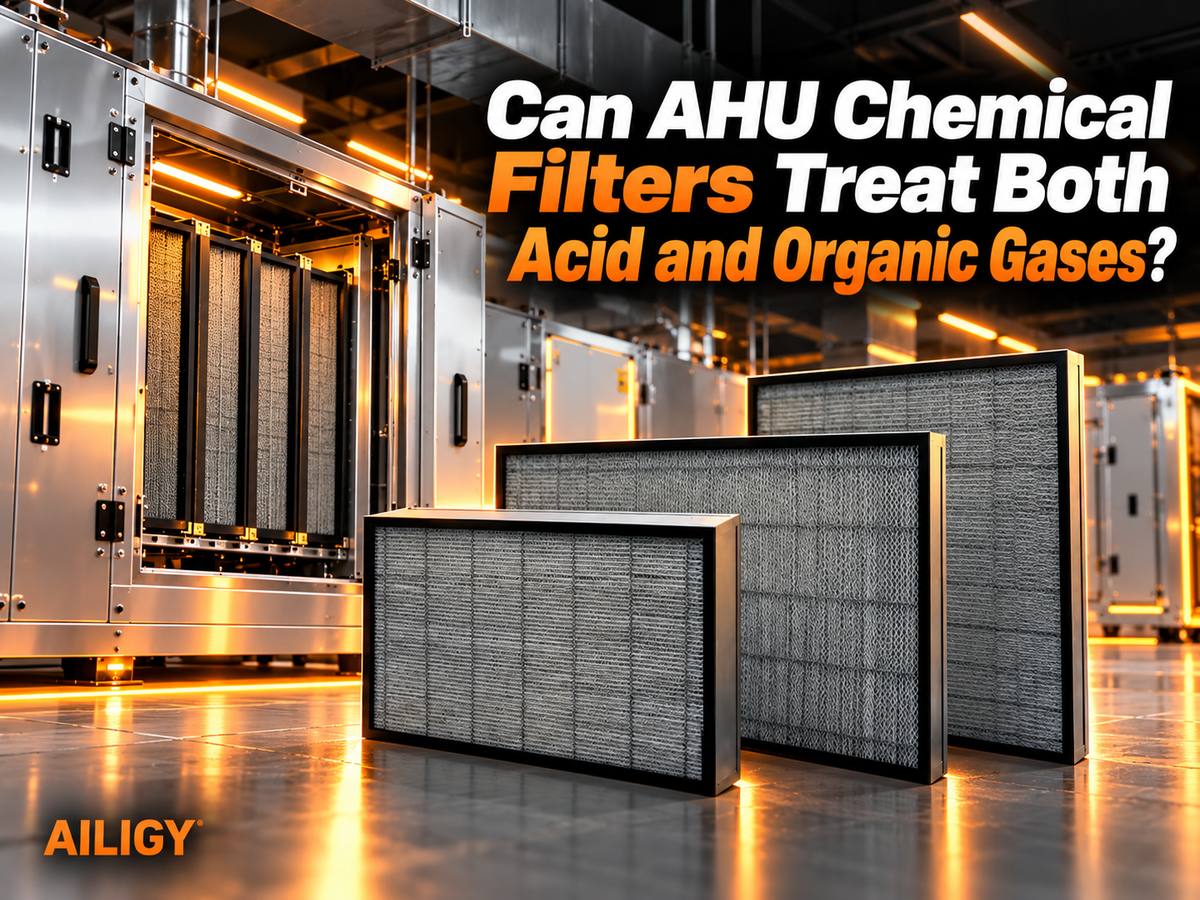 This article explains that the chemical filtration section of the air conditioning box can be evaluated to handle acid gases and organic gases at the same time, but the media must be configured for specific components and the mixing load must be checked. The multi-gas name alone cannot guarantee that all acid gases and organic matter are effective. The article starts with four steps: first determining whether the filter has passed through the same filter section, comparing combinations and system conditions, application check points, verification and subsequent use, and points out that internal and external gas sources should be handled separately when they come from different sources.
-
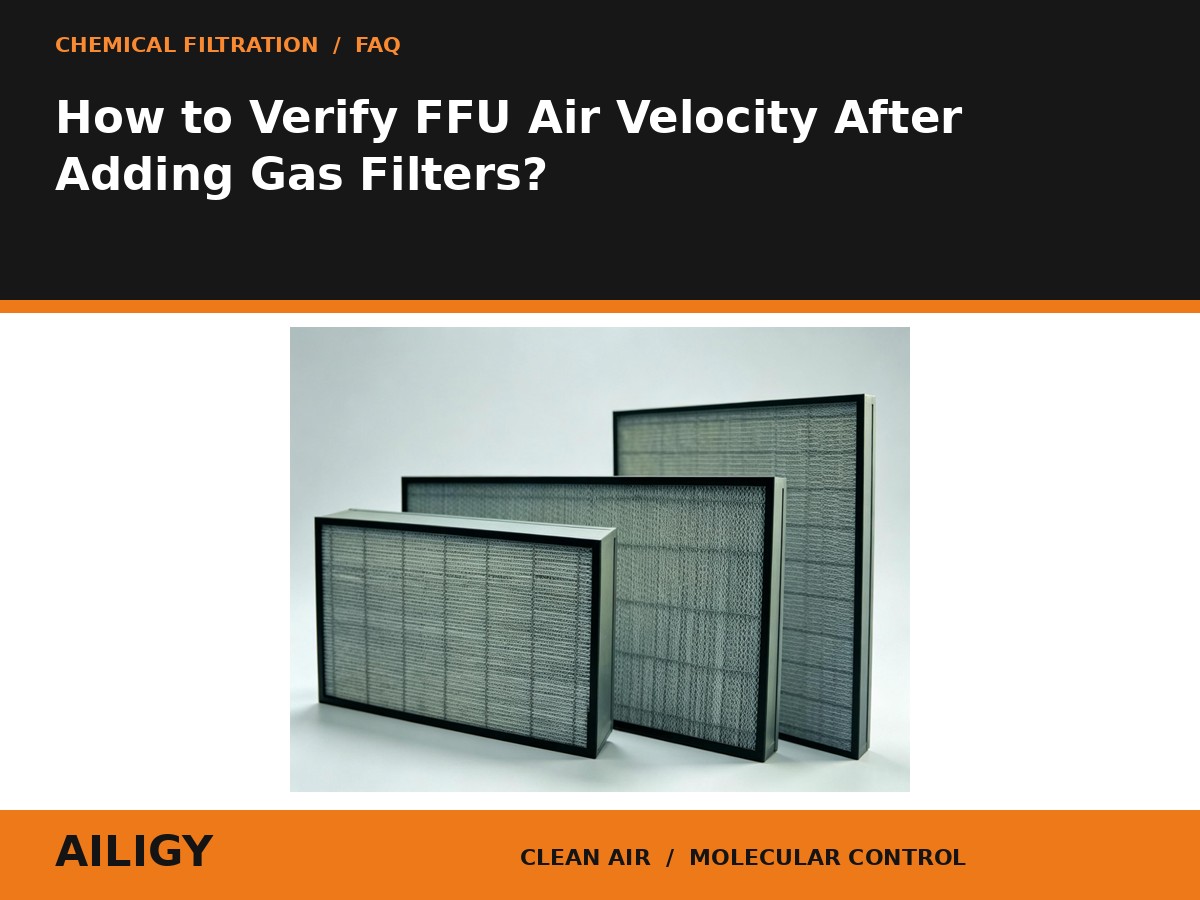 After adding a chemical filter to FFU, the actual outlet air speed and distribution should be measured under the agreed operating conditions, and the air volume, resistance and control settings should be checked. If the original speed remains unchanged, there is no guarantee that the original target wind speed will still be met.
-
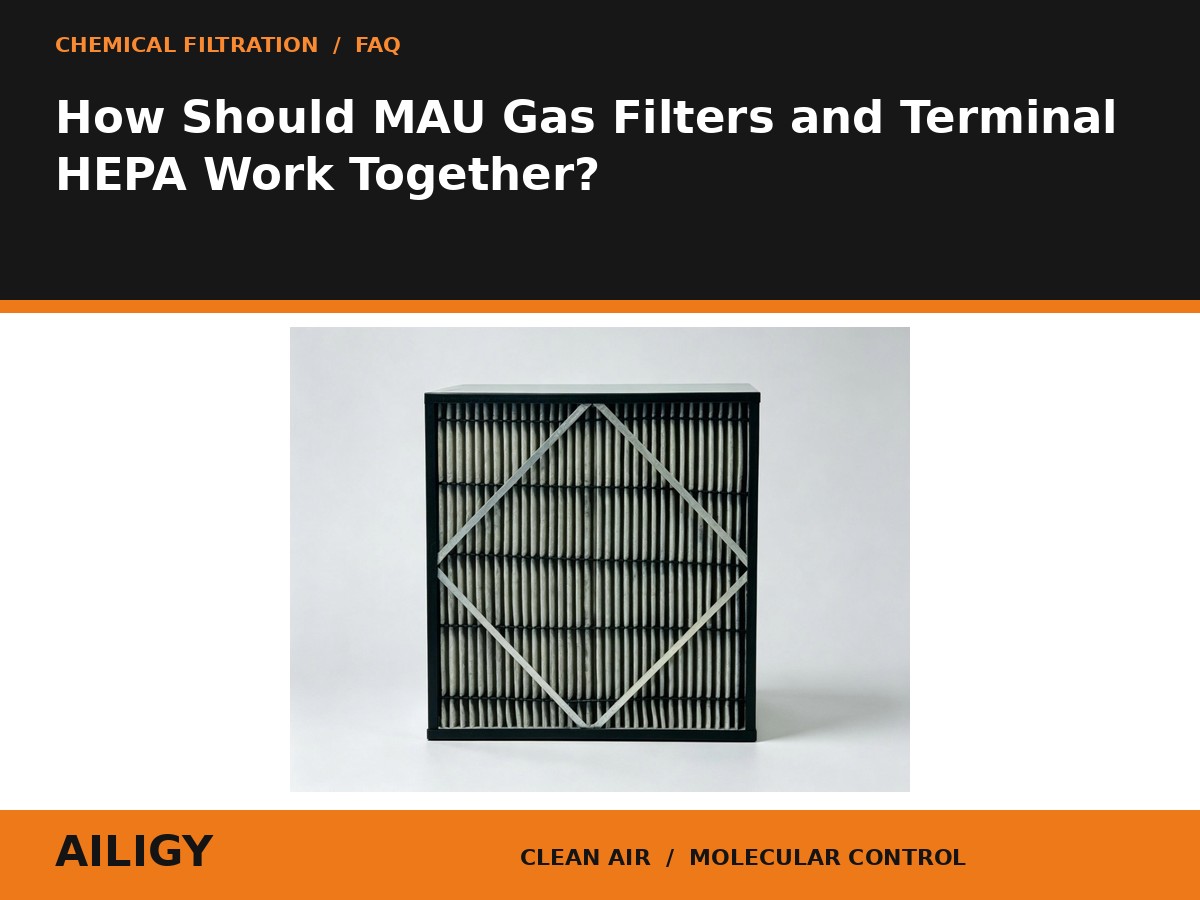 MAU chemical filtration and terminal HEPA respectively control the target gases in the fresh air and the corresponding particles in the delivery area. The two need to be configured together, and the effect of one cannot be used to infer that the other has met the requirements.
-
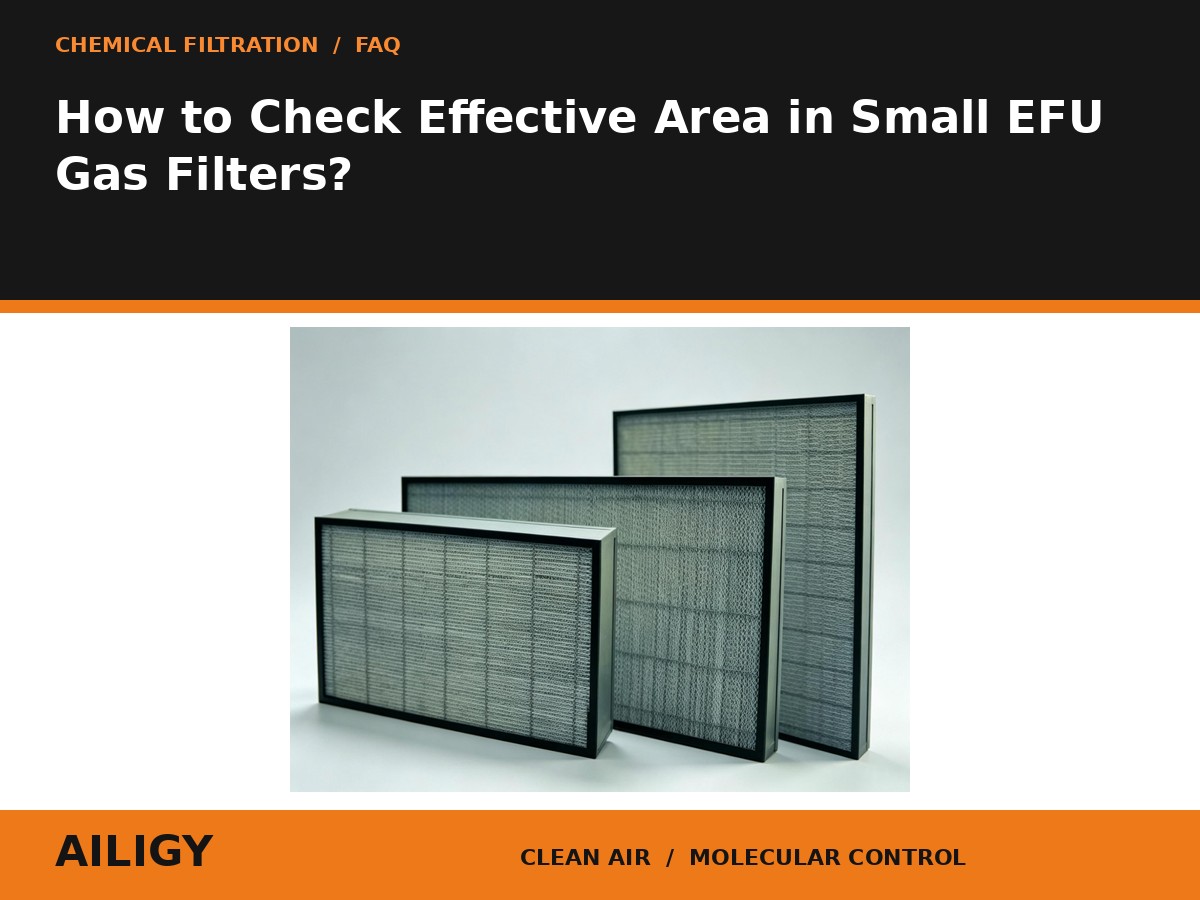 The effective treatment area of a small-sized EFU chemical filter should be checked based on the filter material area that actually allows air to pass through. The frame, support, sealing and shielding parts cannot all be calculated into the effective area, and the overall dimensions cannot directly replace it.
-
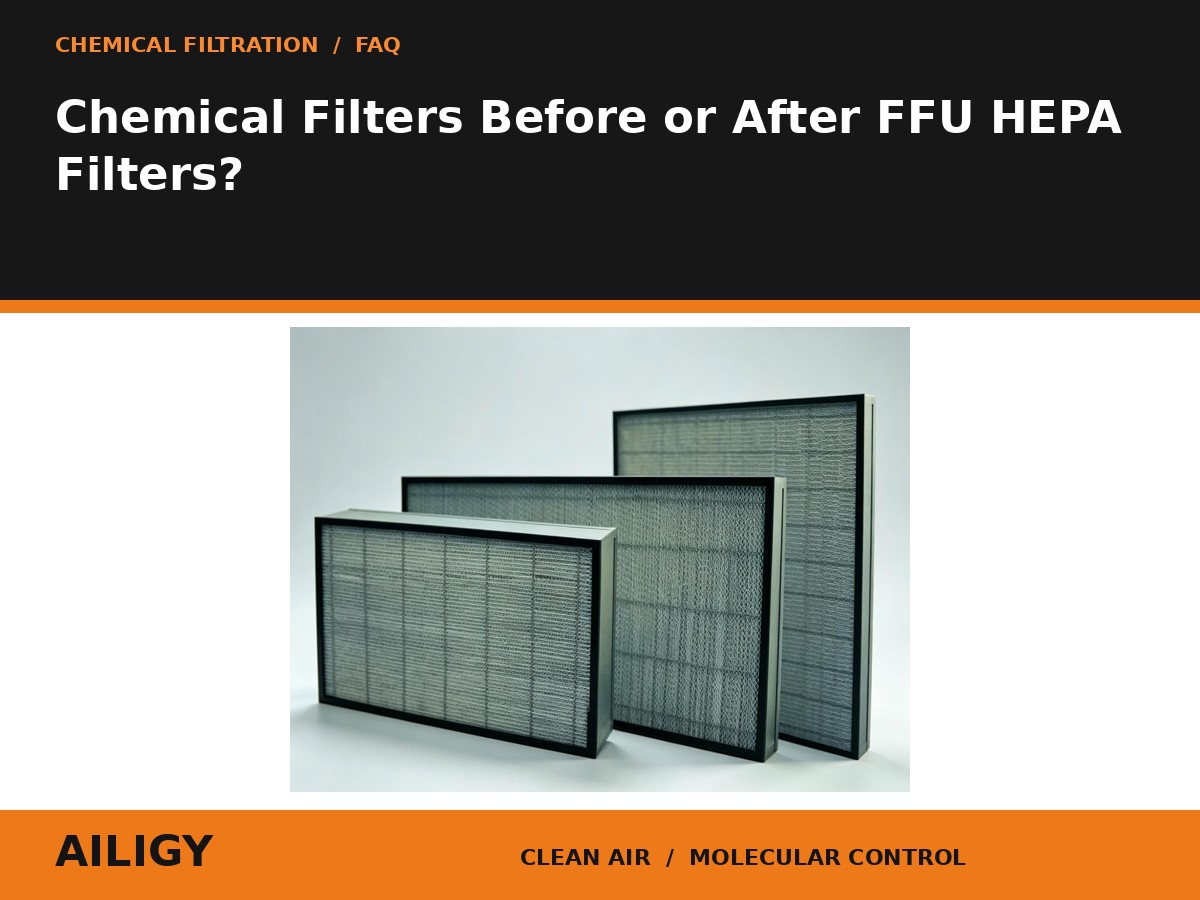 Whether the FFU chemical filtration section is placed before or after the HEPA, it is necessary to consider the filter material powder loss, gas release, air flow path and maintenance structure at the same time. Common configurations will use subsequent particle filtering to control relevant particles, but the specific sequence still needs to be confirmed by product and system.
-
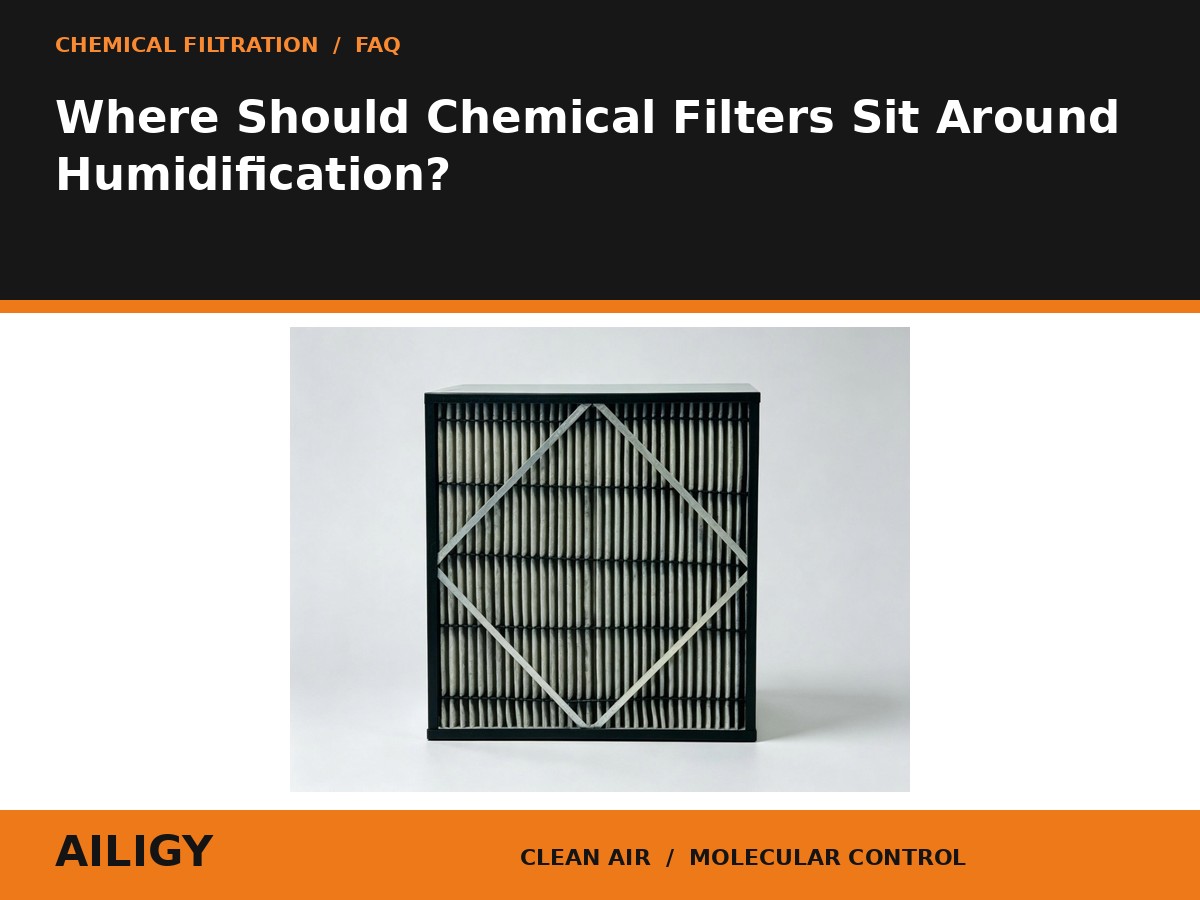 The relationship between the chemical filtration section and the humidification section of the air conditioning box should be determined based on the temperature and humidity range of the filter material, humidification method and droplet risk. The key is to make the air entering the chemical filter section meet applicable conditions and facilitate maintenance and testing.
-
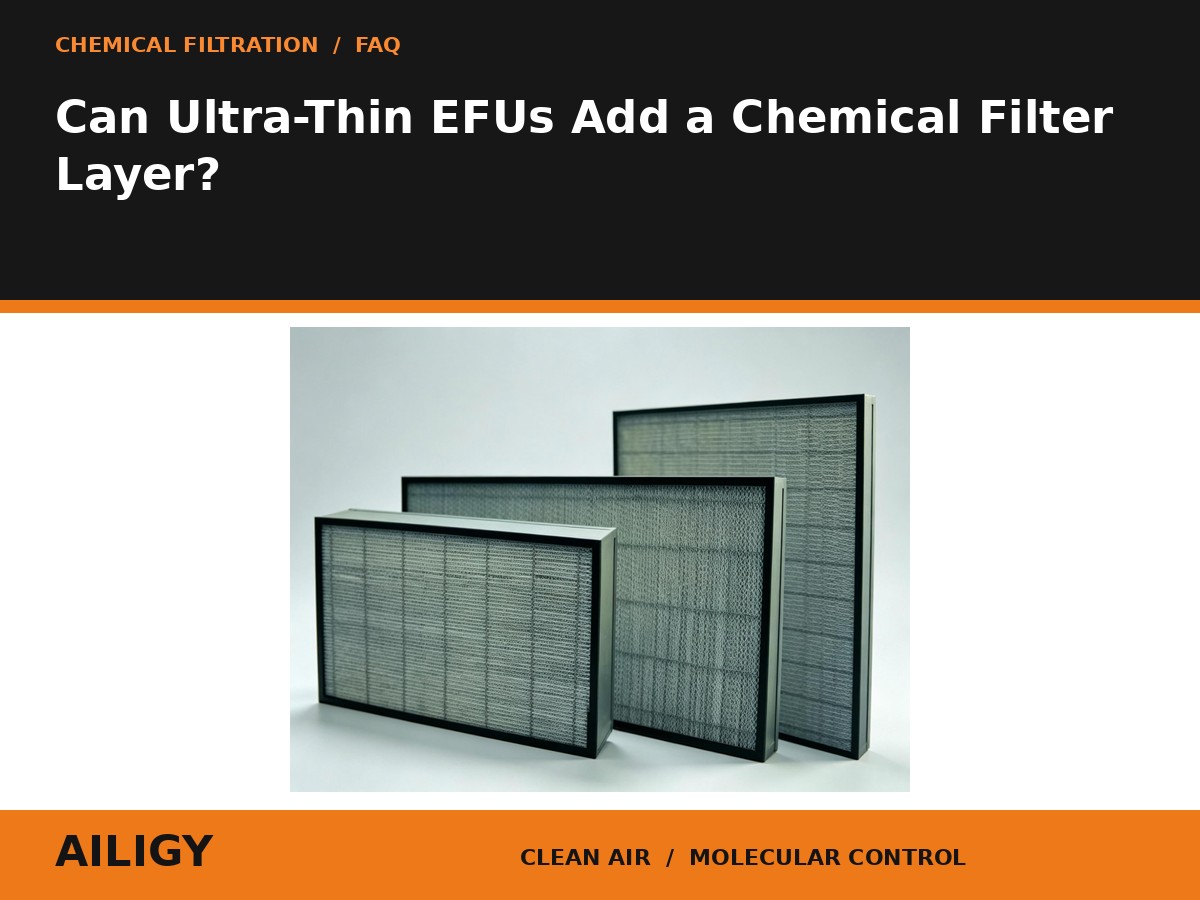 Whether ultra-thin EFU can be equipped with a chemical filter layer depends on the overall available height, effective area, fan static pressure and maintenance methods. Just because the filter is thin, it cannot be assumed that it will not affect the air volume or equipment structure.
-
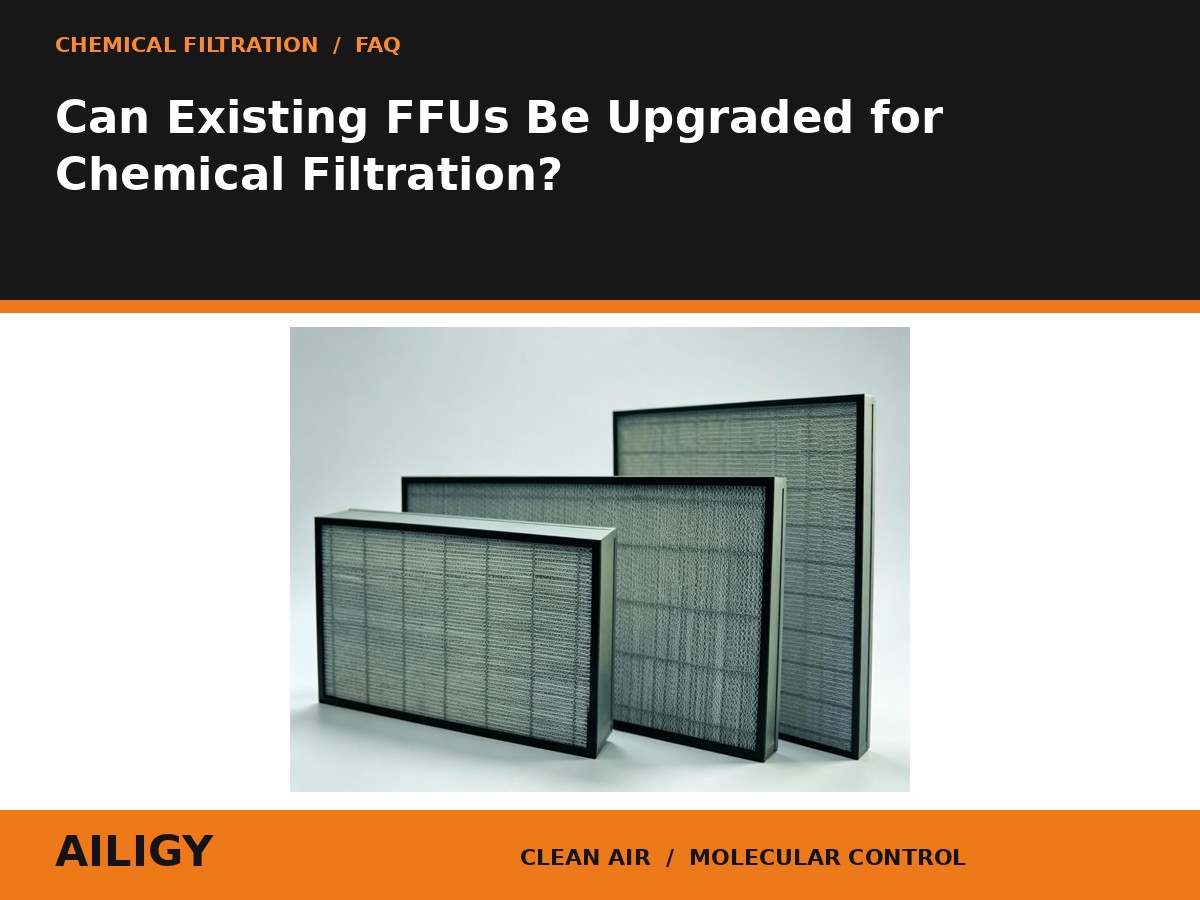 Whether ordinary FFU can be changed to FFU with chemical filtration requires checking the fan margin, structural space, sealing interface and wind speed target. You can’t just put a layer of filter material in the air inlet and consider the transformation complete.
-
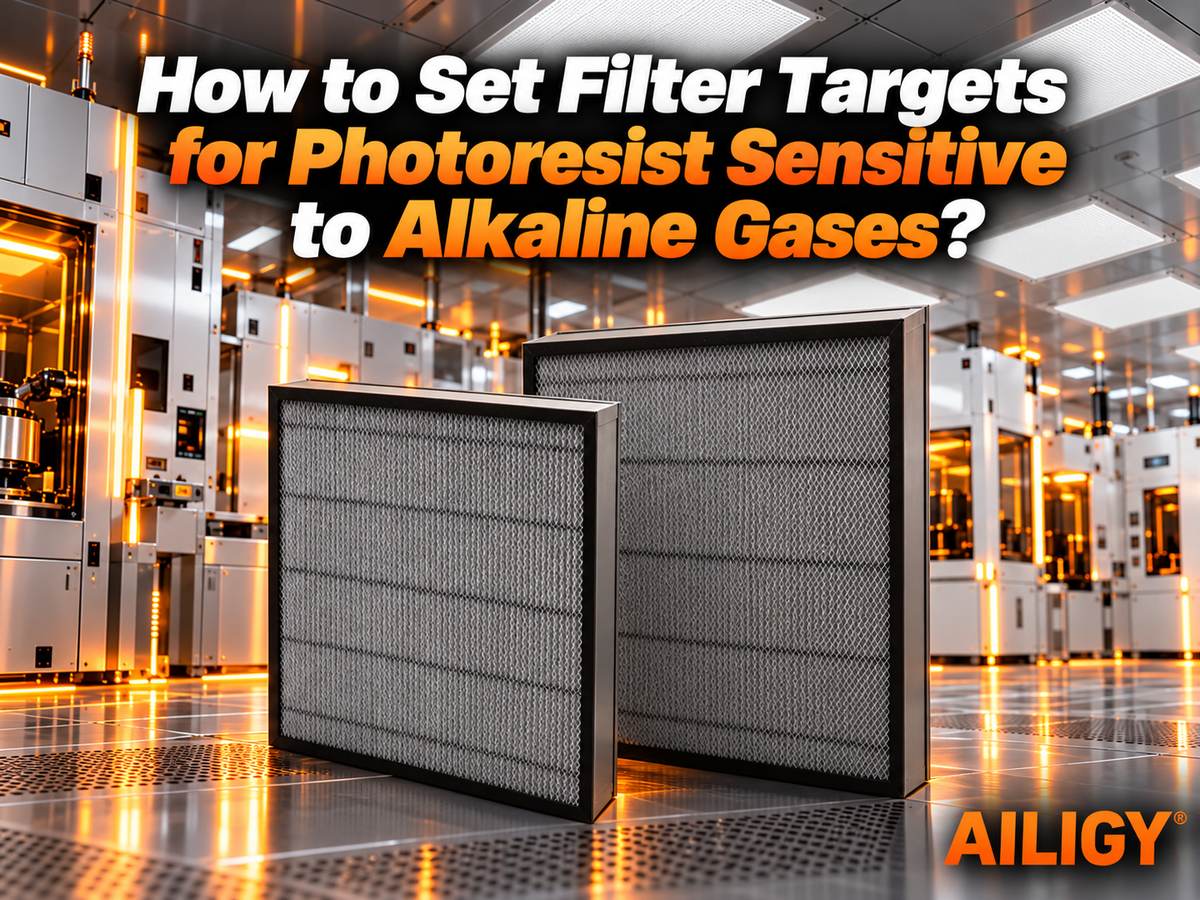 This article explains that when the photoresist is sensitive to alkaline gases, the filtration target should be determined based on the specific photolithography process, material and equipment requirements. General deodorization standards or some universal AMC values cannot be directly regarded as requirements for the entire photolithography area. The article follows four steps: clarifying sensitive objects and detection calibers, assigning targets to actual protection locations, applying check points, verification and subsequent use. It points out that ammonia and amines should be distinguished and the actual use location of photoresist should be verified.
-
 Pharmaceutical shop chemical filters can be configured for matching gaseous contamination, such as specific organic gases or external odors. It is not a substitute for the respective control measures required for particulate, biofouling and process emissions.
-
 Whether the data center chemical filter treats fresh air or recycled air should be determined based on the source of pollution and the air path. When the external input is obvious, focus on the fresh air section. Internal accumulation or local protection needs may require circulation or regional treatment.
-
 Chemical filtration and particle filtration in the LCD workshop need to be divided according to the pollution objects, and jointly match the process, air flow and cleanliness requirements. The chemical filter section handles the corresponding gases, and the particle filter section handles the corresponding particles. The efficiency of the two cannot be replaced by each other.
-
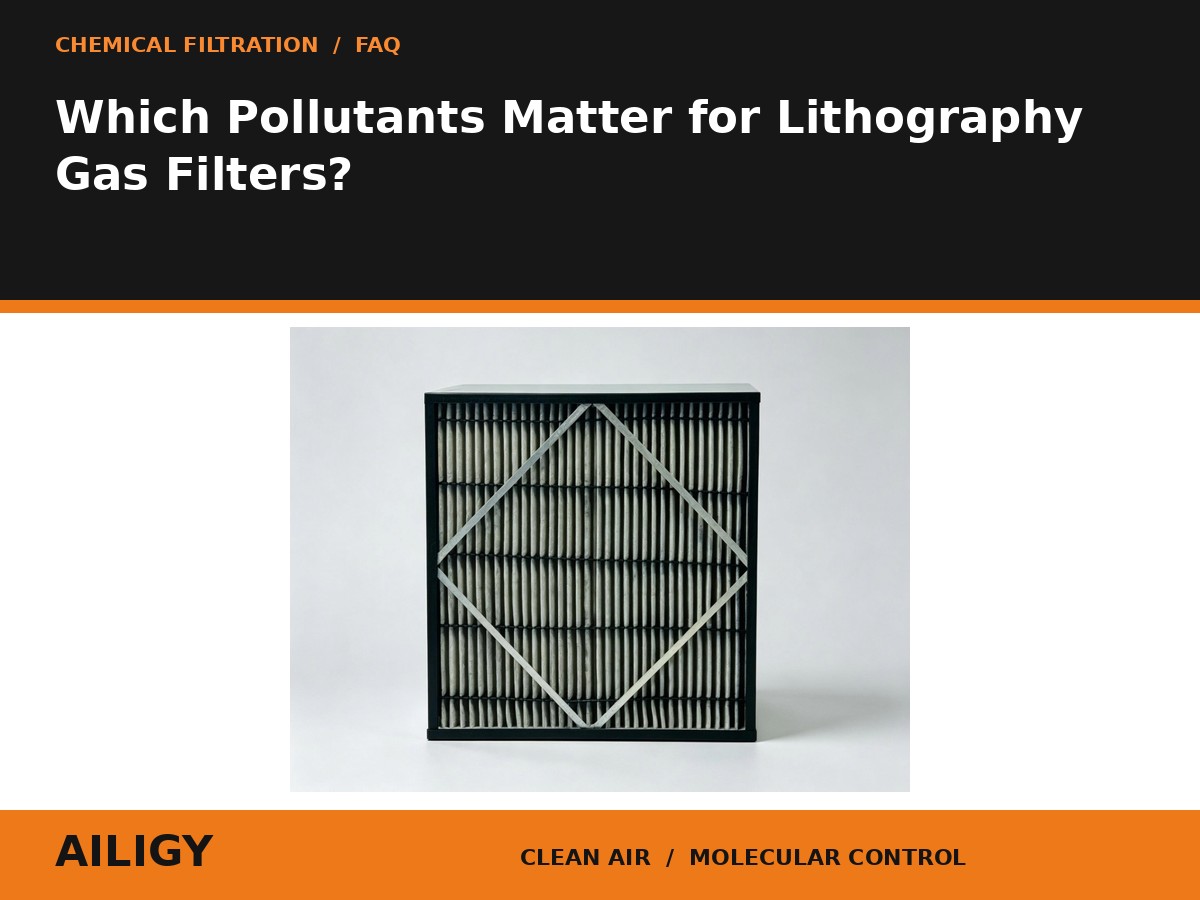 The key pollutants of the chemical filter in the photolithography area should be determined based on the photolithography process, materials and equipment requirements, and may involve alkaline, organic and other related molecular pollution. You cannot apply the same ingredient list or concentration target to all photolithographic areas.
-
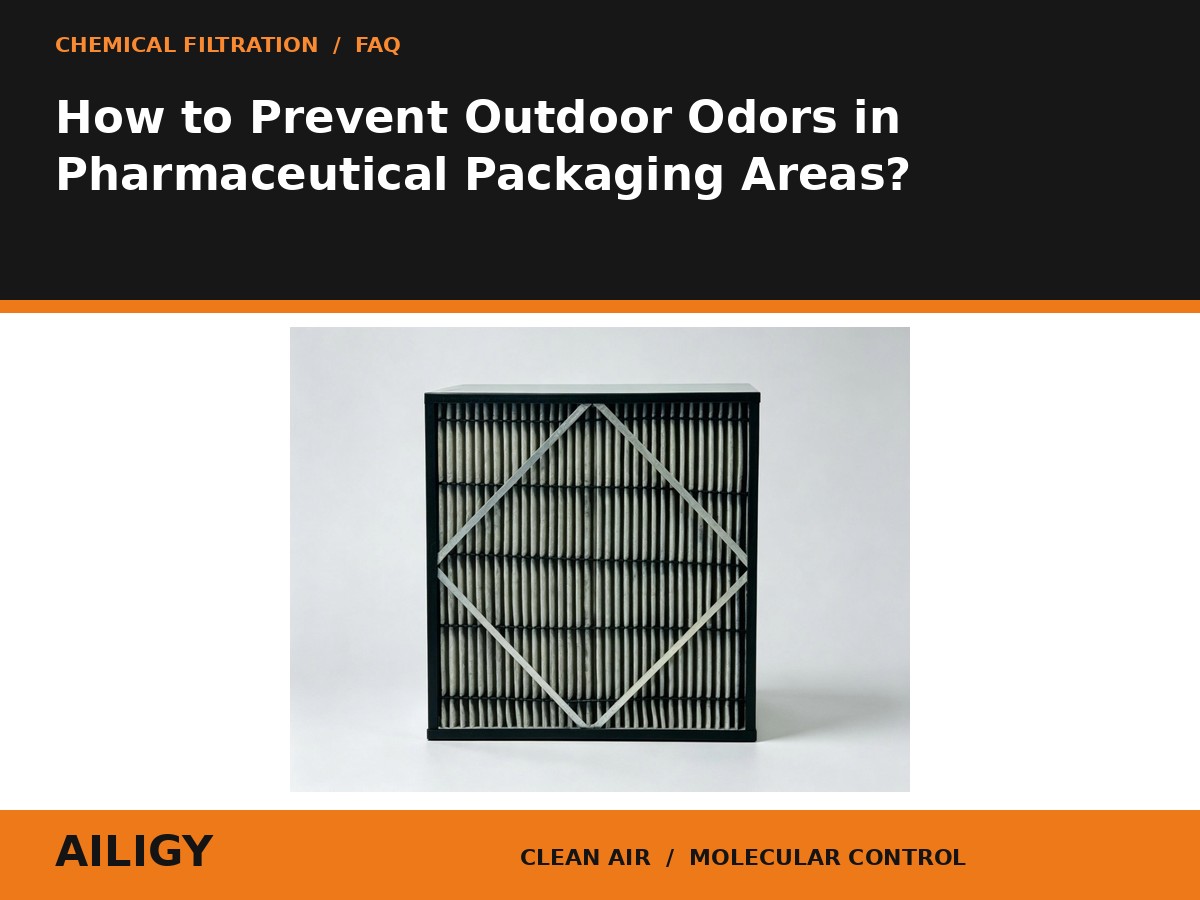 To reduce the input of external odors in the pharmaceutical packaging area, it is necessary to check the fresh air outlets, door area air paths and air supply and exhaust balance at the same time. Chemical filtration can assist with matching gases but is not a substitute for source and ventilation path management.
-
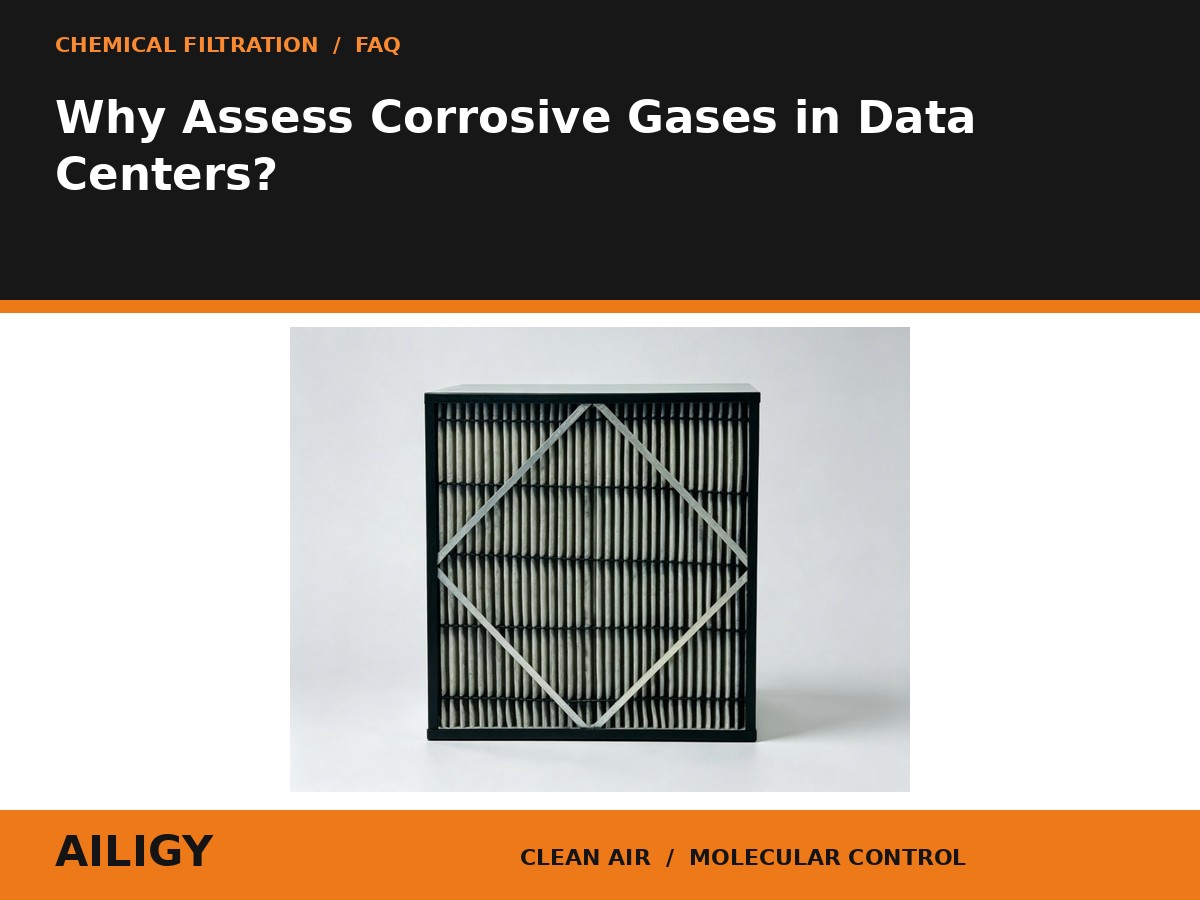 Data centers evaluate gaseous corrosion contamination to identify environmental factors that may affect the reliability of electronic components. Particle filtration, temperature and humidity are normal, but it still cannot prove that relevant corrosive gases do not exist.
-
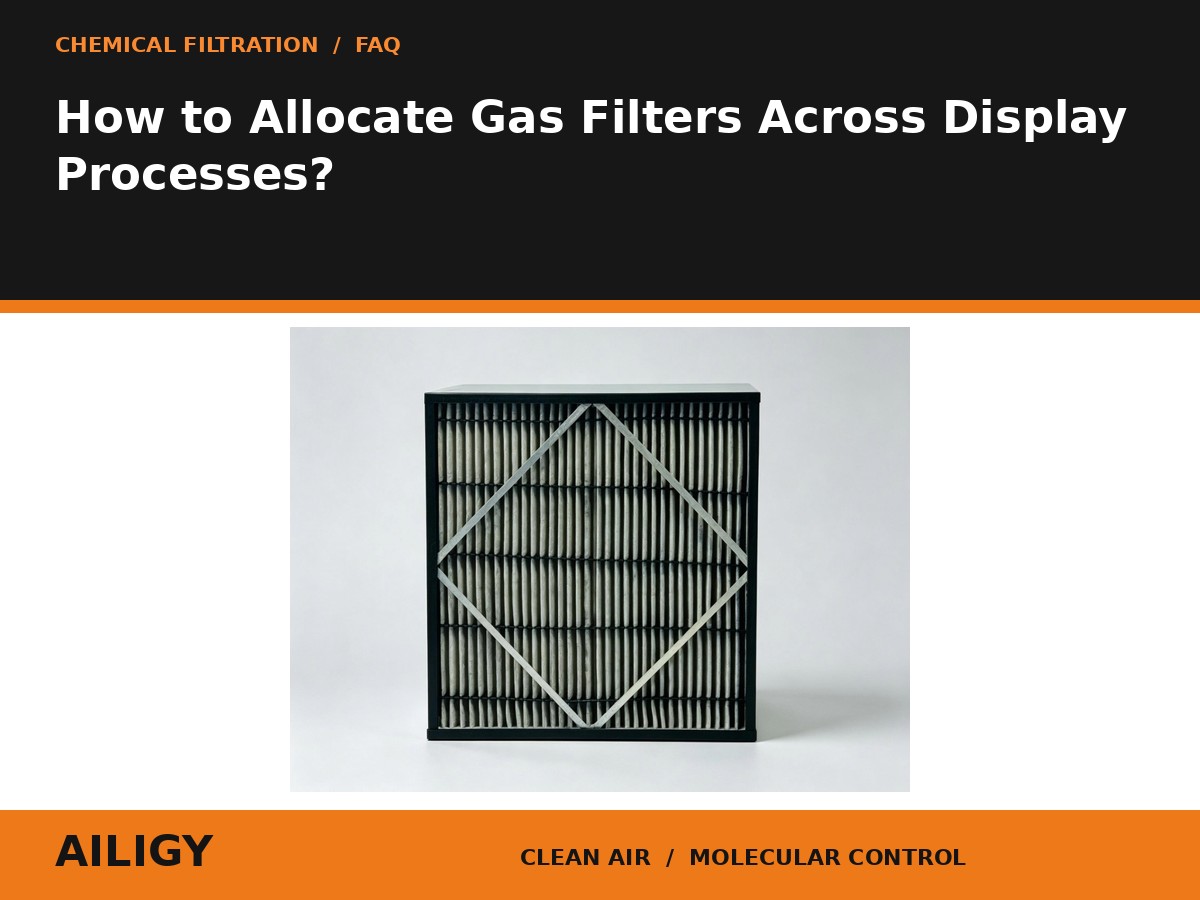 The chemical filtration in the panel production workshop should be configured according to the pollution components, sensitive objects and air paths of each process. The materials and protection requirements used in different processes may be different, and it is not appropriate to uniformly configure the same filter material according to the workshop area.
-
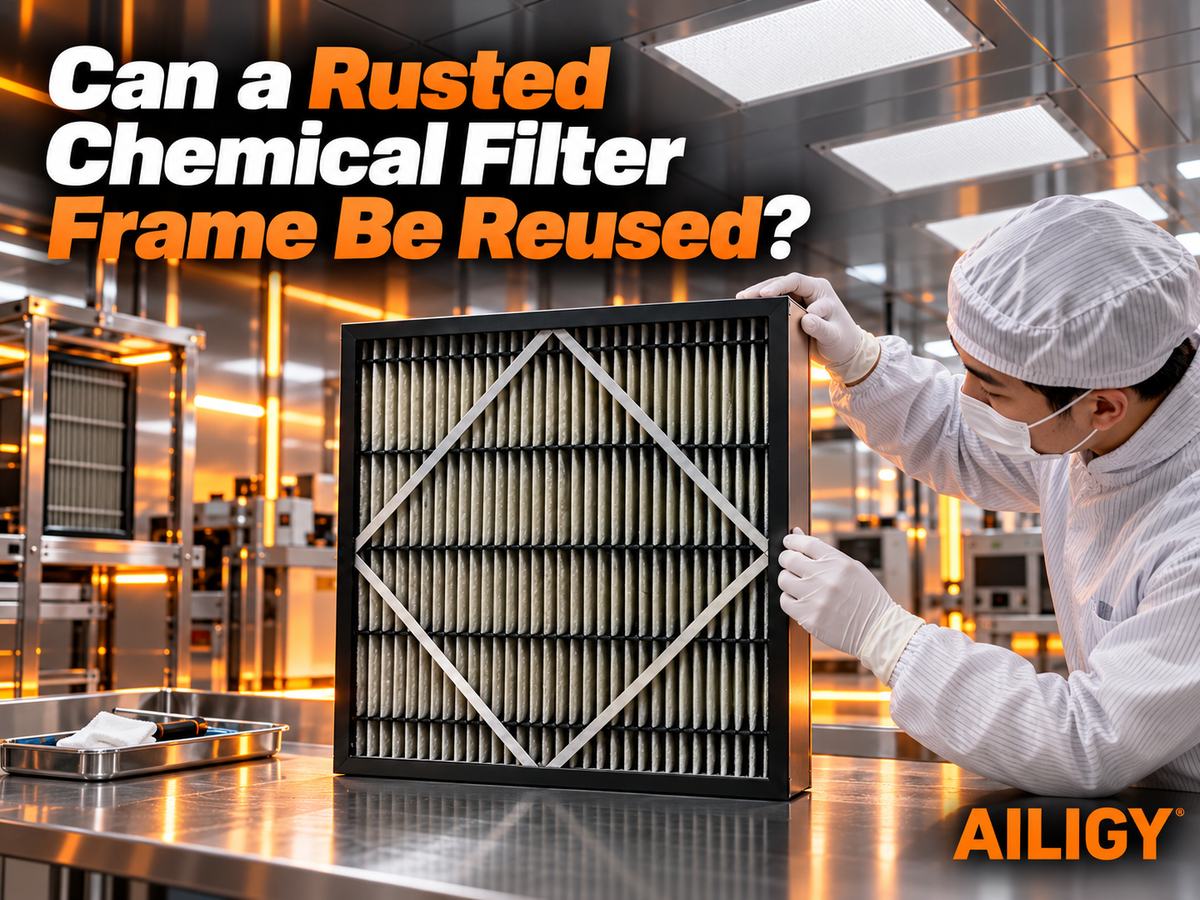 This article explains whether the rusted old frame of a chemical filter can continue to be used. It is necessary to check the corrosion degree, structural strength, sealing contact surface and cleanliness requirements. It cannot be considered that the original frame still has reliable support and sealing capabilities just by removing visible rust. The article starts with four steps: first finding the cause of corrosion, confirming the structure and sealing status, applying check points, verification and subsequent use. It points out that corrosion of the sealing surface may cause bypass and affect the actual filtration effect.
-
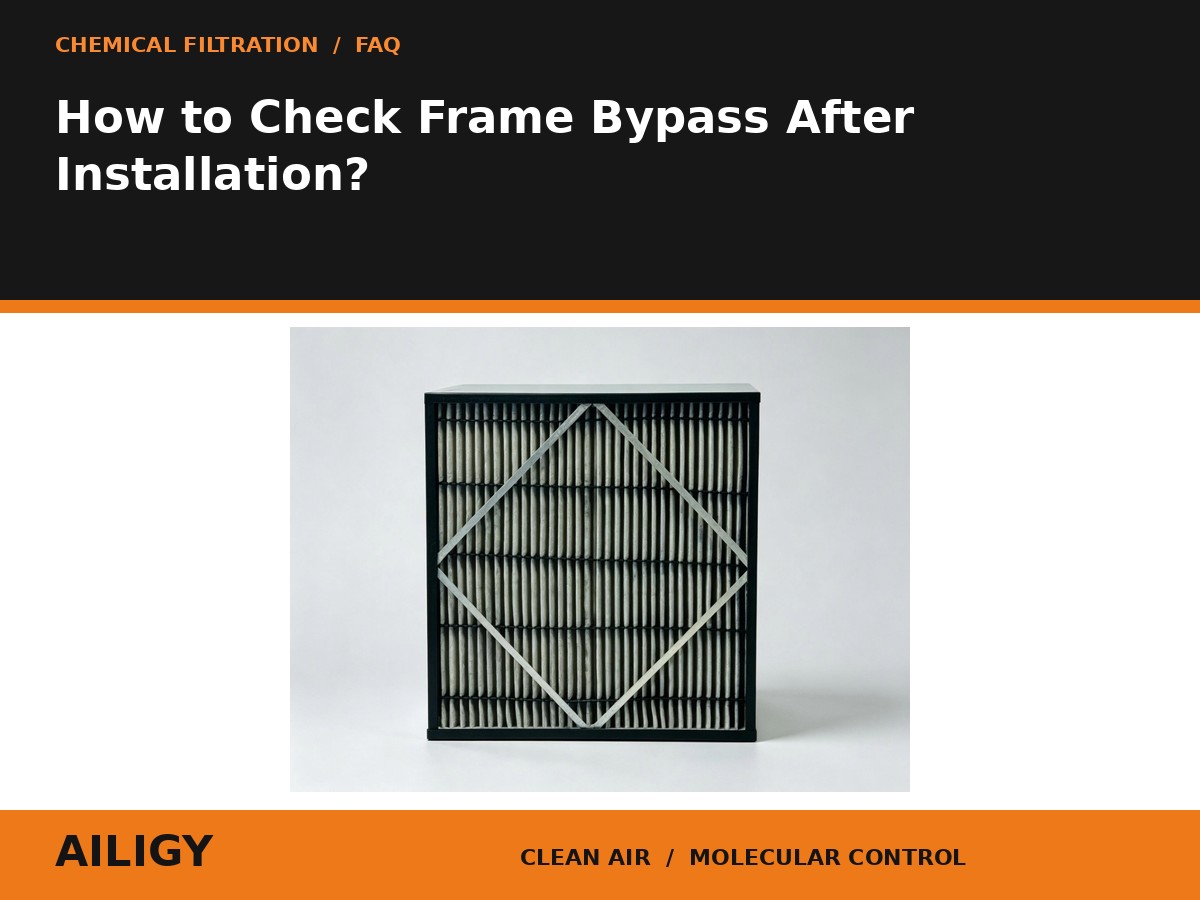 Check the frame bypass after the chemical filter is installed. The gaskets, compression pieces, frame contact surfaces and surrounding air paths should be checked. If necessary, a leak inspection method suitable for the system should be used. Abnormal gas outlet readings do not alone prove bypass location.
-
 Chemical filter validation requires keeping production loads comparable, or differences being clearly documented and analyzed separately. If the materials, output or cleaning activities are different before and after the trial, the outlet changes cannot be entirely attributed to the filter.
-
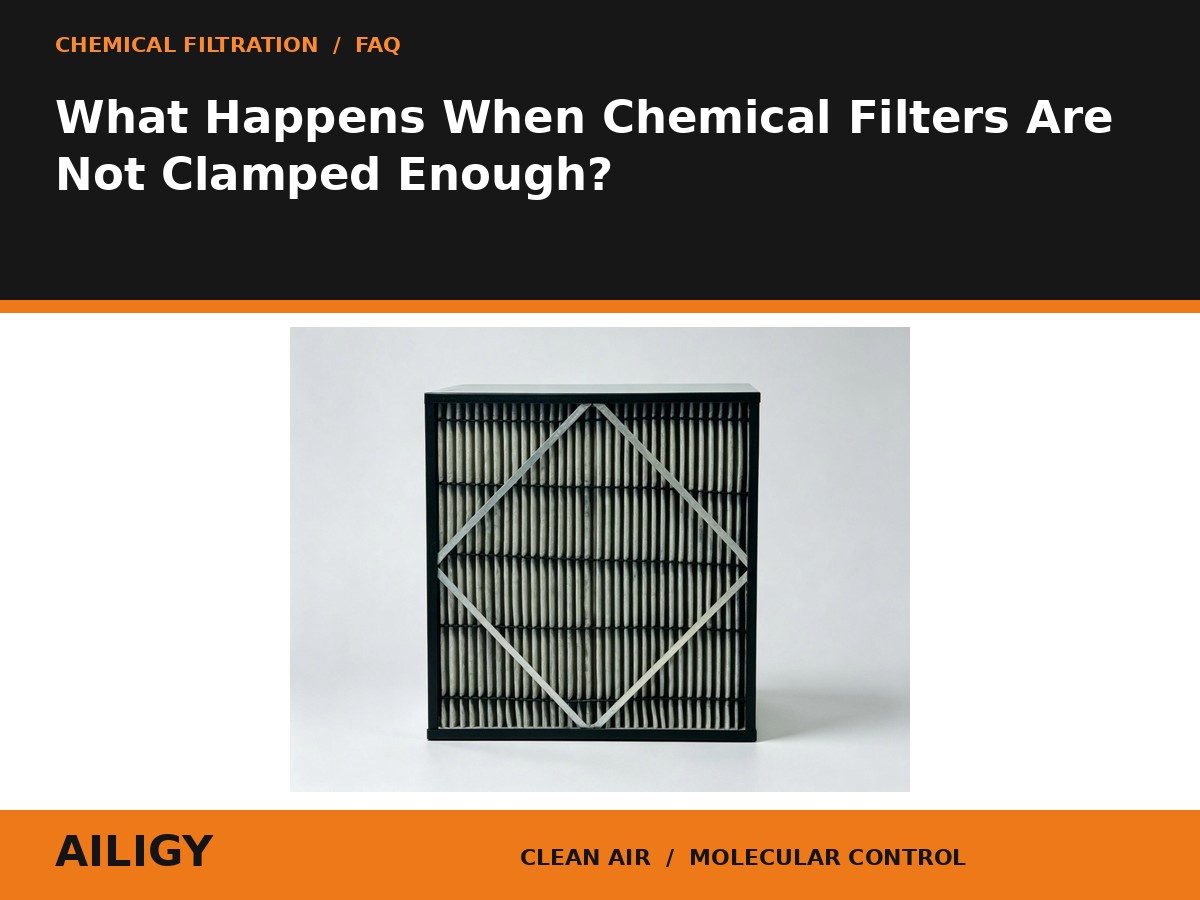 Insufficient compression of the chemical filter may cause frame bypass, loose position, or operating vibration, causing some air to not pass through the filter material as designed. Even if the filter material is suitable, the overall outlet effect may be reduced due to installation problems.
-
 The concentration at the filter inlet and outlet should be measured in pairs that can represent the same working conditions. Synchronization or appropriate time matching is particularly important when inlet fluctuations are significant; otherwise the calculated removal efficiency may be distorted.
-
 Whether the chemical filter gasket faces the air inlet side or the air outlet side should be determined according to the frame contact surface, pressing method and product description. There is no fixed answer that applies to all structures, the core is creating a continuous, uniform and reliable seal.
-
 Chemical filter performance verification usually requires sampling at the inlet and outlet of the filter section, and the system protection effect should also be checked in key areas. The points should represent real airflow and avoid being close to local exhaust outlets or being interfered by untreated air.
-
 Before trialling a chemical filter, baselines should be established for target gases, inlets and protected areas, actual air volume and environmental conditions. The baseline needs to cover representative pollution periods and cannot be measured only once when production is stopped or when there is no odor.
-
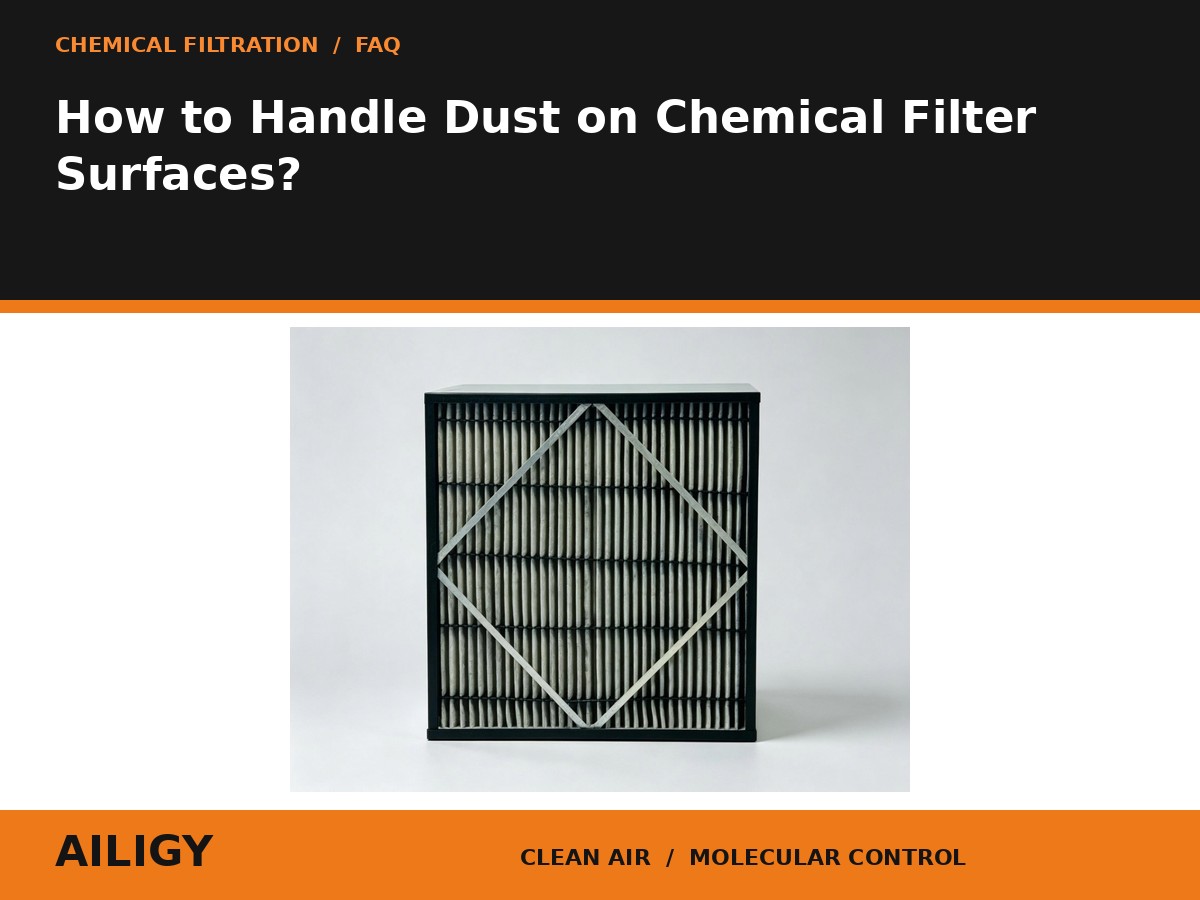 When there is dust on the surface of the chemical filter, you should first confirm the degree of dust accumulation, front-end protection and product maintenance instructions. Water washing, beating or high-pressure blowing cannot be used by default; removing dust does not mean restoring gas processing capabilities.
-
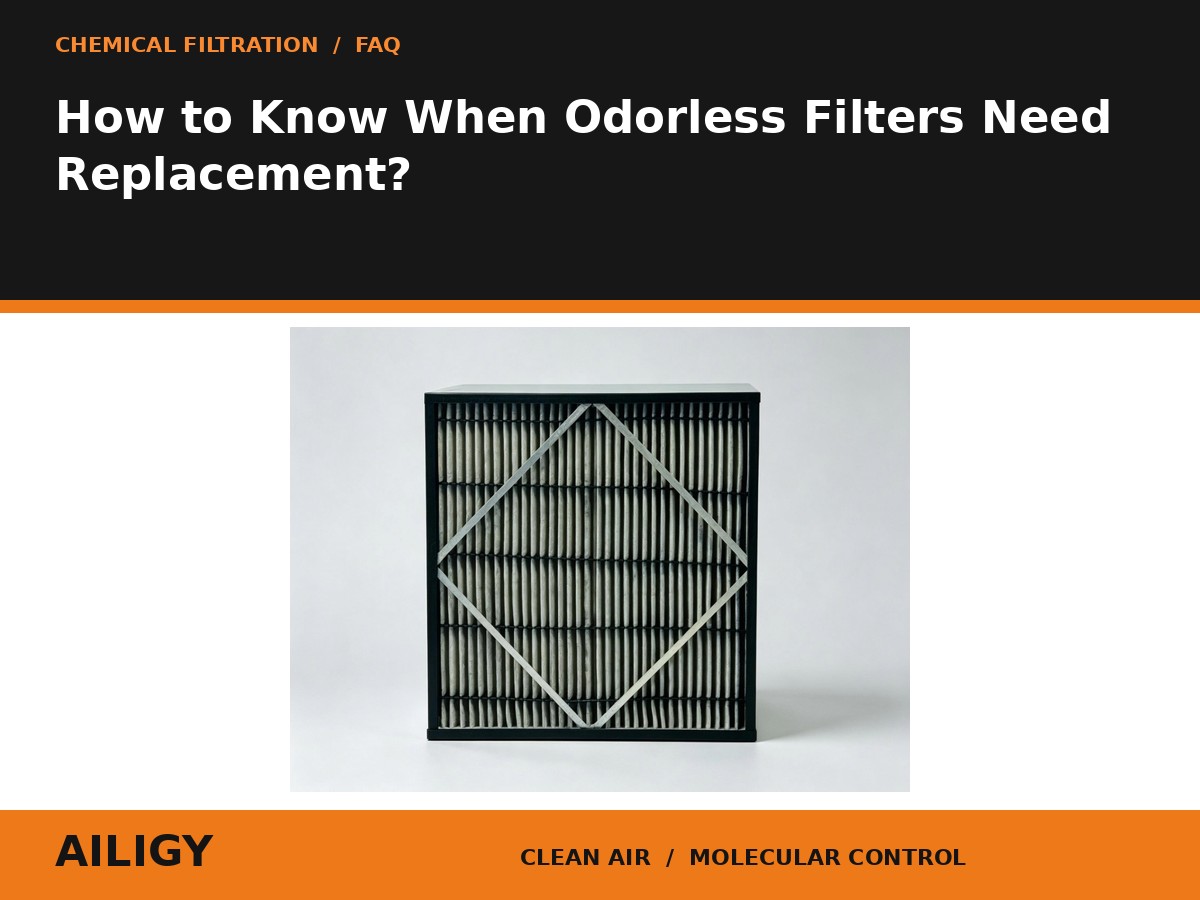 Chemical filters have no odor and need to be replaced based on target gases, outlet trends, load records and necessary remaining capacity assessments. Some gases are difficult to detect, and the equipment protection target may also be lower than the range of human smell judgment.
-
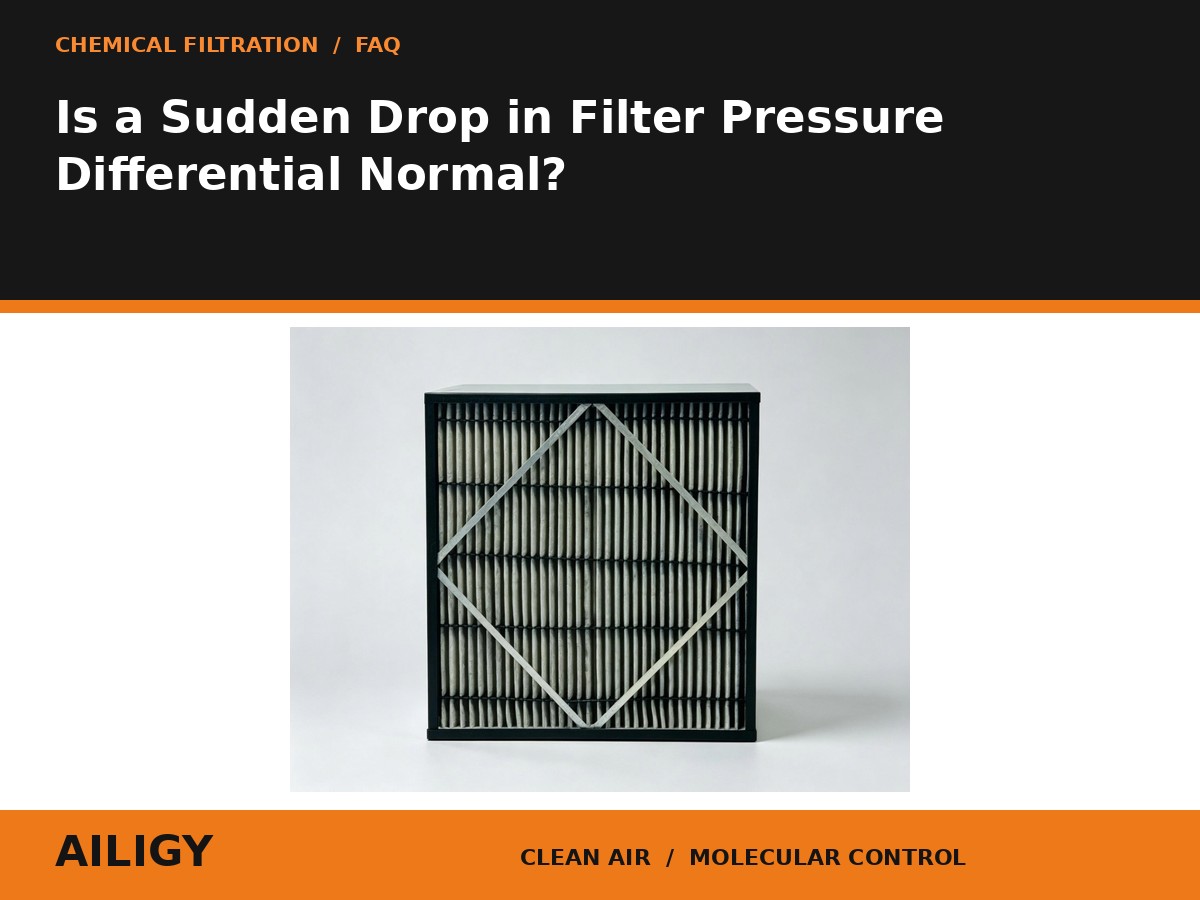 If the pressure difference suddenly becomes low during the operation of the chemical filter, it may not necessarily be a normal improvement. It may involve air volume drop, bypass, loose filter element or measurement failure. The fan, actual air volume and installation status should be checked simultaneously.
-
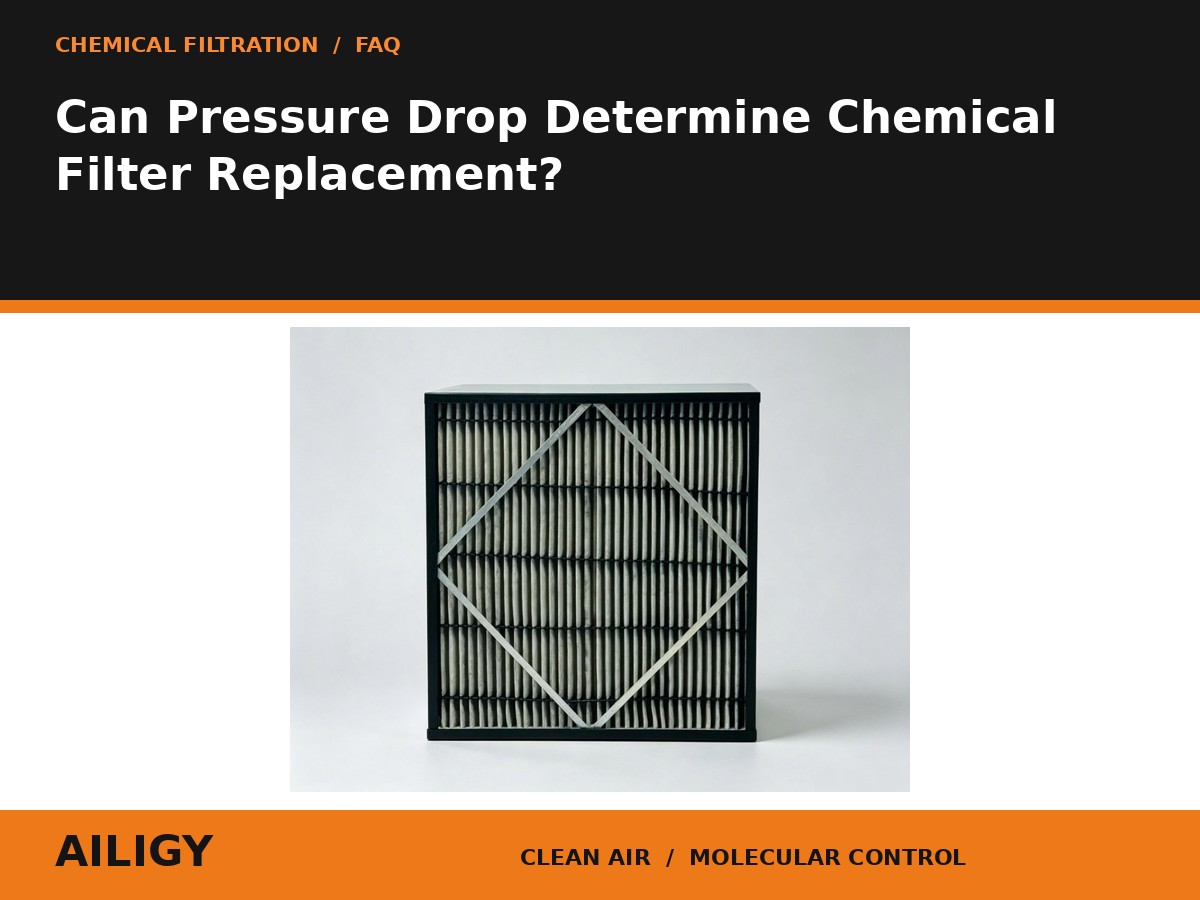 Chemical filters cannot judge gas failure simply by pressure difference. Particle clogging often increases resistance, while gas processing capacity consumption may not have significant changes in pressure difference; the two types of maintenance basis need to be separated.
-
 If the pressure difference before and after the chemical filter suddenly rises, factors such as the measurement pipeline, actual air volume, pre-filtration status, moisture and blockage should be checked. The pressure difference reflects the air flow resistance problem and cannot alone indicate that the gas adsorption capacity has been exhausted.
-
 Chemical filters usually cannot be cleaned and reused in the same way as ordinary washable filters. Water washing may change the medium state, processing ingredients, structure and cleanliness. Whether it is allowed or not must be based on the clear instructions of the corresponding product.
-
 The replacement cycle of chemical filters cannot be determined uniformly every six months because different gases, concentrations, air volumes and operating hours will cause different consumption. Calendar periods can be used for management, but need to be based on actual load and protection objectives.
-
 The chemical filter outlet concentration is higher than the inlet, which may involve factors such as sampling time mismatch, instrument differences, post-filter section release, bypass, or media desorption. It should be investigated based on evidence, and it cannot be determined that the filter element is causing contamination based on just one reading.
-
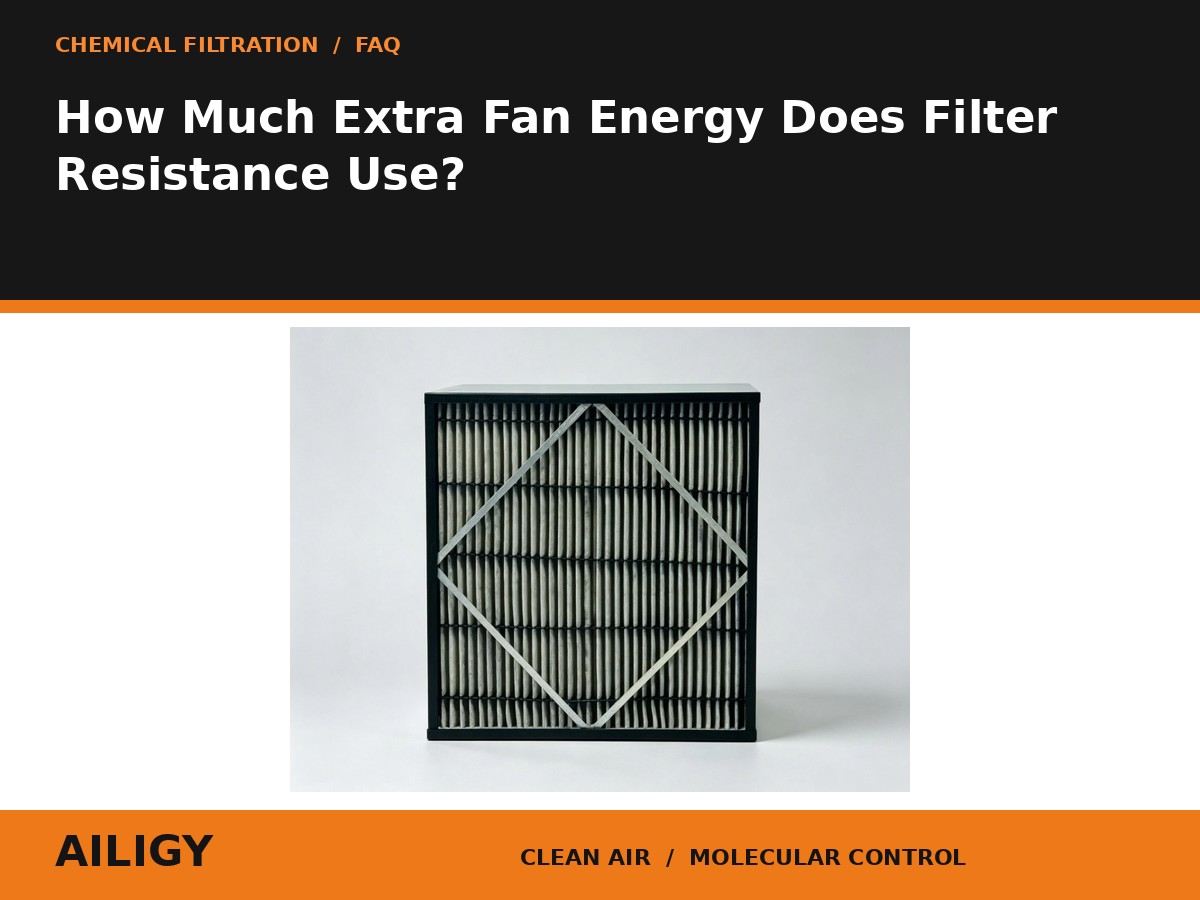 The amount of fan power consumption increased by the new resistance of the chemical filter needs to be calculated or measured based on the actual air volume, fan efficiency, control method and operating time. You cannot promise a uniform increase in power consumption based on just one pressure difference value.
-
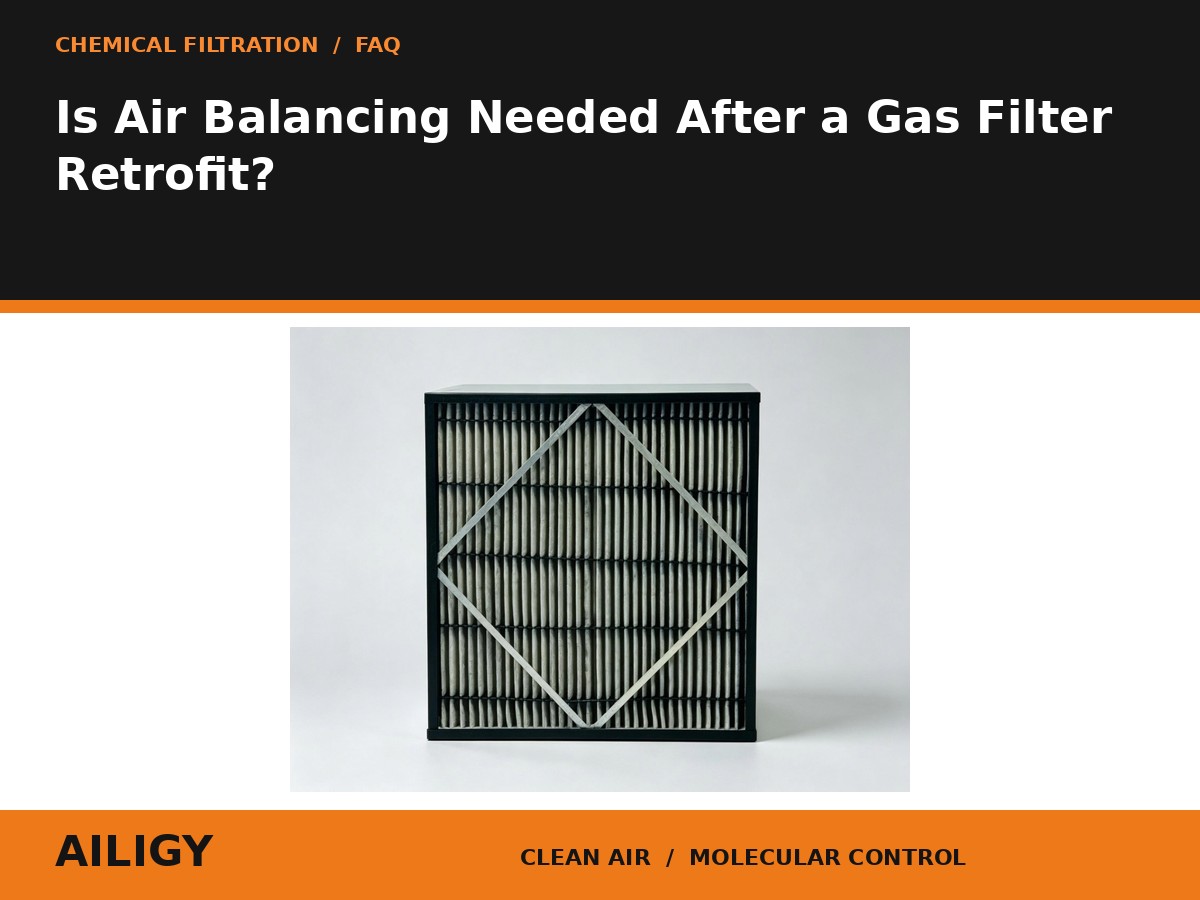 When chemical filtration modifications change system resistance or branch distribution, it is often necessary to recheck the air volume balance. Even if the total air volume does not change much, the supply air, return air and pressure difference in each area may still change.
-
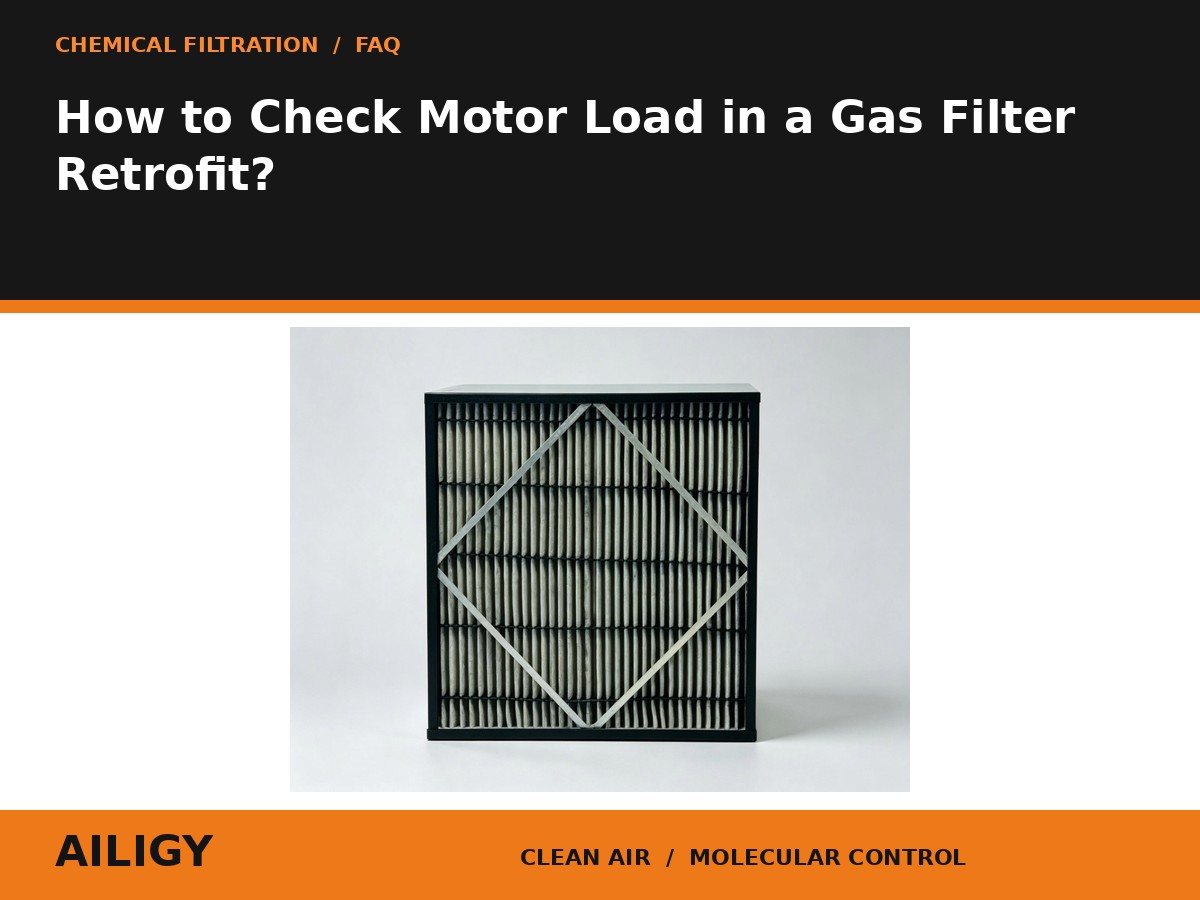 Checking the original motor load for chemical filter modification requires a combination of fan performance, control settings and actual operating measurements. The changes in air volume and power after adding resistance are affected by the fan type and control method, and cannot simply be assumed to be overloaded or power-saving.
-
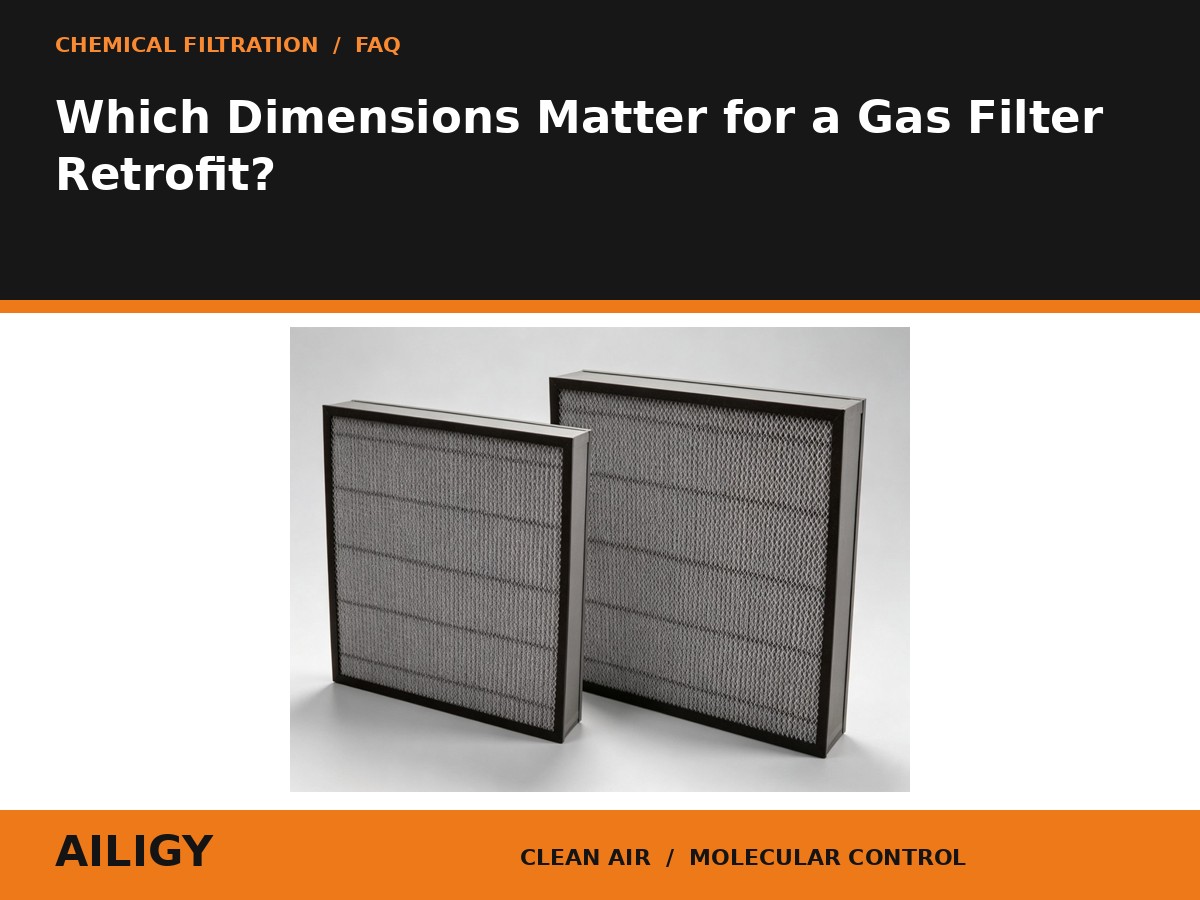 Chemical filtration modification measurements should cover the clear opening of the filter frame, installation depth, sealing contact surface, compression structure and removal path. It is also necessary to pay attention to the wind path, load-bearing and peripheral equipment, and should not just measure the length, width and height.
-
 Old equipment without drawings can still evaluate chemical filtration modifications through on-site measurements and operational surveys, but interface, fan and structural verification cannot be skipped. Hidden spaces and conditions that cannot be confirmed should be clarified before design.
-
 Chemical filters can be evaluated and installed incrementally by area, provided that the pollution paths and ventilation connections in each area are clear. Phased implementation does not mean that the areas are completely independent. Shared return air or external input may still affect the overall effect.
-
 Chemical filtration retrofit downtime depends on the scope of work, installation location, cleaning recovery and acceptance steps, and there is no universal set number of hours. A plan including construction, cleaning, commissioning and verification should be given after the on-site verification is completed.
-
 To avoid affecting the room pressure difference, the chemical filter modification needs to check the balance of supply air, return air and exhaust air at the same time. New resistance may change the air supply volume, and you cannot just rely on restoring a certain fan speed to ensure a stable room pressure difference.
-
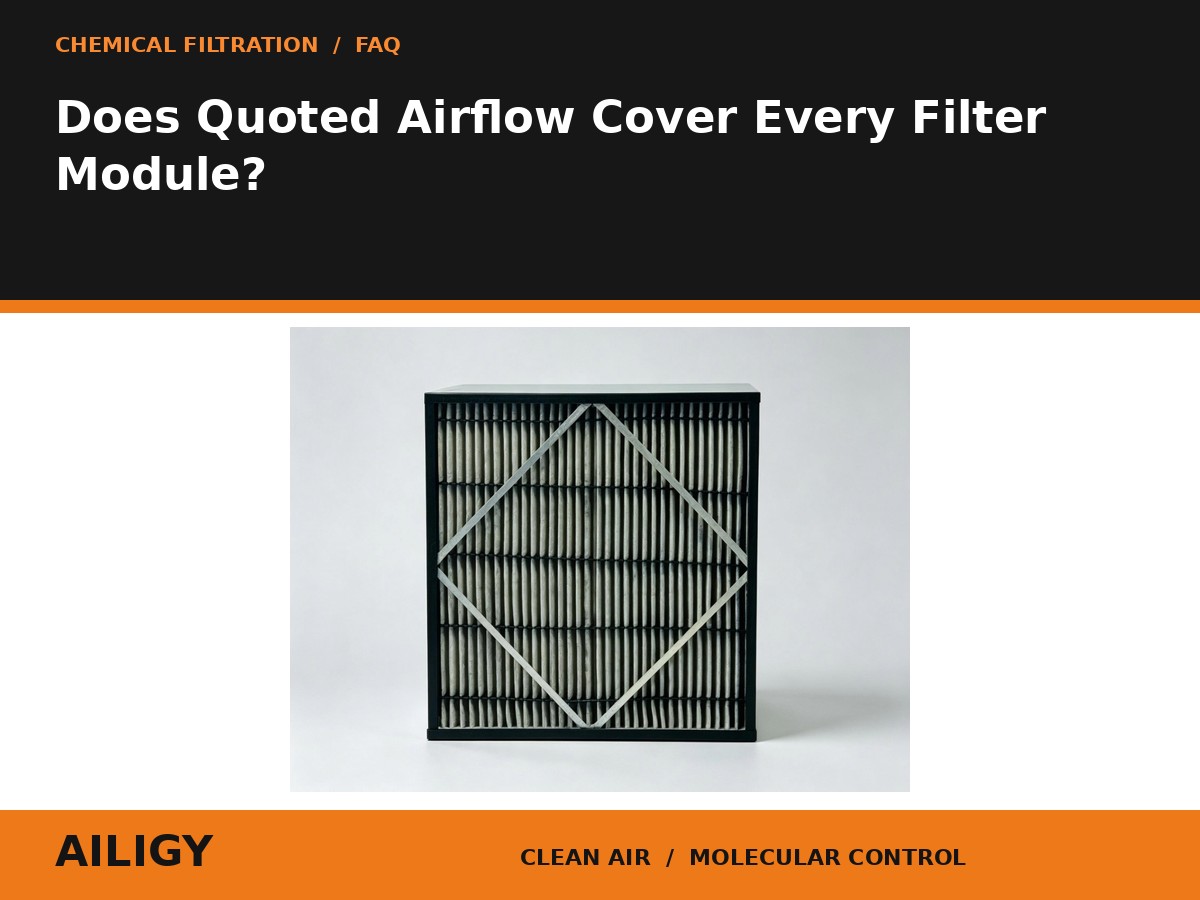 The air volume in the chemical filter quotation may be the rated air volume of a single module, or it may be the designed processing capacity of the entire set. The caliber needs to be clearly stated in the quotation. The number of modules, series-parallel relationship and actual allocation determine the system capability and cannot simply be added up by quantity.
-
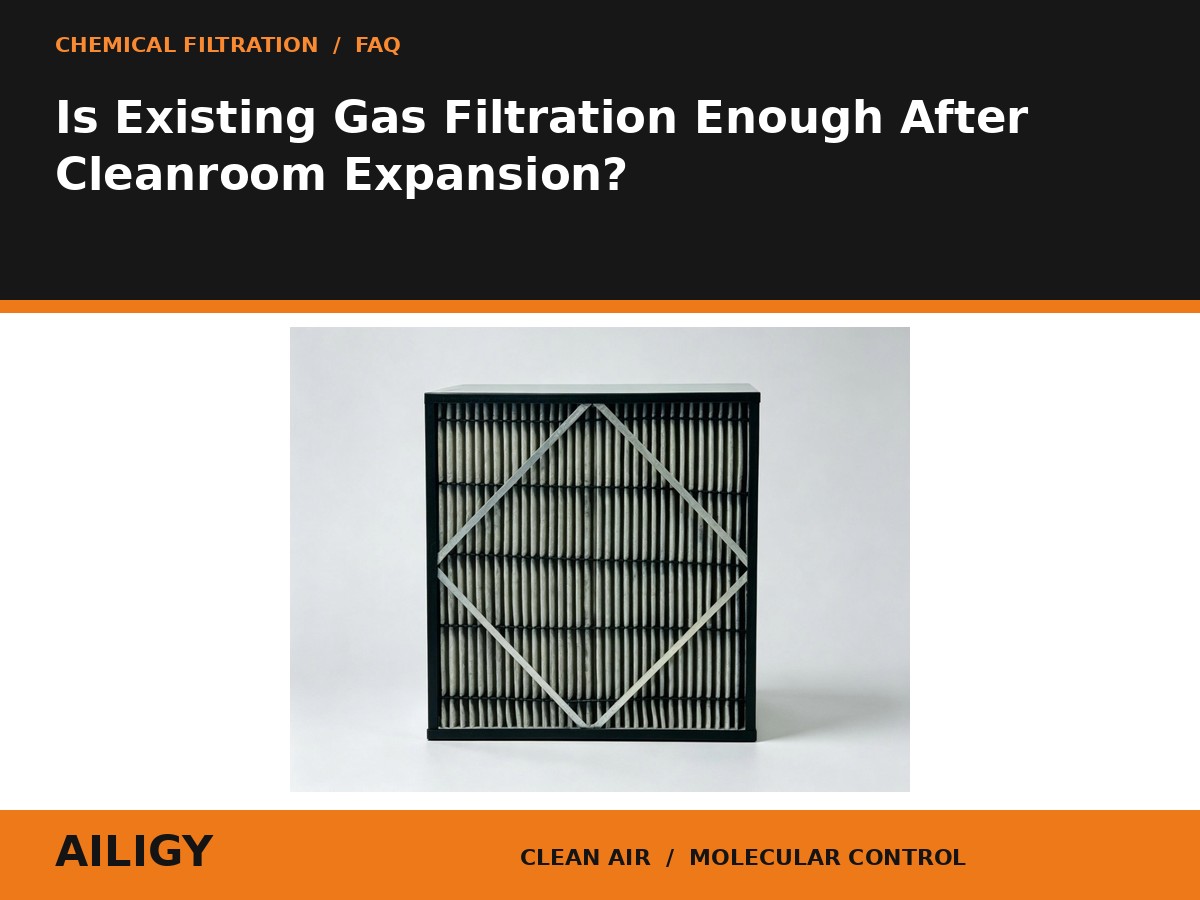 After the clean room is expanded, whether the original chemical filtration capacity is sufficient requires rechecking the treatment air volume, gas load, area sensitivity and air path. The increase in area is not necessarily proportional to the load, but the original plan cannot be used directly.
-
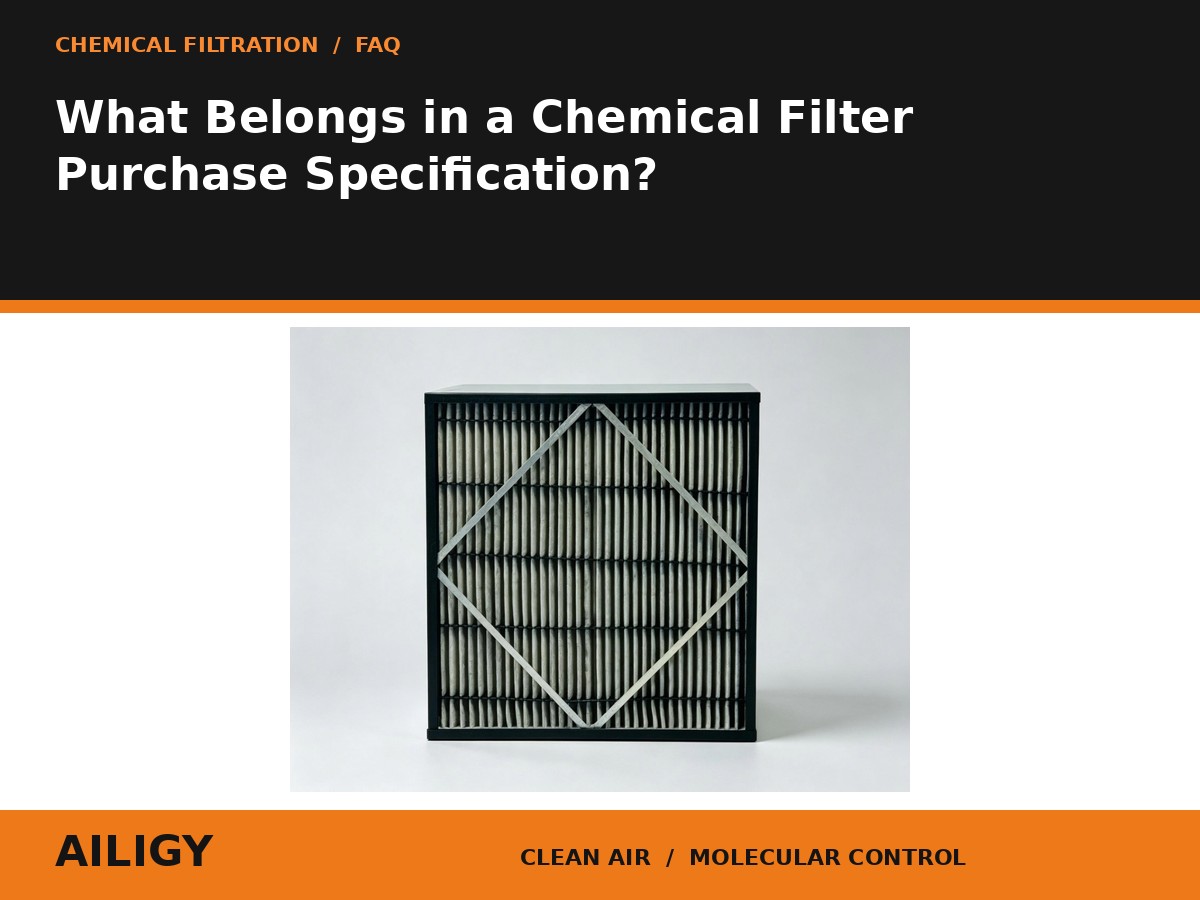 The chemical filter procurement specification should include target gas, air volume, environmental conditions, structural interfaces, performance basis and acceptance method. A complete description will allow the supply to correspond to project requirements, and avoid just writing about dimensions and general removal rates.
-
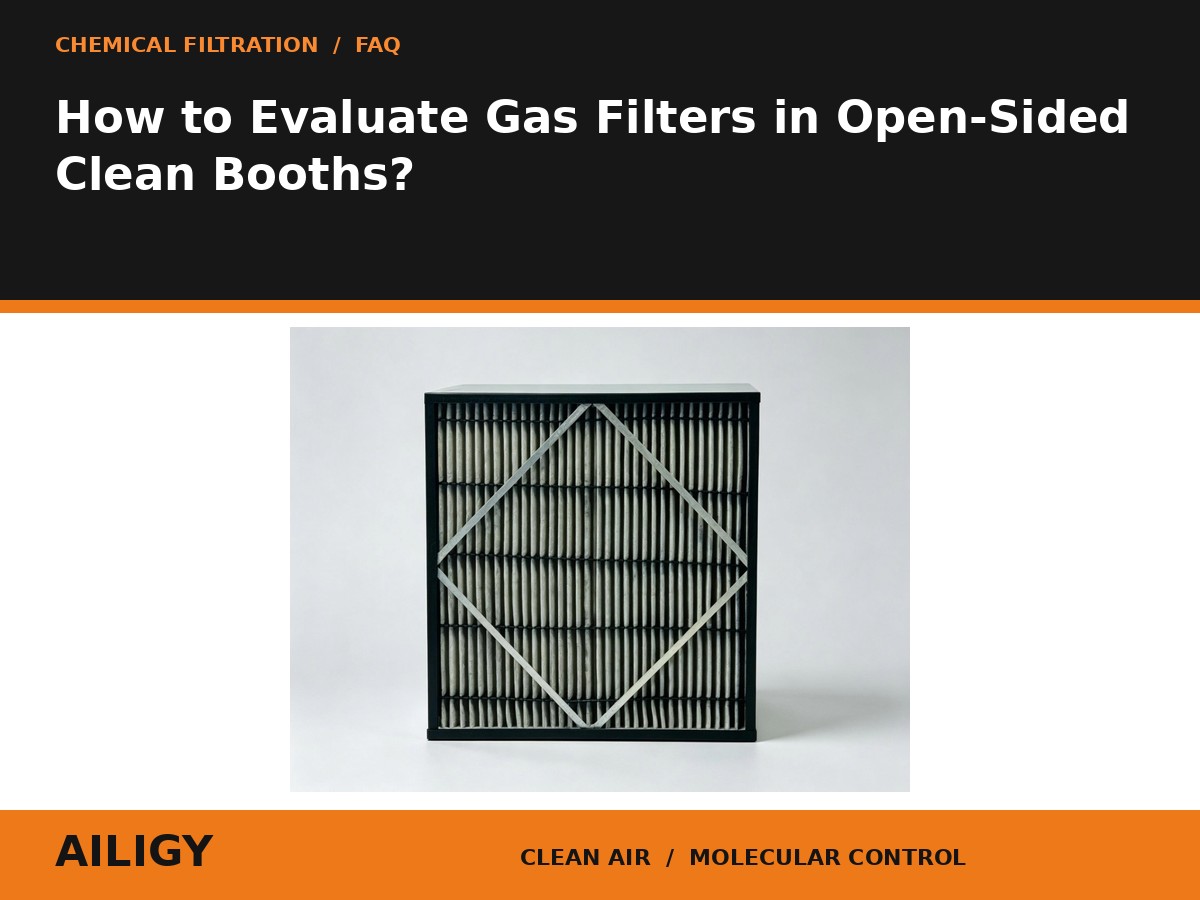 When evaluating chemical filtration effects in a clean booth with surrounding open areas, it is necessary to focus on checking the entry of untreated air and local airflow coverage. Good performance at the outlet of the filter section does not necessarily mean that the gas concentration in the entire open area has been controlled.
-
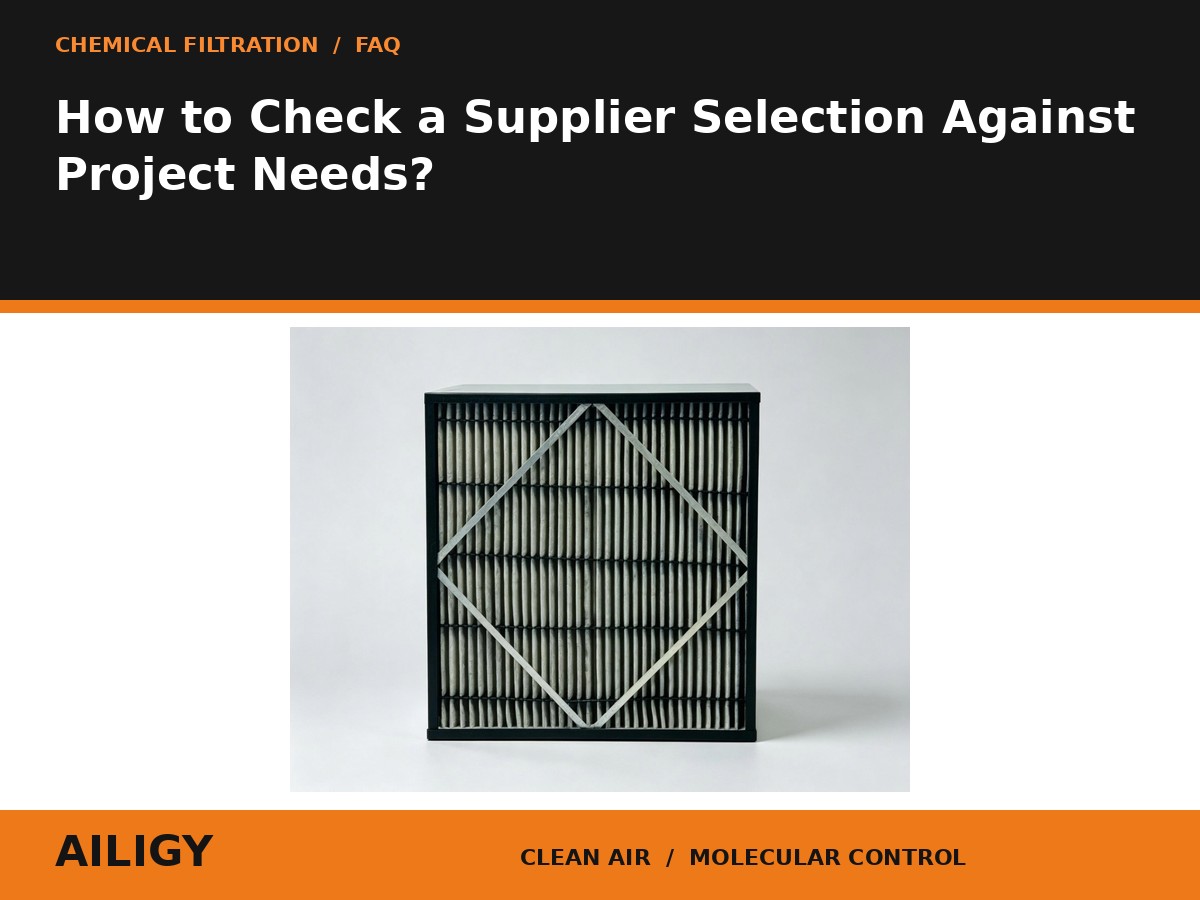 Check the chemical filter manufacturer's selection recommendations and correspond to the target gas, air volume, environment, interface and acceptance requirements one by one. Recommended models or brand experience cannot replace performance and adaptation evidence with clear conditions.
-
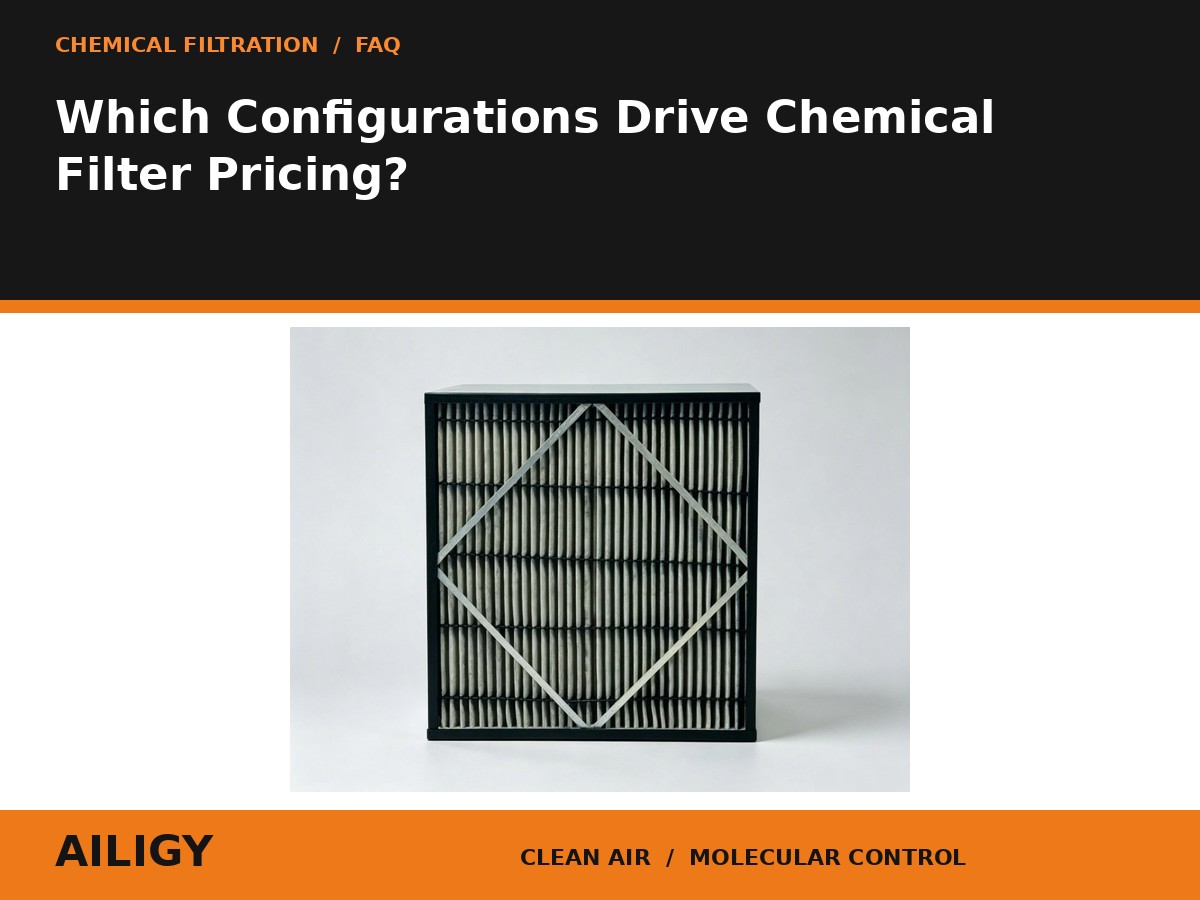 The price of chemical filters is mainly affected by the type and quantity of media, structural size, effective area, sealing method and scope of supply. Quotation comparison should be based on the same target gas and usage conditions, and cannot just compare each price.
-
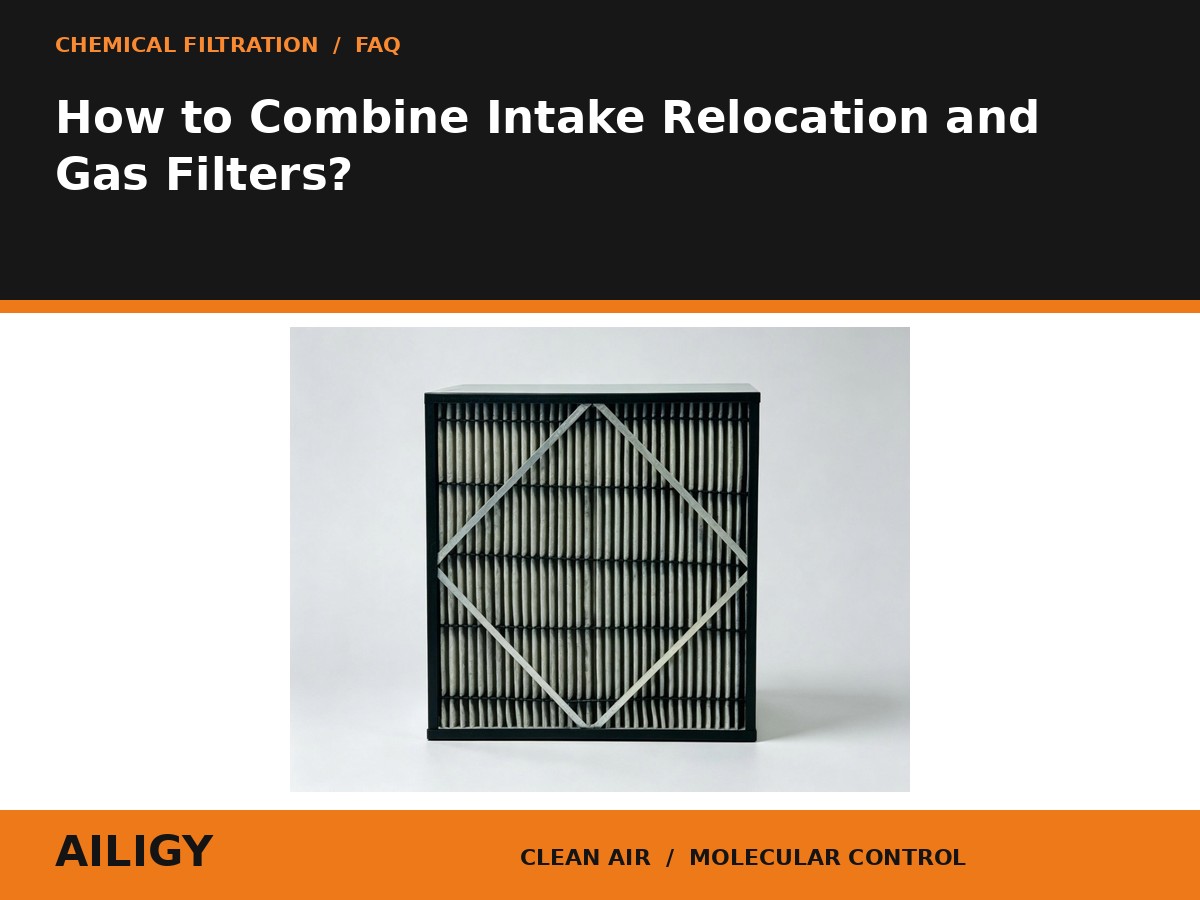 When the factory is close to the pollution source, the air inlet migration and chemical filtration should be compared with the measured load at the inlet, wind direction and system conditions. Improving the input location can reduce partial loads, but increased distance alone does not guarantee a solution to the gas problem.
-
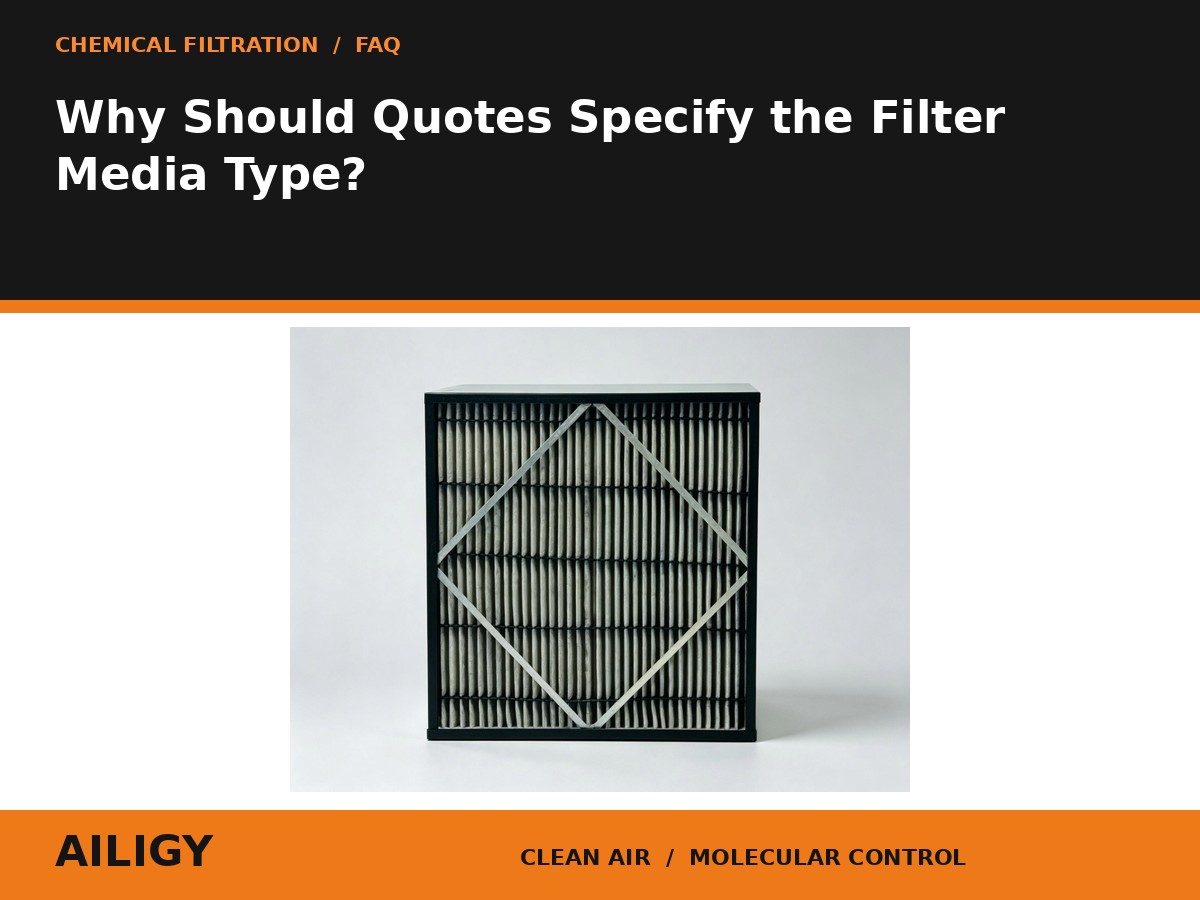 The chemical filter quotation indicates the type of filter material, which helps to confirm the target gas, capacity and usage conditions, and avoids comparing inequivalent products based only on appearance and price. Quotes should also be understood in conjunction with media configuration and relevant performance data.
| Product direction | Main contents to check |
| FFU matching chemical filter | Coordination of circulating air flow, target gas, wind speed and particle filtration |
| Box chemical filter | Dealing with air volume, media configuration, frame sealing and replacement space |
| Flat chemical filter | Available depth, effective area, processing power and interfaces |
| V type chemical filter | Module layout, air volume, resistance, capacity and system adaptation |
| Synergy | Effect on the project |
| air filter manufacturing | Check product form, size, media configuration and related performance conditions |
| Motor and fan matching | Evaluate air volume, static pressure and operating margin under new resistance |
| Control system development | Coordinate with equipment operation, speed regulation and system control requirements |
| Sheet metal and structural processing | Check frames, interfaces, supports, seals and maintenance spaces |
| Complete machine assembly and testing | Verify filtration, air supply, structure and control conditions together |

Aili industrial box-type chemical filters are mainly installed in MAU fresh air units, air handling units and centralized HVAC systems to control AMC air molecular pollutants in the air. Depending on the target pollutants, different chemical filter materials such as 853 (2750), 147 (2752), and 875 (2751) can be selected to adsorb VOCs, acidic gases, alkaline gases and other specific gaseous pollutants through activated carbon, composite adsorption materials, etc. The product adopts galvanized steel plate, 304 stainless steel or aluminum frame and can be customized according to MAU installation size, air volume, pollutant type and operating conditions.
Inquiry

Aili Industrial FFU matching chemical filter is a chemical air filtration product installed inside the FFU or on the air inlet side of the FFU. It is mainly used to control AMC air molecular pollutants in the clean room air. The product is equipped with corresponding chemical adsorption materials according to different types of pollutants, and can perform air treatment for acidic gases, alkaline gases, VOCs, condensable organic matter and some process-related molecular pollutants. The product adopts a modular design adapted to the FFU structure and can be customized according to FFU size, installation space, air volume, pollutant type and usage conditions. It is suitable for clean environments such as semiconductors, electronic manufacturing, pharmaceuticals, biotechnology, and laboratories. FFU → Chemical Filtration → AMC Control → HEPA/ULPA → Clean Air
Inquiry

Aili industrial flat-plate pleated micro-pleated AMC chemical filter adopts a flat-plate pleated structure, which achieves the adsorption of gaseous pollutants by increasing the expansion area of the filter material. The product can be used in MAU air handling units, clean room fresh air systems and other air treatment equipment. It is equipped with 853 (2750), 147 (2752), 875 (2751) and other chemical filter materials according to the type of pollutants. It is suitable for the control of VOC, acid gas, alkaline gas, ozone, sulfide and some semiconductor process-related molecular pollutants. The product uses an anodized aluminum profile frame, double-sided protective net and low chemical release EPDM sealing material, and supports customization of size, filter material type, filter material thickness and structure.
Inquiry

Aili Industrial V-type chemical filter is a chemical air filter used to control gaseous pollutants in the air. It is mainly used in MAU fresh air treatment systems, clean room air systems, and production scenarios that require air environments such as semiconductors, electronics, and pharmaceuticals. The product adopts a V-shaped filter structure, which folds and combines chemical filter materials to form a larger effective filter area in a limited installation space. Depending on the target pollutants, chemical filter materials for pollutants such as VOCs, organic gases, acidic gases, and alkaline gases can be configured. The product supports non-standard sizes and OEM/ODM customization, and can be configured according to the air volume, installation size, pollutant type and usage environment of the air treatment system.
Inquiry


Contact us now
Contact us now
