

HEPA high efficiency filter
H13, H14 grade, suitable for clean air supply in clean rooms and equipment
Aili Industry provides HEPA high-efficiency filters, which can be selected according to filtration grade, filter material, structure, sealing method and equipment interface. They are equipped with clean room terminals, FFU, EFU, BFU, high-efficiency air supply outlets and air treatment equipment.
The products cover configurations without partitions, with partitions, liquid tank seals, V-type and PTFE, and support standard specifications and non-standard size customization. Specific air volume, resistance, usage environment and testing requirements are subject to the corresponding product specifications and project agreements.

| name | content | name | content |
| filter level | H13, H14 | filter material | Glass fiber, PTFE |
| structure | Without partitions, with partitions, V-shaped | size | Standard specifications, non-standard customization |
| Sealing method | Gasket seal, liquid tank seal | Installation interface | Match according to box, frame and knife edge interface |
| Supporting equipment | FFU, EFU, BFU | application system | Efficient air supply vents, AHU, clean air supply system |
| Selection parameters | Air volume, resistance, filtration level | Testing requirements | Efficiency testing, leak detection and project acceptance requirements |
| product type | Features | Key points in selection |
| High efficiency filter without partition | Adopting dense pleated filter material and separation structure, it can be used for FFU, EFU and clean air supply ends | Thickness, filter area, operating air volume and resistance |
| High efficiency filter with partition | The filter media is supported and separated by partitions to form air channels. | Installation depth, processing air volume and usage environment |
| Liquid tank seal high efficiency filter | Installation sealing is achieved through the combination of liquid tank and knife edge interface. | Slot position, blade size, insertion conditions and maintenance methods |
| PTFE high efficiency filter | Use PTFE filter material, configure filtration grade and structure according to project requirements | Pressure drop, process material requirements and environmental suitability of complete assembly |
| V type high efficiency filter | Combine multiple sets of filter elements into a V-shaped structure to increase the filtering area in the corresponding space | Dealing with air volume, box space and installation sealing |
| Box type high air volume high efficiency filter | Configure according to box installation conditions and maximum processing air volume requirements | Overall dimensions, rated air volume, resistance and maintenance space |
| High temperature resistant high efficiency filter | Select temperature-resistant materials and structures according to specified temperature conditions | Continuous temperature, peak temperature, temperature changes and sealing materials |
| Non-standard customized high-efficiency filter | Confirm size and configuration based on equipment drawings and operating parameters | Installation tolerances, interfaces, air volume, resistance and delivery requirements |
product catalog


| project | H13 configuration | H14 configuration |
| Level selection basis | Process and acceptance requirements allow the use of H13 | Process and acceptance requirements are specified or H14 is required |
| Air volume matching | Check the air volume and resistance of the specific model | Check the air volume and resistance of the specific model |
| Installation requirements | Confirm interface sealing and fixed structure | Confirm interface sealing and fixed structure |
| Replace or upgrade | Confirm replacement parts according to original system parameters | Recheck system performance when upgrading from H13 |
| Replacement situation | Things to check |
| Filter replacement of the same grade | Size, air volume, resistance, sealing and installation direction |
| H13 upgraded to H14 | New filter resistance, fan operating point and performance verification after installation |
| Glass fiber changed to PTFE | Process material requirements, actual pressure drop, and environmental suitability of complete assembly |
| Original model discontinued | Old nameplates, specifications, installation drawings and equipment operating parameters |
| Gasket seal changed to tank seal | Whether the frame, blade edge and box structure need to be adjusted? |
| The air volume of the original equipment is insufficient | At the same time, check the filter resistance, air inlet conditions, fan and control status |
| stage | Confirm content |
| Before purchasing | Filtration grade, size, air volume, resistance, filter material, sealing, quantity and testing requirements |
| Drawing confirmation | Overall dimensions, tolerances, mounting orientation, interfaces and label locations |
| Arrival inspection | Model, serial number, information and packaging, frame, filter material and sealing parts |
| Installation acceptance | Fixing and sealing status, as well as air volume, air speed and leak detection inspection specified by the project |
| Data retention | Specifications, testing data, installation records and subsequent maintenance records |
| Manufacturing and supporting capabilities | Help with projects |
| Independent production of air filters | Confirm configuration based on grade, media, size and sealing requirements |
| Fan and motor matching | Calculate air supply conditions based on resistance and target air volume |
| Sheet metal and box processing | Coordination of filters, mounting frames and device interfaces |
| Control system development | Cooperate with equipment speed regulation, operation management and linkage requirements |
| Components and whole machine synergy | Jointly confirm filtration, air supply, sealing and verification conditions |
| Standard and non-standard support | Cooperate with new projects, equipment modifications and replacement parts needs |
Semiconductor and equipment side
Used for clean air supply inside clean rooms, equipment and local areas.
Key points: grade, space, air volume, sealing
Panel display and precision electronics
Used in production areas and equipment that require particle control.
Focus: cleanliness, equipment interface, operating conditions
Photovoltaic and lithium battery manufacturing
Can be used in related production environments, equipment and air handling systems.
Focus: air volume, dust control, size
biomedicine
Used in clean production areas, air treatment equipment and related supporting systems.
Focus: Regional requirements, sealing, acceptance
Medical and Laboratory
For use in spaces with clean air and particle control requirements.
Focus: filter level, system matching, maintenance
precision optics
Used in optical components, precision manufacturing and particle sensitive areas.
Focus: particle control, airflow, interface
Food and Cosmetics
For use in related clean production, processing and packaging areas.
Focus: hygiene requirements, filtration, maintenance
Industrial and Commercial Air Treatment
Used in the filtration section of AHU, HVAC and other air handling equipment.
Focus: Dealing with air volume, resistance, and installation space

Fan and motor matching
For FFU, EFU, BFU and other equipment, check the filter resistance, design air volume and fan static pressure conditions together.
Related: air volume, static pressure, filter resistance

Control system collaboration
Equipment projects can simultaneously confirm speed regulation, operation control and communication requirements, so that filters and air supply equipment can communicate according to the same working conditions.
Related: Equipment operation and control requirements

Sheet metal and structural processing
The box, frame and related structural parts can be confirmed according to the installation space and equipment interface, and manufacturing support is provided for standard and non-standard sizes.
Related: Dimensions, interfaces, installation structures

Filter independent production system
Covering HEPA, ULPA and other air filtration products, the grade, filter material, size, frame and sealing method can be confirmed by project.
Related: Filter production and project selection

Assembly and process inspection
Quality inspection covers core components, production processes and complete machine assembly, and corresponding inspections are carried out according to product type.
Associations: parts, processes, assemblies

Product testing and delivery
Conduct corresponding performance and operational tests based on product type, and confirm specifications, materials, packaging and delivery arrangements based on project requirements.
Related: testing, information, packaging, delivery
Project support advantages for large factories
Aili Industry has a 30,000-square-meter production base. The production area covers motors, fans, filters, control systems, sheet metal processing, complete machine assembly, product testing, and finished product management. For HEPA and ULPA filter projects, complete site and manufacturing zoning provide the organizational basis for raw material entry, filter production, structural component processing, process inspection, finished product storage and packaging delivery.
The project value of large-scale production bases is mainly reflected in multi-category collaboration, parallelization of standard and non-standard products, batch project organization, and supporting communication of filters and clean equipment.


Sheet metal processing

Whole machine assembly
Product testing

Finished product area
HEPA high efficiency filter FAQ
From product selection, performance configuration to customized development, the following are the most common issues that customers are concerned about when choosing HEPA high-efficiency air filters.
Q1: What is the function of HEPA high-efficiency filter?
A: Mainly used to filter particles in the air, and cooperate with the air supply system to provide filtered air to clean rooms or designated areas of equipment.
Q2: How to choose between H13 and H14 high efficiency filters?
A: First confirm the grade according to the process and acceptance requirements, and then check the air volume, resistance and installation conditions of the specific model.
Q3: What is the difference between high-efficiency filters without partitions and with partitions?
A: The filter material separation and support structure of the two are different. The selection should be combined with the installation thickness, air volume, resistance and environmental conditions.
Q4: What is the initial resistance of the HEPA filter?
A: There is no uniform value. The initial resistance is related to the filter material, structure, filter area and air volume. You should check the data of the specific model at the specified air volume.
Q5: How often should the high-efficiency filter be replaced?
A: Judging based on the pressure difference, actual air volume, leak detection results and process maintenance requirements, replacement cannot only be based on a fixed month.
Q5: What is the reason for the increase in pressure difference of high-efficiency filter?
A: It may be related to dust accumulation, moisture or changes in operating air volume. It should be investigated based on air volume and historical records.
Q7: Can the HEPA filter be cleaned?
A: Follow the maintenance instructions of the corresponding model. When cleaning is not explicitly allowed, you should not wash, brush or purge the filter material yourself.
Q8: Can HEPA filters remove odors?
A: HEPA mainly filters particulate matter. Odor and gas pollutants require gas phase filtration products configured according to the type of pollutants.
Q9: Can HEPA filters of the same size be directly replaced?
A: It is also necessary to check the air volume, resistance, sealing and interface. Being of the same size does not guarantee that the replacement device will perform the same.
Q10: Why does a qualified filter still leak after installation?
A: It may be related to transportation damage, uneven compression or air leakage from the installation interface. The leakage location should be located, processed and re-verified.
Q11: Can the HEPA filter be customized in size?
A: Yes. Aili Industrial can provide non-standard customization according to installation size, filtration level, air volume and sealing requirements.
Q12: What parameters do I need to provide when purchasing a HEPA filter?
A: Please provide the size, grade, air volume, resistance, sealing method and quantity; if you have equipment drawings or old nameplates, you can also provide them together.
Customized air filter solutions for your special needs
Aili Industry - From air filters to clean air supply equipment, it provides product matching and technical support for clean rooms and production equipment.
-
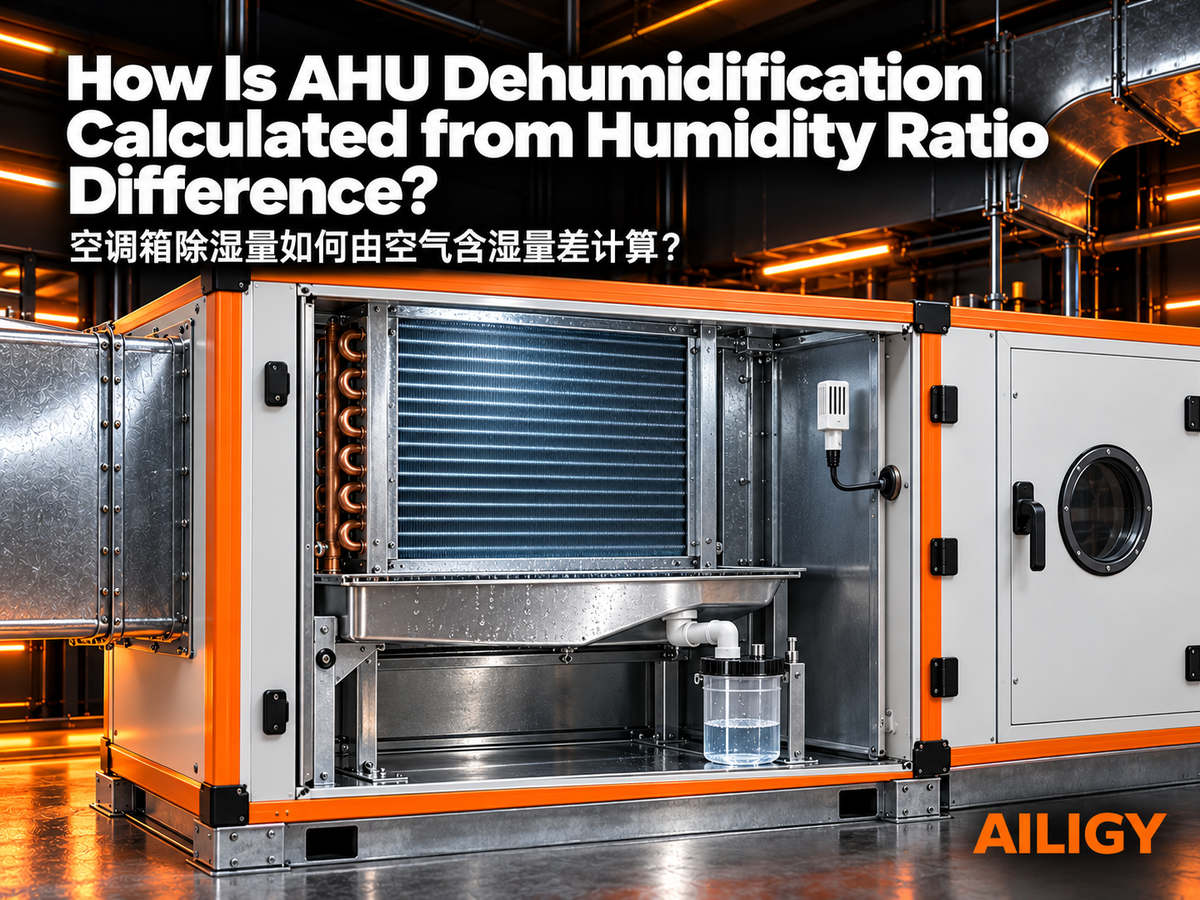 The theoretical dehumidification capacity of the air-conditioning box can be calculated by multiplying the dry air mass flow rate by the difference in moisture content before and after treatment. Moisture content is expressed in terms of the mass of water vapor per kilogram of dry air and cannot be directly subtracted from the relative humidity percentage. When calculating, the air flow rate, moisture content difference and time unit must be written in full. If the air volume is only m³/h, the dry air mass flow rate must be converted according to the air state. The calculation result corresponds to the moisture loss in the air, which is not equal to the drainage volume of the water tray at any time, nor is it equal to the cooling capacity; the dehumidification capacity, sensible cooling capacity and latent heat need to be checked separately. If the room is still humidified by people, processes and doors opening, the moisture balance should be done first, and then the amount of dehumidification tasks undertaken by the unit should be determined. Aili Industrial can jointly confirm the coils, water trays, drainage structures, fans, and control configurations, and connect air handling units, FFU, and HEPA/ULPA filters. The actual results are subject to on-site leak detection and performance test results.
-
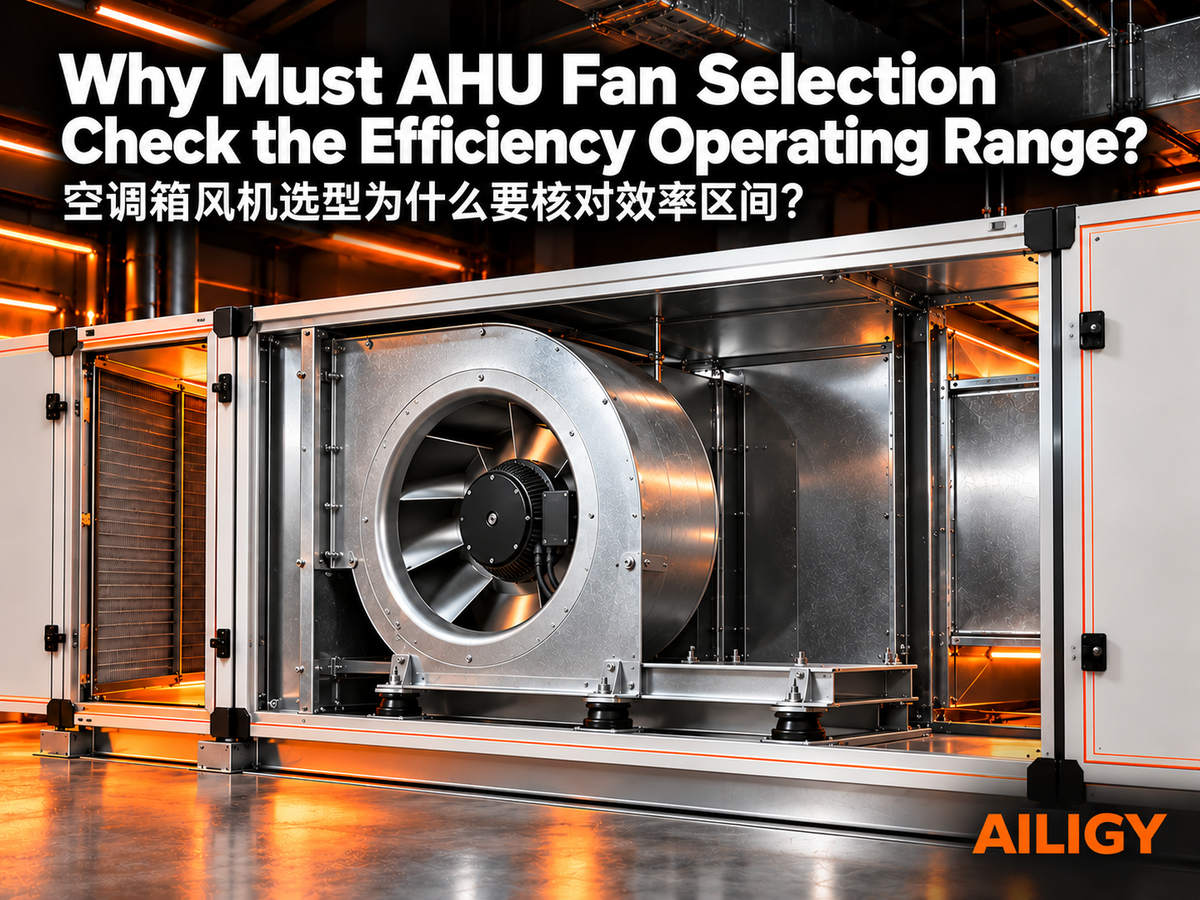 The efficiency of the air conditioning box fan should be checked according to the working point corresponding to the designed air volume and pressure, and the actual adjustment range should also be checked. The maximum efficiency point is just a position on the curve. If the selection point deviates from this range, or the installation conditions change the fan performance, high rated efficiency does not mean actual operation power saving.
-
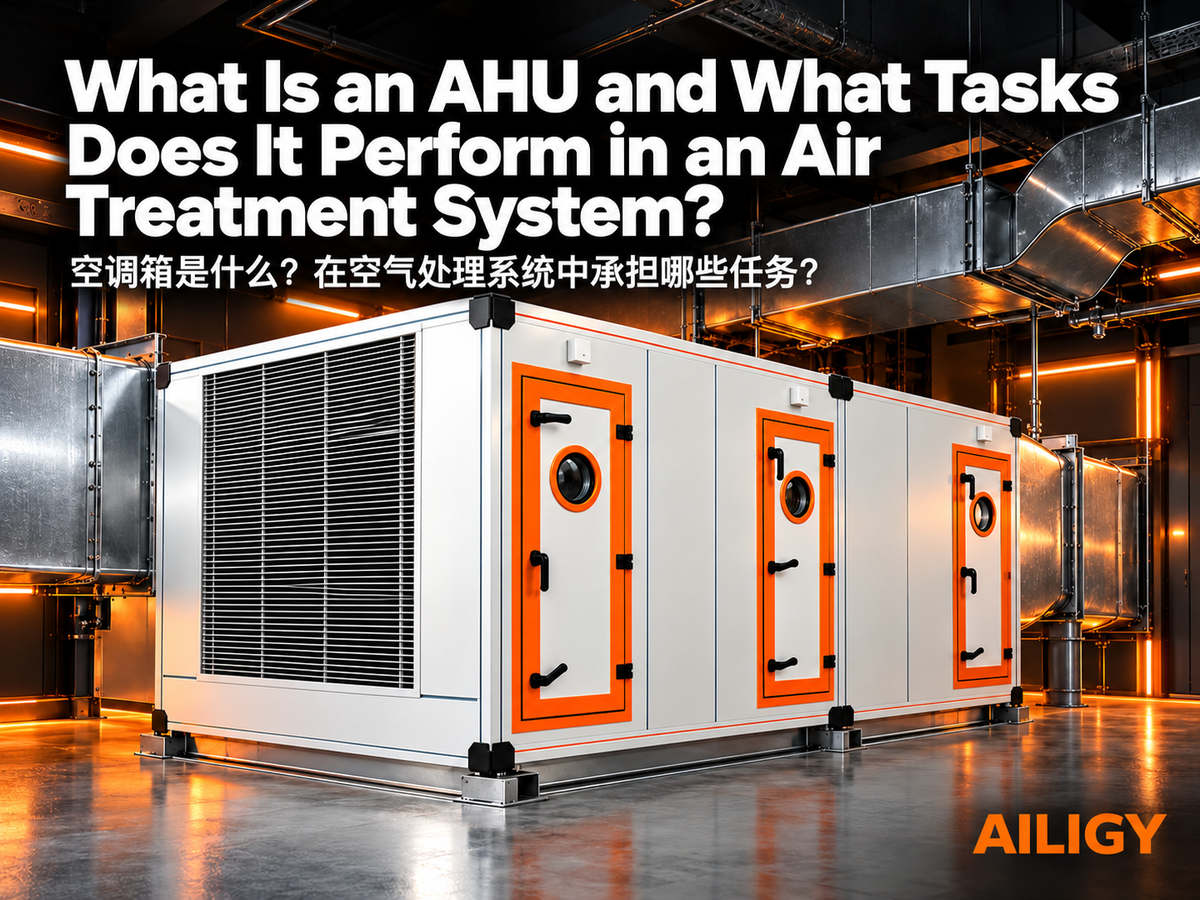 The air conditioning box is a device that centrally processes and delivers air according to design requirements. Common functions include filtration, cooling, heating, humidification and air supply. The air handling unit is a more complete technical name, and AHU is the English abbreviation. What processing the equipment can do depends on the function segments it is equipped with. You cannot judge whether it has a built-in refrigeration system just by its name. From the air path, first confirm the air source, then check the filtration and hot and cold moisture treatment units, and finally look at the fan and air supply interface. The filter section looks at the particle efficiency and resistance, the coil looks at the air inlet and outlet status, and the fan looks at the pressure and power at the target air volume. Each section corresponds to testable results. They are also called air-conditioning boxes, and the scope of supply may vary greatly. When enquiring, the cold source, accessories and engineering division should be listed separately. Aili Industrial can jointly check fans, motors, filters, sheet metal and control configurations, and can connect products such as FFU, EFU, HEPA/ULPA filters and chemical filters. The actual results are subject to on-site leak detection and performance test results.
-
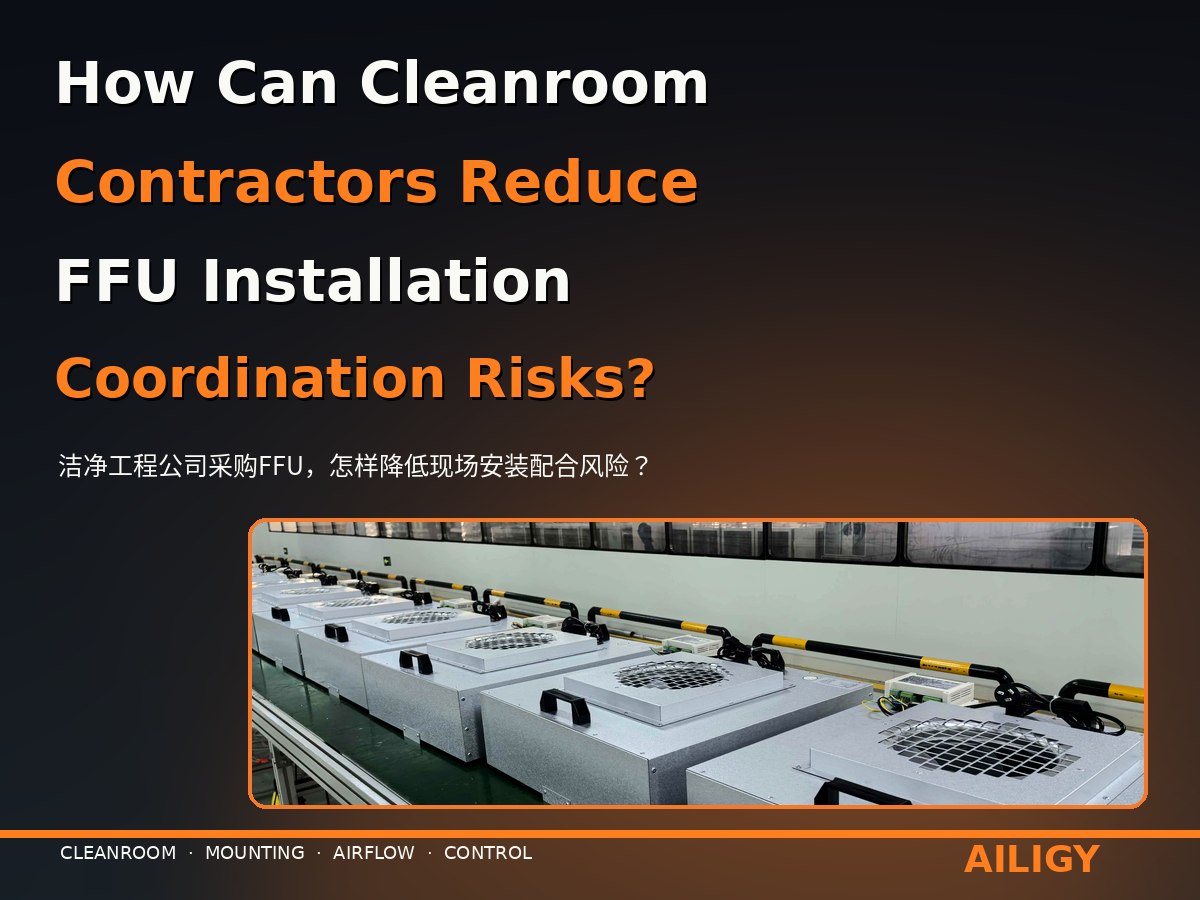 The installation risks of clean engineering FFU often come from the on-site interface and responsibility boundaries not being confirmed in advance, rather than the single product itself. This article organizes the verification points based on project design handover, ceiling and installation openings, air inlet and maintenance space, filter sealing, electrical group control, batch arrival, construction changes and acceptance records, and attaches an FFU on-site installation cooperation checklist for use by clean engineering companies, equipment procurement and project management personnel.
-
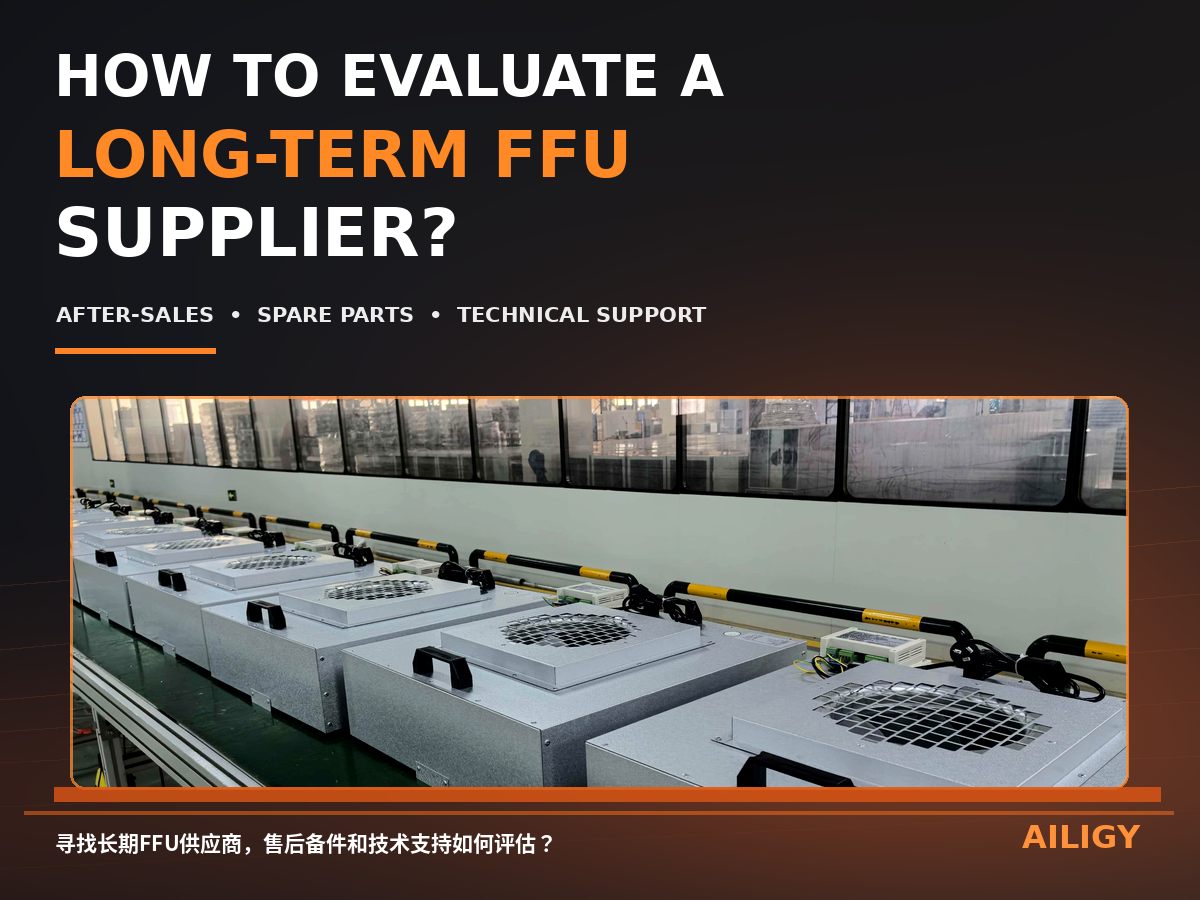 Looking for a long-term FFU supplier, how to evaluate after-sales spare parts and technical support?How does long-term purchasing FFU evaluate suppliers? From fan motors, HEPA/ULPA filters, control board spare parts compatibility, fault diagnosis, technical version management to after-sales responsibilities and continuous supply, a procurement verification list is provided, and the collaborative support capabilities of Aili Industrial core components and complete machines are introduced.
-
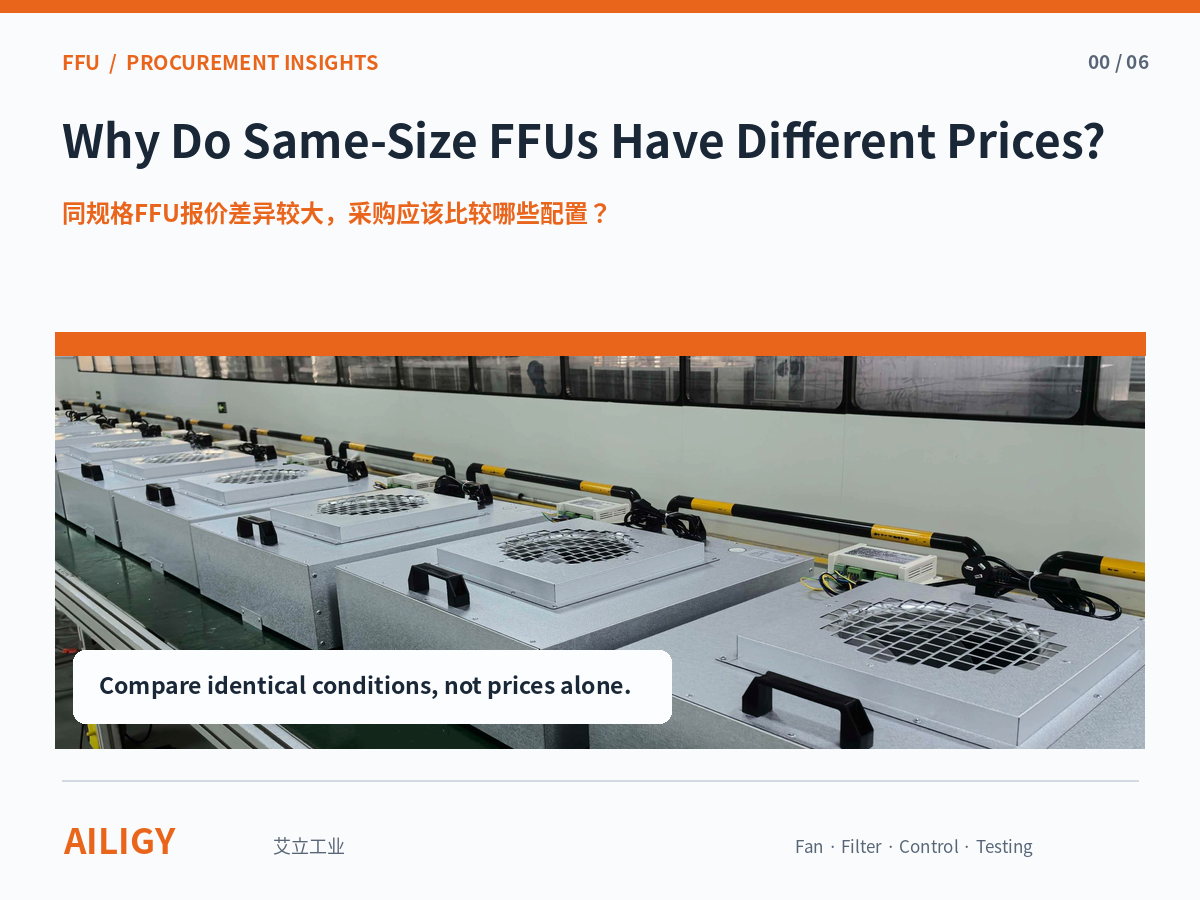 The quotations of two FFUs with the same appearance and dimensions are not necessarily directly comparable. Procurement should verify the actual operating conditions of the fan motor, HEPA/ULPA rating and resistance, structural materials, control methods, detection range, after-sales and delivery responsibilities. This article provides a quotation verification form with the same conditions to help clean engineering contractors, equipment manufacturers and bulk purchasing customers find the real configuration differences.
-
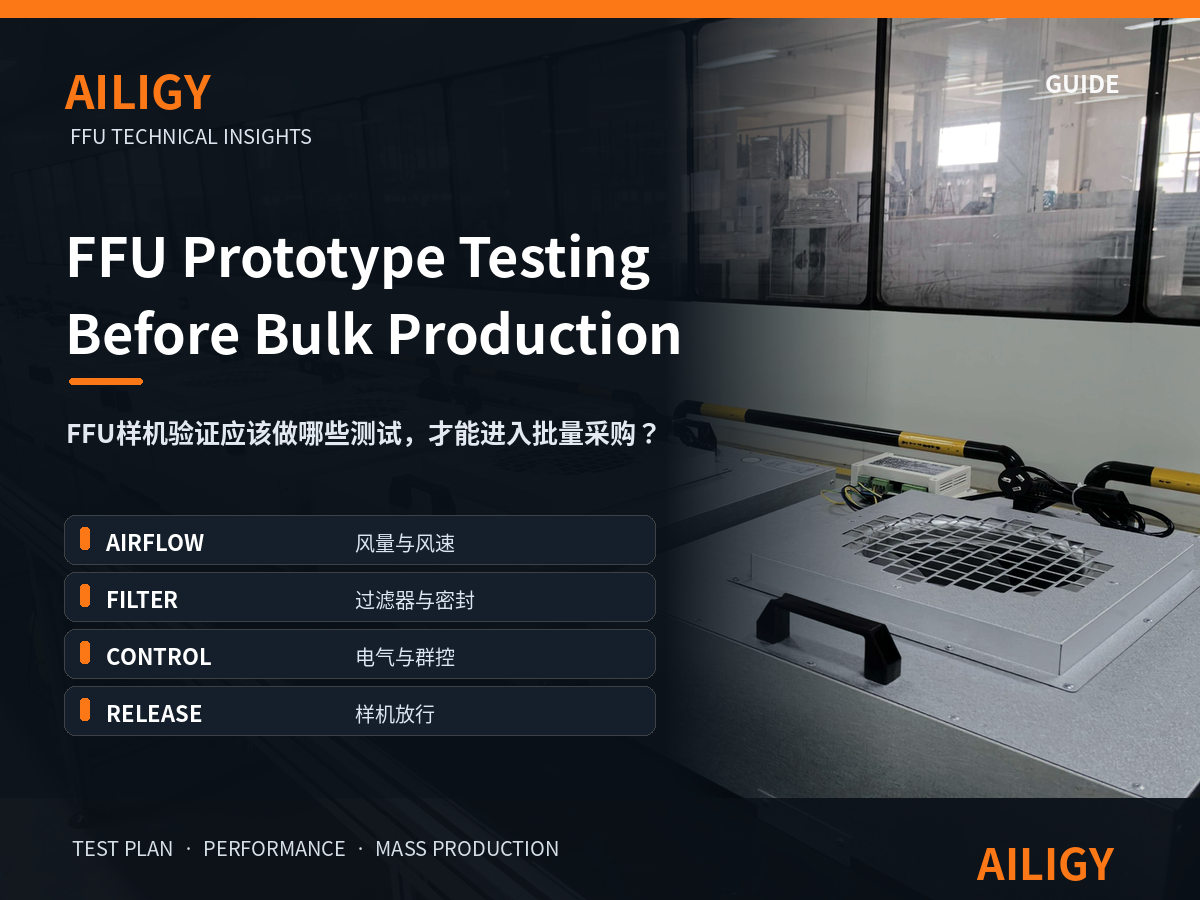 What should FFU prototypes be tested before entering bulk purchase? Detailed explanation of verification items such as appearance interface, air volume and speed uniformity, static pressure, HEPA/ULPA filter sealing, electrical group control, noise vibration and continuous operation, etc., provide FFU first article inspection and mass production release list, and introduce Aili Industrial complete machine testing and manufacturing supporting capabilities.
-
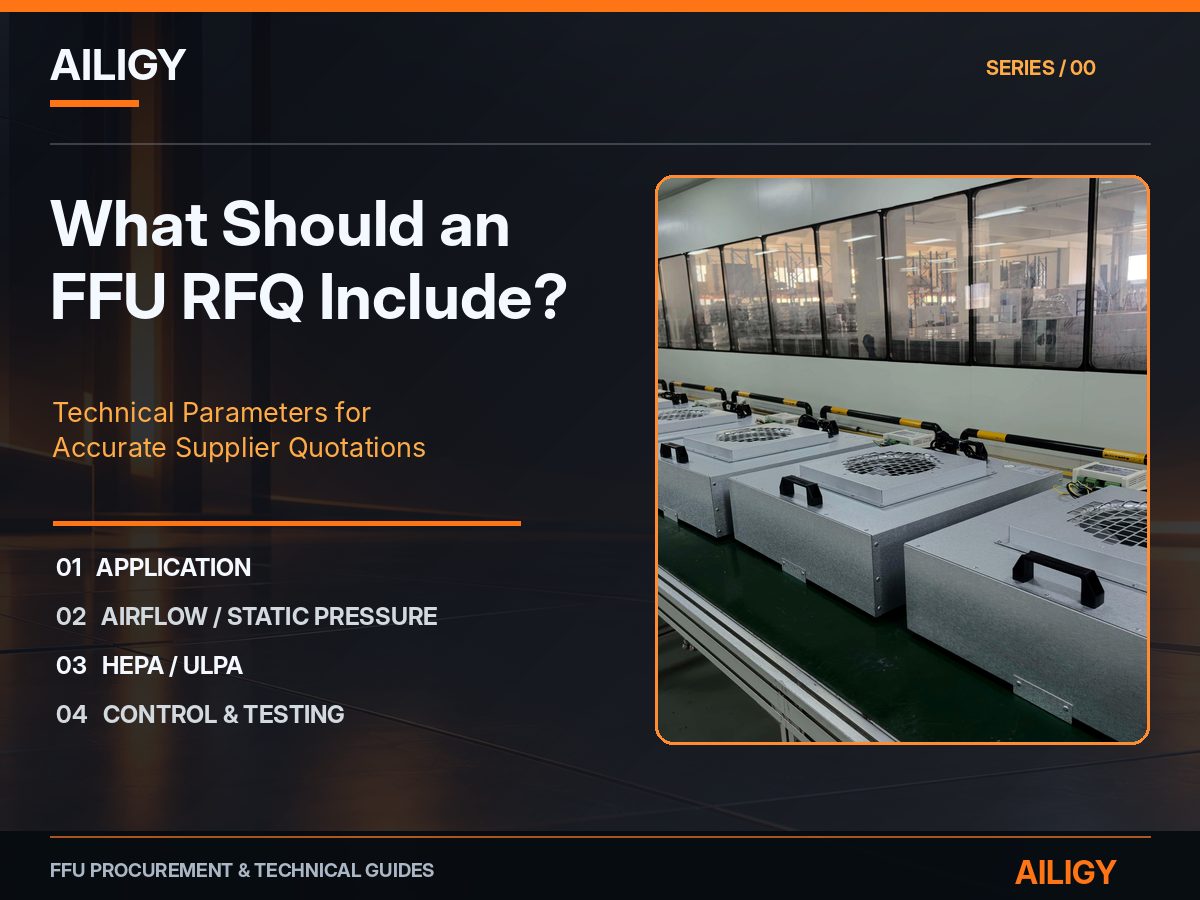 When making an inquiry to the FFU manufacturer, in addition to the size and quantity, you must also confirm the application, installation hole position, air volume and speed, static pressure, filtration level, power supply and group control interface, test acceptance and delivery requirements. This article provides 20 FFU procurement inquiry templates that can be directly copied, and introduces Aili Industrial's 30,000 square meter manufacturing base and core component complete machine collaborative supporting capabilities.
-
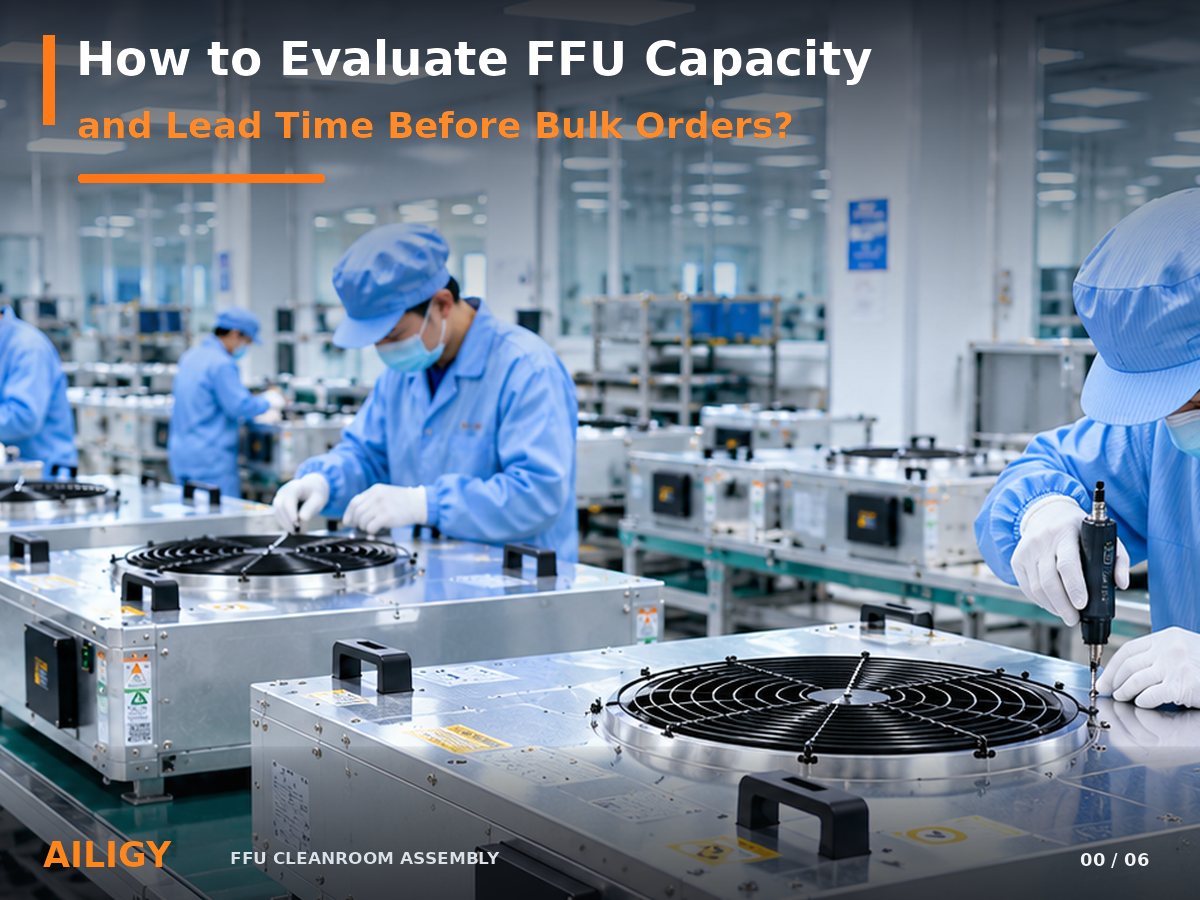 For bulk purchases of hundreds, thousands or even tens of thousands of FFU units, judging whether a supplier can deliver on time cannot just look at the factory area or advertised production capacity. This article provides a procurement review list focusing on effective production capacity, key materials, delivery nodes, first article verification, batch quality, group control requirements and batch delivery plans, and explains the project supporting methods based on the independent manufacturing system of Aili Industry.
-
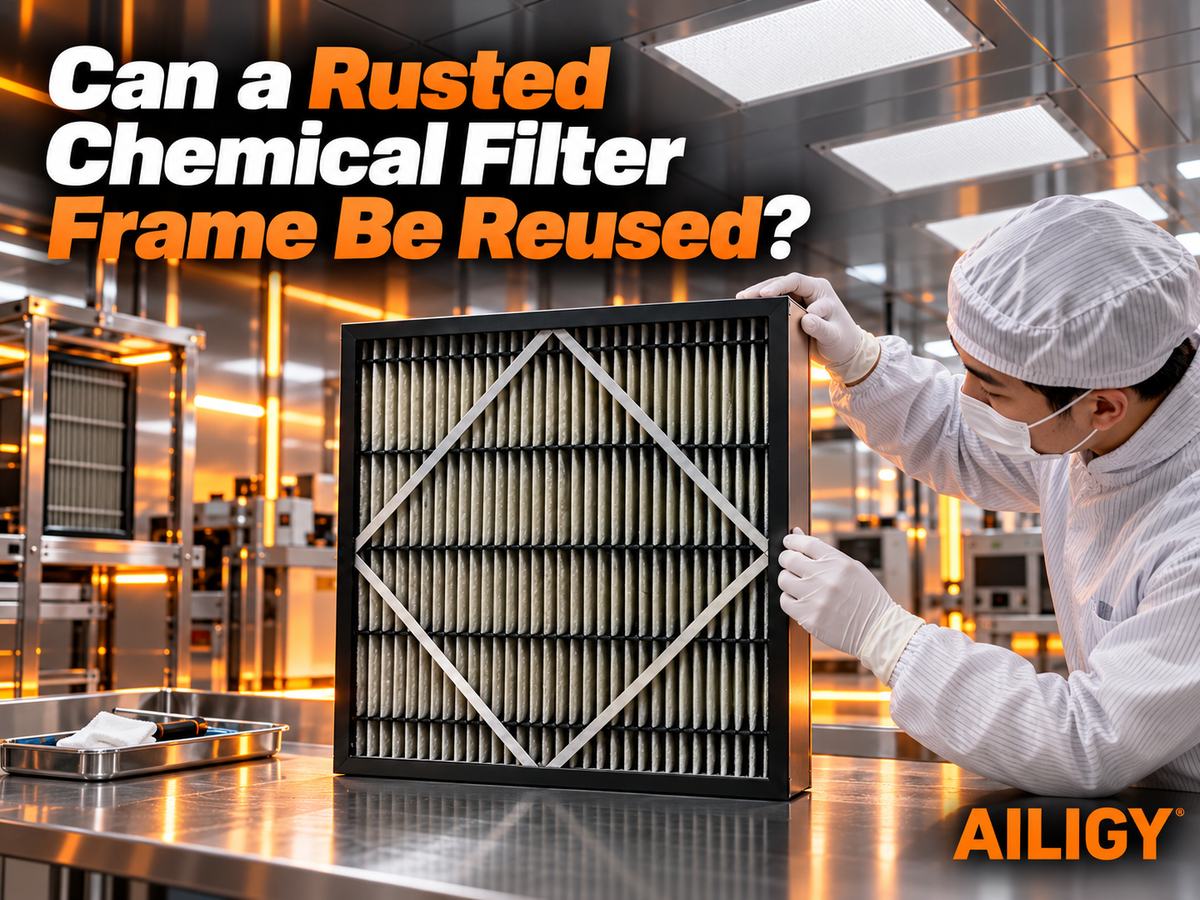 This article explains whether the rusted old frame of a chemical filter can continue to be used. It is necessary to check the corrosion degree, structural strength, sealing contact surface and cleanliness requirements. It cannot be considered that the original frame still has reliable support and sealing capabilities just by removing visible rust. The article starts with four steps: first finding the cause of corrosion, confirming the structure and sealing status, applying check points, verification and subsequent use. It points out that corrosion of the sealing surface may cause bypass and affect the actual filtration effect.
-
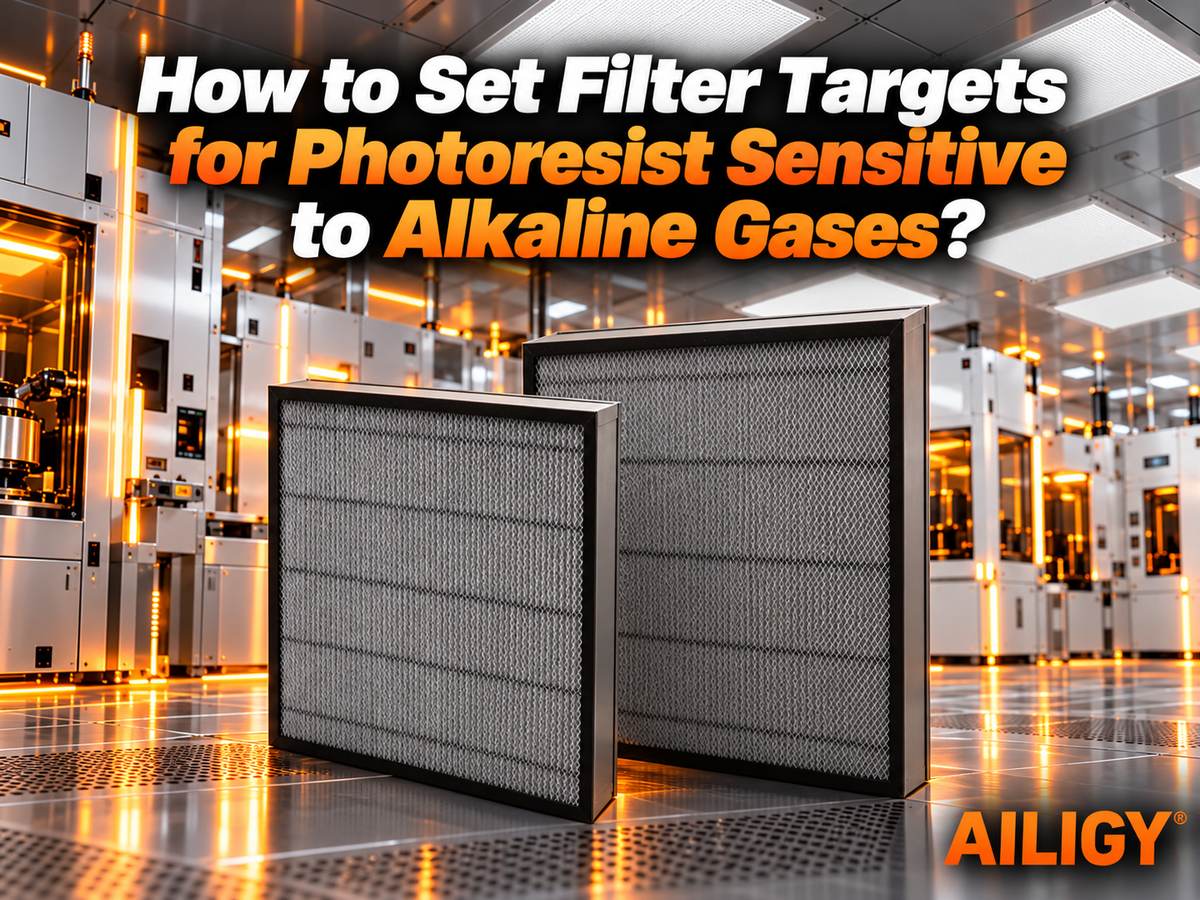 This article explains that when the photoresist is sensitive to alkaline gases, the filtration target should be determined based on the specific photolithography process, material and equipment requirements. General deodorization standards or some universal AMC values cannot be directly regarded as requirements for the entire photolithography area. The article follows four steps: clarifying sensitive objects and detection calibers, assigning targets to actual protection locations, applying check points, verification and subsequent use. It points out that ammonia and amines should be distinguished and the actual use location of photoresist should be verified.
-
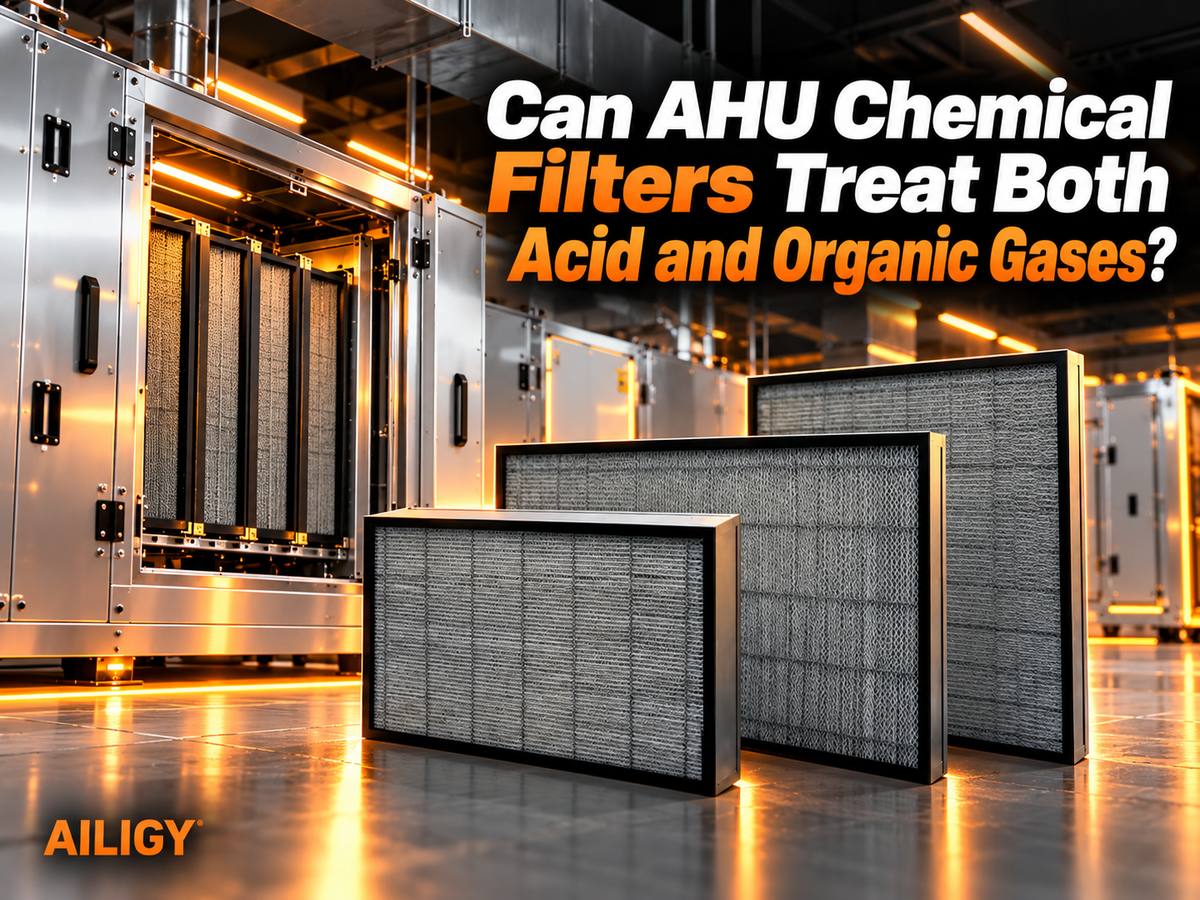 This article explains that the chemical filtration section of the air conditioning box can be evaluated to handle acid gases and organic gases at the same time, but the media must be configured for specific components and the mixing load must be checked. The multi-gas name alone cannot guarantee that all acid gases and organic matter are effective. The article starts with four steps: first determining whether the filter has passed through the same filter section, comparing combinations and system conditions, application check points, verification and subsequent use, and points out that internal and external gas sources should be handled separately when they come from different sources.
-
 This article explains that the same project can evaluate the use of different chemical filter media, but their respective goals, combination sequence, environmental suitability and maintenance methods should be clearly defined. Putting different media together does not mean that the efficiency and capacity of mixed gases can be simply added. The article is divided into four links: distinguishing stratified and mixed configurations, verifying target gases item by item, application check points, verification and subsequent use, and points out that the combined configuration needs to be confirmed separately for each target gas.
-
 This article explains that cleaning agent safety data sheets can provide clues to the composition and properties of chemical filters, but they cannot replace on-site air testing. When selecting, you also need to understand the cleaning method, temperature, dosage, exhaust air and the actual gas entering the filter section. The article follows four steps: forming an investigation direction from chemical information, connecting documents with actual use, applying check points, verification and subsequent use. It points out that the occupational exposure limits in SDS cannot be used as filter outlet concentration targets.
-
 This article explains that there is still an odor after installing a high-efficiency filter in a clean room. The common reason is that the odor comes from gas or steam, and HEPA is mainly responsible for particle filtration. The article is divided into four links: qualified particles do not mean gas control, locating the source along the air path, application check points, verification and subsequent use. It points out that increasing the particle filtration level cannot automatically solve molecular pollution, and requires separate detection objects and treatment plans.
-
 This article explains that if ULPA passes the factory leak test but air leaks on site, it needs to be traced layer by layer along the transportation, unpacking, assembly and field testing conditions. The factory inspection verified the condition of the filter element at that time, and the sealing interface between the box and the installation was also added on site. The article is organized in the order of retaining evidence, distinguishing the causes according to the location of air leakage, and retesting under the same working conditions. It also explains that Aili Industrial can help separate the main body problems from the system bypass in the filter manufacturing, sheet metal and complete machine assembly processes.
-
 The leak detection between the ULPA frame and the suspended ceiling should cover the installation sealing boundary specified in the design, and cannot only scan the filter material. It is necessary to first distinguish what roles the filter element outer frame, installation keel, compression parts and ceiling joints play respectively.
-
 This article explains that the ULPA replacement dimensions should be measured at the same time as the outer frame, thickness and sealing interface, and checked with the original drawings and installation openings. Only measure one edge or place an order based on the old model name. It is easy to miss the space occupied by the liquid tank, flange and gasket. The article is divided into five steps: establishing a measurement benchmark, measuring the matching dimensions, distinguishing the size of the bare frame and the size of the seal, handling the status of old parts, and reviewing the arrival according to the drawings. It also explains that Aili Industrial can provide size verification support in the non-standard customization and sample matching.
-
 The delivery risks of standard products and customized clean equipment should be compared from interface maturity, technical confirmation, prototype verification, material arrangement and change control. Standard products also need to be adapted to the site, and customized products can also be input clearly to reduce the risk of rework. The delivery date cannot be judged based on the name alone.
-
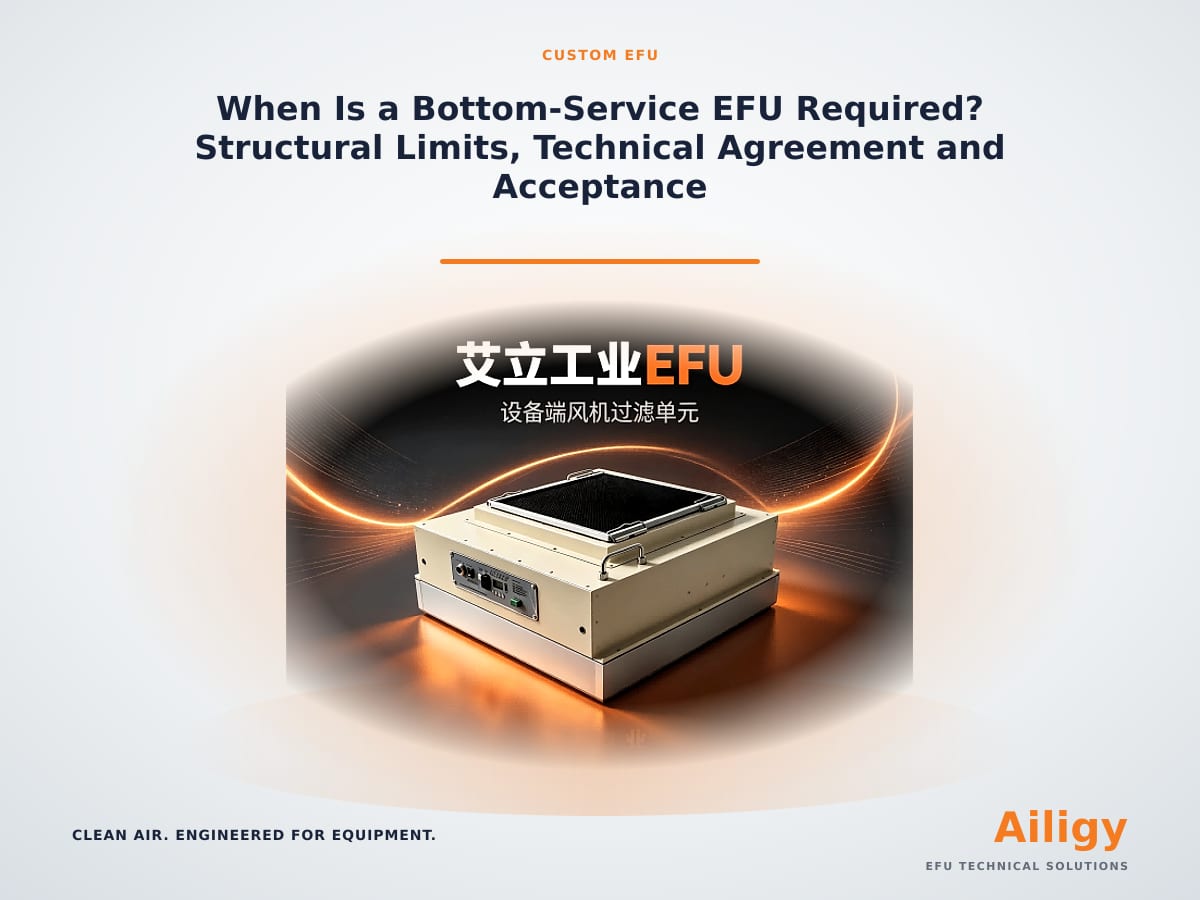 This article focuses on 'When does the drop-down EFU need to be customized?' It explains the judgment method of whether customization is needed, structural boundary freezing, technical agreement, sealing structure, prototype verification and acceptance points, and gives the key points of drawing confirmation, prototype testing and batch curing for direct verification by equipment design, procurement and maintenance personnel. Ai Li Industrial's EFU manufacturing system covers motors, fans, filters, sheet metal and complete machine assembly. The structure, sealing and complete machine performance of the detachable EFU can be checked according to the equipment drawings in the same system. When customizing the detachable EFU, you can refer to the structure and performance supporting instructions provided by Ai Li Industrial according to the model.
-
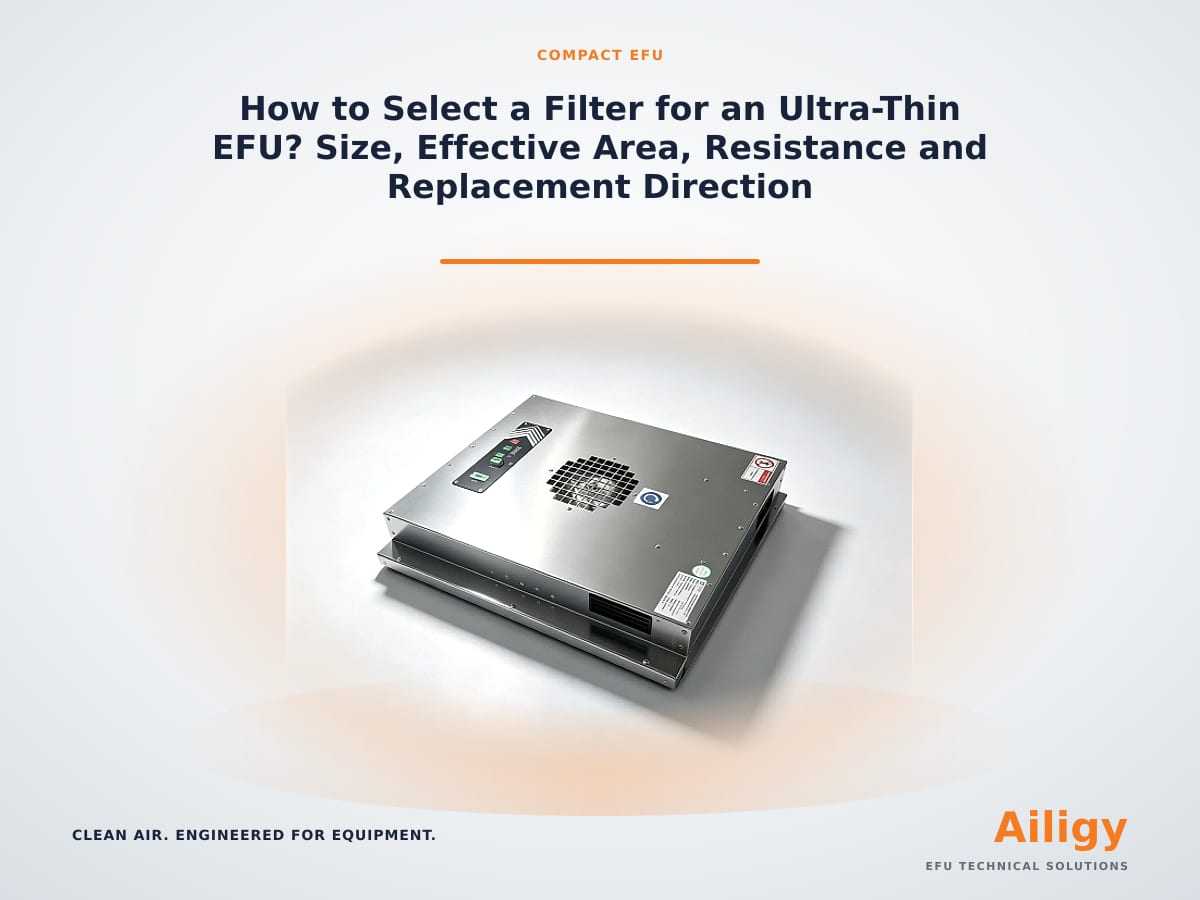 This article focuses on 'How to choose ultra-thin EFU filters' and explains the judgment method of size matching, effective area, resistance, sealing method, replacement direction and complete machine matching. It also provides drawing confirmation, prototype testing and batch curing suggestions for direct verification by equipment design, procurement and maintenance personnel. Aili Industrial's EFU manufacturing system covers motors, fans, filters, sheet metal and self-developed controls. The size, area, resistance and replacement direction of ultra-thin EFU filters can be checked according to equipment drawings in the same system. When selecting ultra-thin EFU filters, you can refer to the instructions provided by Aili Industrial for filter and complete machine matching by model.
-
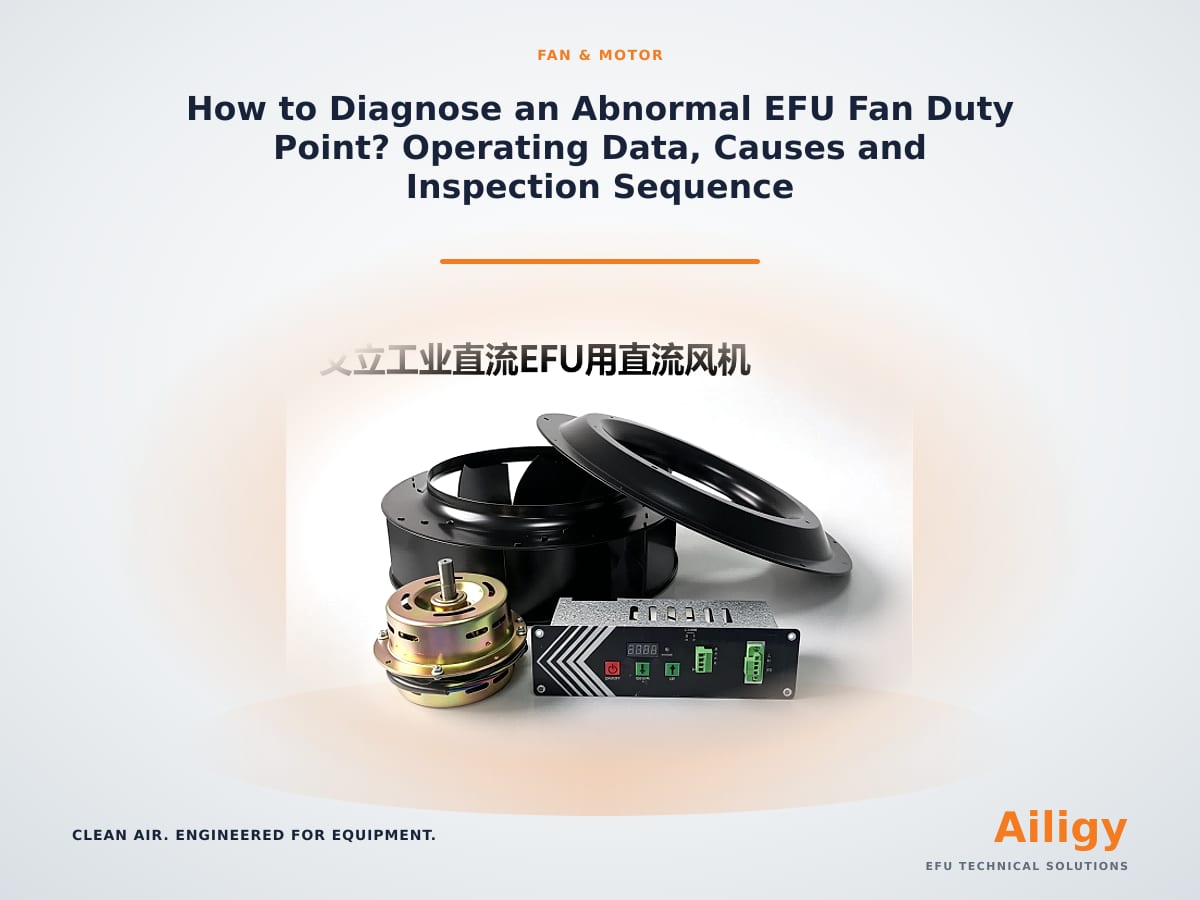 This article focuses on 'How to judge abnormal working point of EFU fan' and explains the linkage judgment method of the four parameters of rotation speed, current, static pressure and filter pressure difference. It divides the causes of failure into two categories: system side resistance change and fan side performance change. It also provides the inspection sequence of data comparison → system side → fan side for verification by equipment operation and maintenance and purchasing personnel. The working point parameters of Aili Industrial's 70mm ultra-thin EFU are marked in the confirmation diagram, and the control scheme supports operating data reading and benchmark comparison.
-
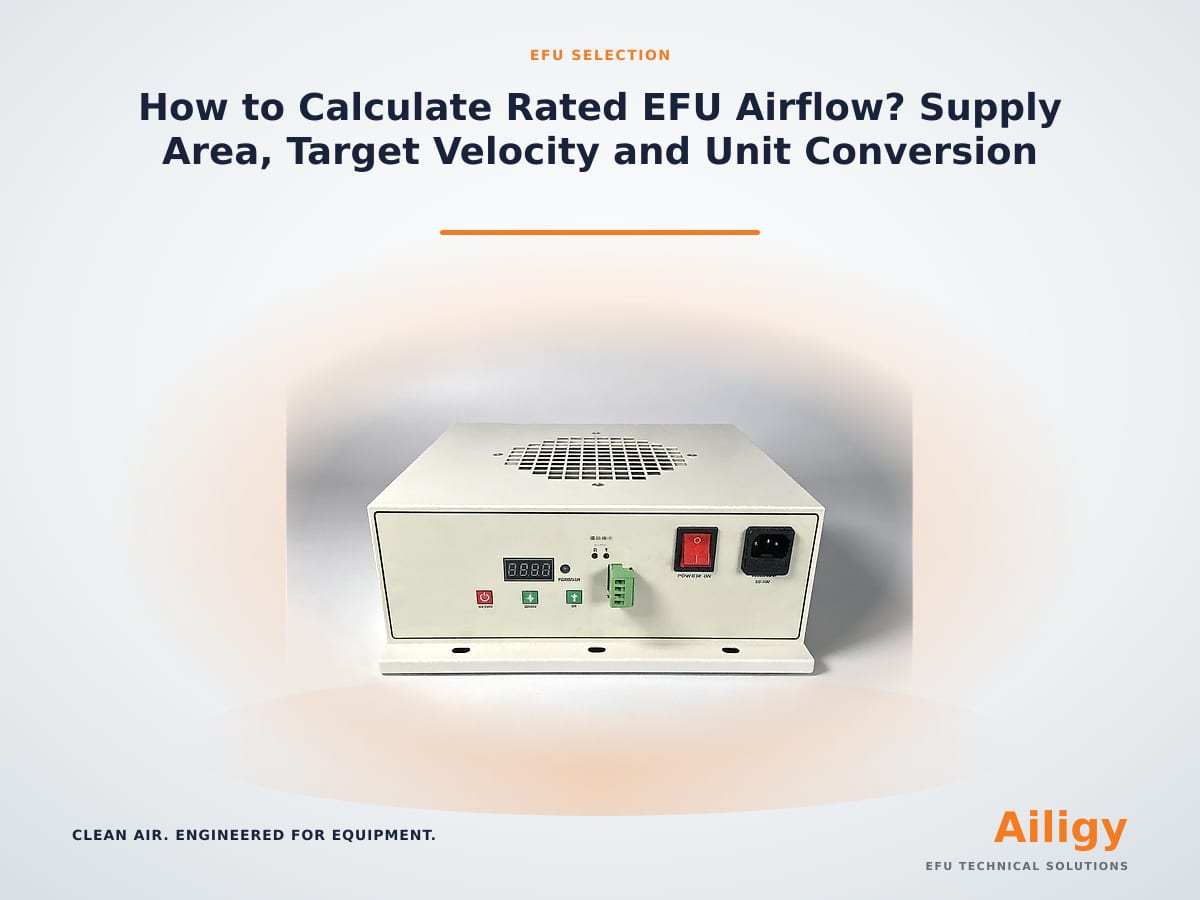 How to calculate EFU rated air volume? Air supply area, target wind speed and unit conversion methodFocusing on 'How to Calculate EFU Rated Air Volume', this article explains the judgment method of effective air supply area, target wind speed, unit conversion, system resistance and fan working point. It also provides prototype records and batch curing points for direct verification by equipment design, procurement and maintenance personnel. Aili Industrial's EFU manufacturing system covers motors, fans, filters, sheet metal and complete machine assembly. The air volume, filter resistance and fan operating point can be checked by model in the same system. When calculating the EFU rated air volume, you can refer to the complete machine and filter supporting instructions provided by Aili Industrial by model.
-
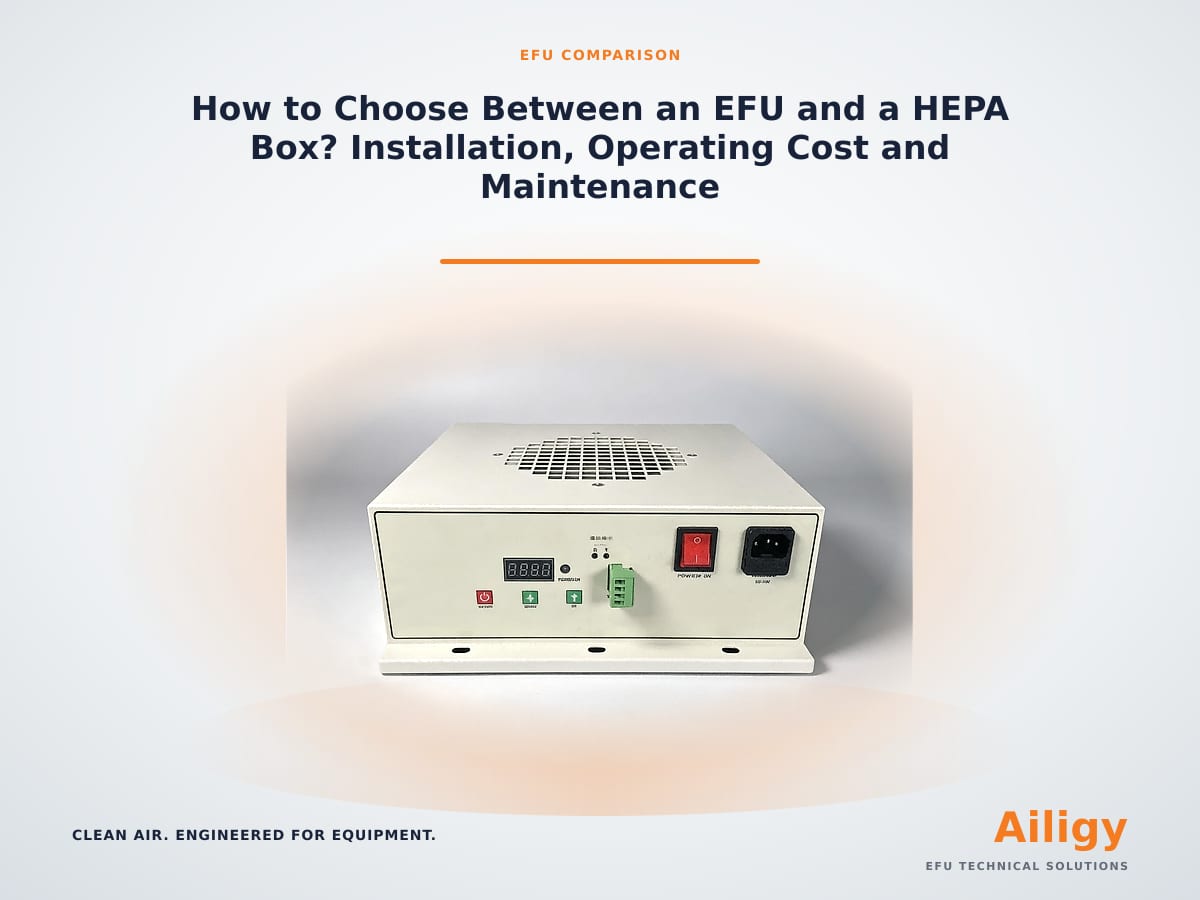 Focusing on 'How to choose EFU and high-efficiency air supply vents', this article explains the installation conditions, operating costs, filtration configurations, control methods, maintenance differences and the judgment method of applicable scenarios. It also provides the key points for comparison and interface verification under the same working conditions for direct verification by equipment design, procurement and maintenance personnel. Aili Industrial's manufacturing system covers EFU complete machines and filtration packages. Motors, fans, filters, sheet metal and controls can be checked according to project conditions in the same system. When comparing EFU and high-efficiency air supply outlets, you can refer to the complete machine and filtration package instructions provided by Aili Industrial by model.
-
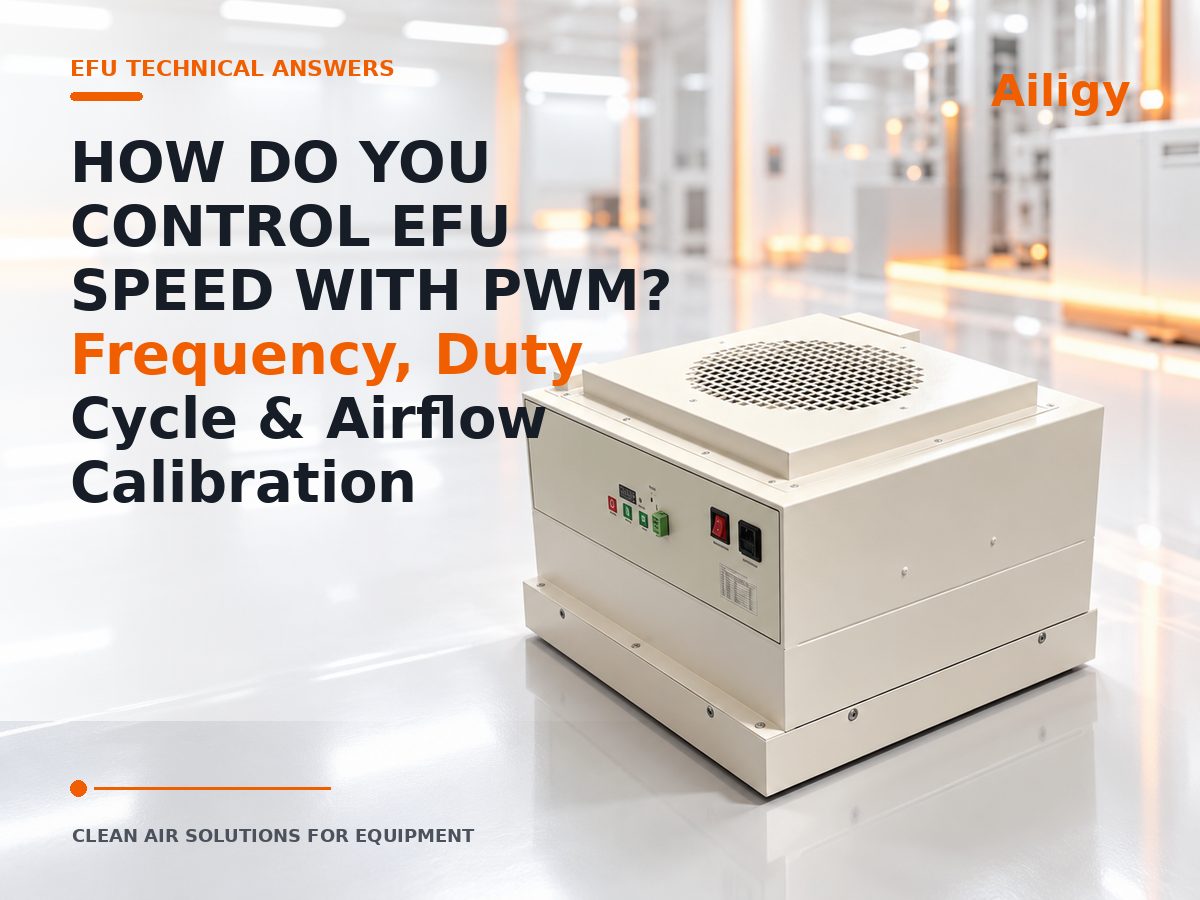 How does EFU implement PWM speed regulation? Frequency, duty cycle and air volume calibration methodFocusing on 'How EFU realizes PWM speed regulation', this article explains the key points of signal definition, wiring requirements, duty cycle and air volume calibration, frequency selection, abnormal status, debugging method and matching of the whole machine. It also provides drawing confirmation, prototype testing and batch curing suggestions for direct verification by equipment design, procurement and maintenance personnel. Aili Industries' EFU manufacturing system covers motors, fans, filters, sheet metal and self-developed controls. The interface, calibration and complete machine verification of PWM speed regulation can be completed in the same system. When implementing EFU PWM speed regulation, you can refer to the control and interface supporting instructions provided by Aili Industries by model.
-
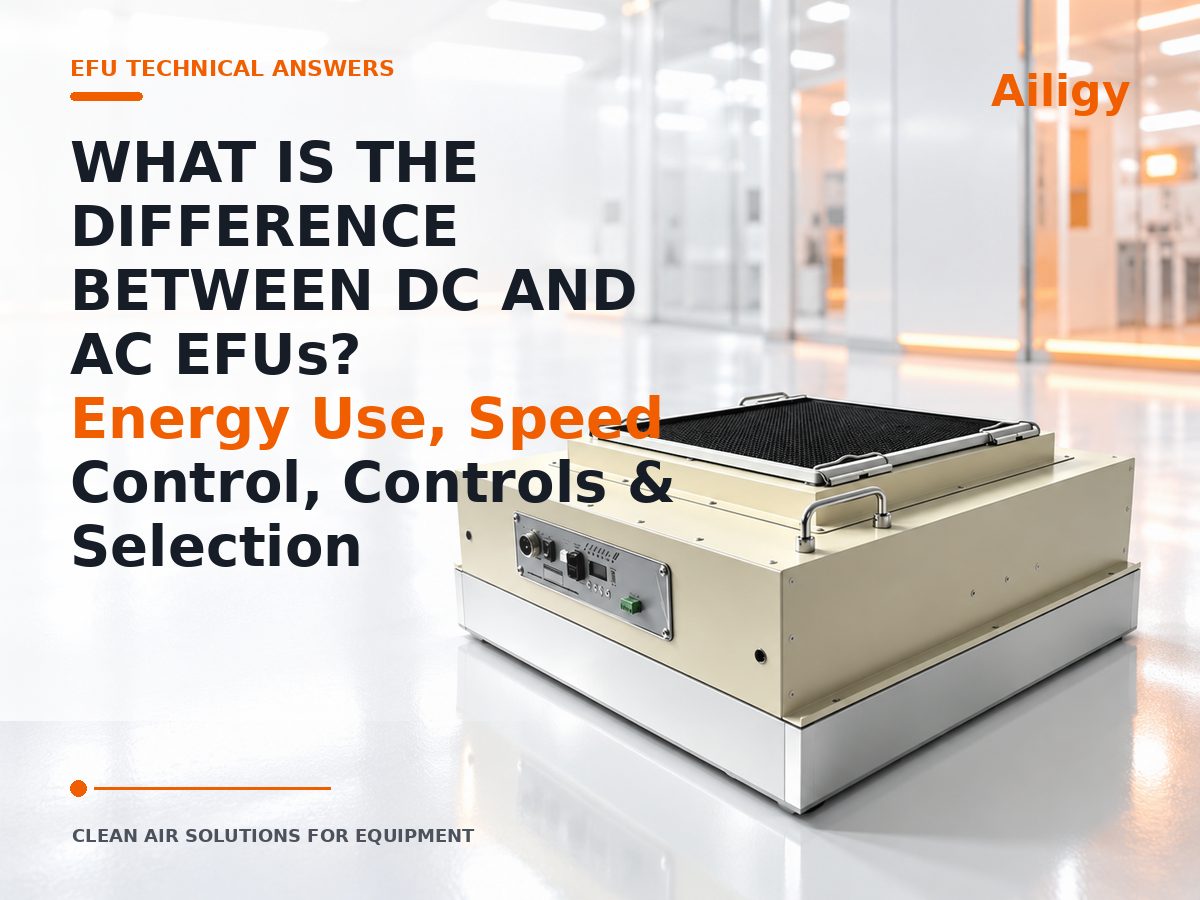 DC EFU usually has better speed regulation and equipment linkage capabilities, and is suitable for equipment projects that require multi-speed operation, continuous speed regulation and energy consumption management; AC EFU can be used for equipment under fixed working conditions or with established AC power supply and control conditions. This article combines air volume, static pressure, operating time, control method and modification conditions to explain the actual differences and selection methods of the two types of EFU.
-
 The failure of the EFU to start is not necessarily caused by motor damage, but may also be caused by power interruption, missing start and stop instructions, abnormal speed control signals, communication errors, equipment interlocking or controller protection. This article explains the safety troubleshooting method for EFU not starting in the order of power supply, control signal, communication, protection status, fan mechanical structure and motor drive, and provides inspection paths corresponding to different fault manifestations.
-
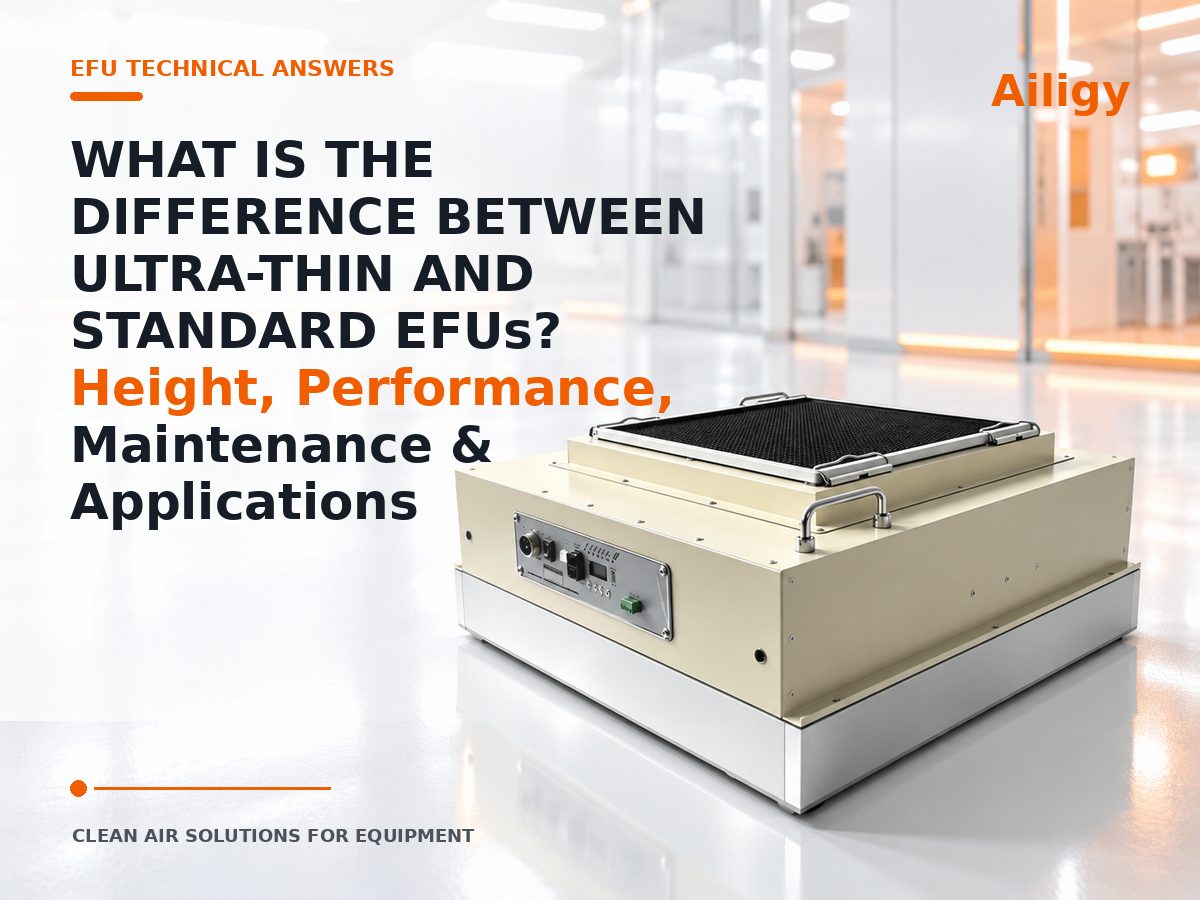 Compare the applicable boundaries of ultra-thin and conventional EFU in terms of installation height, airflow performance and maintenance conditions.
