

ULPA ultra high efficiency filter
Classes U15, U16, and U17, for local clean air supply in clean rooms and equipment
Aili Industry provides ULPA ultra-high efficiency filters, which can be selected according to the filtration level, installation size, rated air volume, resistance and sealing requirements of the project, and are equipped with FFU, EFU and other clean air supply equipment. The filter material can be glass fiber or PTFE. The specific configuration and performance are subject to the specifications and test reports of the corresponding model.
Please provide equipment drawings or existing filter parameters to confirm the installation interface, air volume and filter configuration.

| name | content | name | content |
| filter level | U15, U16, U17 | filter material | Glass fiber, PTFE |
| structure | No partitions, dense pleat type | size | Standard specifications, non-standard customization |
| Sealing method | Gasket seal, liquid tank seal | Installation interface | Match according to the box body and knife edge interface |
| Supporting equipment | FFU, EFU, BFU | application system | Clean air supply terminal and equipment local clean system |
| Selection parameters | Air volume, resistance, filtration level | Testing requirements | Efficiency testing, scanning leak detection |
product catalog


How to choose U15, U16 and U17 ULPA ultra-high efficiency filters?
| filter level | The lowest overall efficiency under MPPS | Important points to confirm when selecting |
| U15 | ≥99.9995% | Whether it meets the process requirements and the resistance under the target air volume |
| U16 | ≥99.99995% | Particle control requirements, fan residual pressure and leak detection conditions |
| U17 | ≥99.999995% | Whether there are indeed requirements for this level, and the verification capabilities of the whole machine |
The above is the overall efficiency classification value of EN 1822; overall efficiency and local efficiency are different detection indicators. ,
The grade should be determined by process requirements. After confirming the target level, match the filter area, filter material, thickness and fan operating point to avoid being unable to maintain the required air volume after the filter is installed.
HEPA high efficiency filter
Covering H13 and H14 levels, it can be used in clean rooms, AHU, FFU and other clean air treatment equipment. Glass fiber or PTFE filter material can be selected according to the project.
Grade: H13/H14
ULPA ultra high efficiency filter
Covering U15, U16, and U17 grades, it is designed for clean environments with higher particle control requirements. The size and sealing form can be configured according to the equipment interface.
Grade: U15/U16/U17
High efficiency filter without partition
Adopting a dense pleated filter material and glue line separation structure, the filter area can be arranged within the corresponding thickness and used for FFU, EFU, clean equipment and terminal air supply.
Structure: Mini-pleat
PTFE HEPA/ULPA filter
Using PTFE membrane filter material, it can be configured with HEPA or ULPA grade according to cleanliness requirements. Material suitability needs to be confirmed in conjunction with humidity, chemical media and complete filter components.
Filter material: PTFE
V type high air volume high efficiency filter
Multiple filter elements are combined in a V-shape to arrange a larger filter area in the box space, and are used in systems that require larger air treatment capacity.
Structure: V-Bank
Large air volume box type high efficiency filter
Using box-type or V-shaped filter element combination, the specifications can be confirmed according to the design air volume, installation space and allowable resistance of the air handling equipment.
Direction: Larger air handling capacity
Liquid tank seal high efficiency filter
The liquid tank and the knife edge cooperate to form an installation seal, which is used in clean systems where it is important to confirm the sealing connection between the filter and the installation frame.
Seal: liquid tank/knife edge
Non-standard HEPA/ULPA filter
Non-standard product configurations can be communicated based on equipment space, size, air volume, resistance, frame, filter material and sealing interface.
Scope: Dimensions match structure
| Selection direction | Conditions that need to be confirmed |
| FFU matching ULPA filter | Module size, target air volume, fan residual pressure, installation and replacement methods |
| EFU matching ULPA filter | Equipment interface, local air supply range, thickness restrictions and maintenance space |
| Glass fiber filter material ULPA filter | Operating air volume, pressure drop, ambient temperature and humidity and process material requirements |
| PTFE filter material ULPA filter | Process suitability and overall suitability of media, adhesives, frames and seals |
| Non-standard size ULPA filter | Overall dimensions, effective filter area, installation tolerances and sealing interfaces |
| Confirmation method | Subject to specifications and testing data |
| step | Selection content | Information that needs to be confirmed |
| 1. Clear cleaning goals | Determine filter level | Select U15, U16 or U17 according to process requirements, and clarify testing and acceptance requirements |
| 2. Confirm installation dimensions | Match device space | Check the filter length, width, thickness, installation tolerance and replacement space |
| 3. Determine the operating air volume | Match air supply needs | Provide rated air volume or target surface wind speed, combined with effective air outlet area for confirmation |
| 4. Check system resistance | Match fan capacity | Confirm the initial resistance under the target air volume, and check the fan residual pressure under the final resistance condition |
| 5. Select filter media and sealing | Adapt to the use environment | According to the temperature and humidity, process medium and installation interface, confirm the filter material, frame and sealing method |
| 6. Clear testing and acceptance | Verify actual performance | Agree on efficiency testing, scanning leak detection and reporting requirements, and verify sealing and air supply performance after installation |
| parameter | Please provide information |
| Use location | Clean room, FFU, EFU, clean bench or other equipment |
| filter level | U15, U16, U17, or the testing requirements specified by the project |
| Overall dimensions | Length × width × thickness, indicate unit and allowable deviation |
| Operating air volume | Air volume of a single device or target surface wind speed |
| Resistance requirements | Allowable initial resistance, final resistance or fan residual pressure under corresponding air volume |
| Installation method | Pressed, embedded or other structures, attached installation diagram for easier confirmation |
| Sealing interface | Gasket, tank or equipment specified construction |
| Usage environment | Temperature, humidity, and possible exposure to process media |
| Testing requirements | Efficiency, scanning leak detection, on-site acceptance and reporting requirements |
| Purchasing information | Quantity, lead time and replacement parts requirements |

Fan and motor matching
For FFU, EFU, BFU and other equipment, check the filter resistance, design air volume and fan static pressure conditions together.
Related: air volume, static pressure, filter resistance

Control system collaboration
Equipment projects can simultaneously confirm speed regulation, operation control and communication requirements, so that filters and air supply equipment can communicate according to the same working conditions.
Related: Equipment operation and control requirements

Sheet metal and structural processing
The box, frame and related structural parts can be confirmed according to the installation space and equipment interface, and manufacturing support is provided for standard and non-standard sizes.
Related: Dimensions, interfaces, installation structures

Filter independent production system
Covering HEPA, ULPA and other air filtration products, the grade, filter material, size, frame and sealing method can be confirmed by project.
Related: Filter production and project selection

Assembly and process inspection
Quality inspection covers core components, production processes and complete machine assembly, and corresponding inspections are carried out according to product type.
Associations: parts, processes, assemblies

Product testing and delivery
Conduct corresponding performance and operational tests based on product type, and confirm specifications, materials, packaging and delivery arrangements based on project requirements.
Related: testing, information, packaging, delivery
Project support advantages for large factories
Aili Industry has a 30,000-square-meter production base. The production area covers motors, fans, filters, control systems, sheet metal processing, complete machine assembly, product testing, and finished product management. For HEPA and ULPA filter projects, complete site and manufacturing zoning provide the organizational basis for raw material entry, filter production, structural component processing, process inspection, finished product storage and packaging delivery.
The project value of large-scale production bases is mainly reflected in multi-category collaboration, parallelization of standard and non-standard products, batch project organization, and supporting communication of filters and clean equipment.

ULPA filter inspection and acceptance
When purchasing, the filter model, serial number, test air volume, efficiency level and test report should be matched.
It is recommended to specify in the order:
- The testing standards and acceptance indicators adopted.
- Efficiency testing and scanning leak detection requirements.
- The test air volume corresponding to the resistance data.
- Test reports, serial number labels and packaging requirements.
- Responsibility for equipment or site acceptance after installation.
The installation acceptance should also check the interface sealing and actual operating performance.
ULPA Filter FAQ
From product selection, performance configuration to customized development, the following are the most common issues that customers are concerned about when selecting ULPA filters.
Q1: What is the difference between ULPA and HEPA filters?
A: According to EN 1822 classification, HEPA includes H13 and H14, ULPA includes U15, U16, and U17. The allowable particle penetration rate of ULPA is lower. When selecting a model, you should also compare the resistance and equipment suitability of the specific model under the same air volume.
Q2: Can FFU replace the H14 filter with U15?
A: You need to first check the size, sealing interface, and whether the fan can maintain the target air volume under the resistance of the new filter. After completion of replacement, wind speed, leakage and cleanliness performance should be verified according to project requirements.
Q3: Is U16 definitely more suitable for equipment than U15?
A: Not necessarily. If the process requires U16, it should be configured as U16; if U15 meets the requirements, it needs to be judged based on air volume, energy consumption and maintenance costs. Simply improving the level cannot replace complete machine performance verification.
Q4: What is the initial resistance of the ULPA filter?
A: There is no uniform value. The initial resistance is related to the filter material, filter area, structure and test air volume. When enquiring, please provide the resistance data of the 'specific model at the specified air volume' upon request.
Q5: How often should the ULPA filter be replaced?
A: It should be determined based on pressure difference changes, actual air volume, leakage inspection, process requirements and maintenance records. You cannot judge whether replacement is needed based on a fixed month alone.
Q6: Can the ULPA filter be used again after cleaning?
A: Do not wash, purge or brush the filter material by yourself. Check the maintenance instructions of the corresponding model first; if there is no clear cleaning and re-verification procedure, it should be managed as replacement parts.
Q7: Can ULPA filters remove odors and gaseous pollutants?
A: ULPA is mainly used for particle filtration. Odor and gas pollutants require corresponding gas phase filtration solutions according to the type of pollutants.
Q8: What do I need to provide for customized ULPA filters?
A: Provide at least the filtration level, size, air volume, resistance limit, sealing method, usage environment and quantity. Attached equipment drawings or old filter reports can more accurately confirm the configuration.
Q9: How to choose glass fiber and PTFE filter materials for ULPA filters?
A: The filtration efficiency, resistance and usage environment suitability of specific models under the same air volume should be compared, and the material requirements of the process should be checked at the same time. When high humidity or chemical media are involved, the suitability of frames, adhesives and seals also needs to be confirmed. Aili Industrial can assist in selecting fiberglass or PTFE configuration based on working conditions and equipment parameters.
Q10: What is the relationship between Aili Industrial’s entire industry chain manufacturing and the ULPA ultra-high-efficiency filter project?
A: Aili Industrial's manufacturing system covers motors, fans, filters, control systems, sheet metal, assembly and testing, etc., making it easy to simultaneously check relevant parameters in projects including FFU, EFU, BFU or air treatment equipment.
Customized air filter solutions for your special needs
Provide your installation dimensions, air volume/wind speed requirements and usage environment, and the Aili industrial engineering team can assist you in matching the solution.
-
 This article explains that if ULPA passes the factory leak test but air leaks on site, it needs to be traced layer by layer along the transportation, unpacking, assembly and field testing conditions. The factory inspection verified the condition of the filter element at that time, and the sealing interface between the box and the installation was also added on site. The article is organized in the order of retaining evidence, distinguishing the causes according to the location of air leakage, and retesting under the same working conditions. It also explains that Aili Industrial can help separate the main body problems from the system bypass in the filter manufacturing, sheet metal and complete machine assembly processes.
-
 The leak detection between the ULPA frame and the suspended ceiling should cover the installation sealing boundary specified in the design, and cannot only scan the filter material. It is necessary to first distinguish what roles the filter element outer frame, installation keel, compression parts and ceiling joints play respectively.
-
 When the ULPA is blocked and cannot be scanned, priority should be given to improving the inspection space or assembly structure, and then evaluating alternative verification solutions that meet applicable requirements. Undetectable areas cannot be considered qualified.
-
 The decision to replace the ULPA after it is damaged or fails leak detection should be based on the cause of the leak, scope of impact, allowable processing rules and use risks. You can’t just look at a missing point value or age.
-
 Leak-proof spliced ULPA modules require the simultaneous design of joints, supports, compression and installation seals between modules. Increasing filter media grade cannot compensate for seam bypass.
-
 The ULPA leak detection report should record the detection conditions, scanning range, leak location and rectification and retest. There are only qualified conclusions without object and method information, which is not conducive to subsequent traceability.
-
 When the ULPA leak detection is qualified but the cleanliness is not up to standard, the air volume distribution, personnel and materials, pollution sources and sampling conditions should continue to be checked. Qualified integrity does not mean that the cleanliness of the entire environment must meet the standard.
-
 When FFU and EFU are equipped with ULPA for leak detection, the detection boundaries of the filter element body, installation seal and complete machine connection should be clearly defined. The quality of the filter element and the integrity of the complete machine installation are the results of different levels.
-
 The aerosol arrangement upstream of ULPA leak detection should ensure that the concentration, uniformity and stability meet the method used. The concentration requirements of different instruments and testing specifications cannot be mixed.
-
 The size, position, insertion status and load-bearing arrangement need to be checked to match the ULPA liquid tank and the knife edge. The entry of the knife edge into the groove does not automatically mean a complete seal is formed.
-
 Liquid tank seal ULPA failure should be used to check the colloid state, tank continuity, knife edge fit and installation deviation. Continuous edge air leakage may be related to the sealing path, but still needs to be detected and located.
-
 The choice of ULPA gasket and liquid tank seal depends on the interface structure, installation method, environment and maintenance conditions. Both solutions require correct coordination and leak detection, and you cannot judge the pros and cons based on the name alone.
-
 Pinholes and holes in ULPA filter media need to be identified using applicable integrity testing methods. Visual inspection can reveal obvious damage, but it cannot replace local leak detection.
-
 To locate ULPA leakage, check the filter surface, frame, seal and box interface step by step. A single abnormal signal cannot directly prove that the filter material is damaged.
-
 The boundaries between ULPA factory leak detection and on-site leak detection verification are different: the former focuses on the filter element after manufacture, while the latter also needs to check the impact of transportation, installation and on-site interfaces. Factory qualification does not exempt project requirements from post-installation verification.
-
 ULPA scanning leak detection is used to find local leaks and connection defects, which is an important verification in addition to overall filtration efficiency. Test objects and judgment requirements should be clarified before procurement or acceptance.
-
 Leak detection at the junction between the ULPA filter material and the frame should cover the edges, glue seams and related connection areas. A pass in the center of the filter surface does not mean that the edge connection is complete.
-
 The ultra-thin ULPA design with limited space requires coordination of thickness, effective filtration area, air volume and resistance. Being thinner does not mean that the original performance can be maintained under the same conditions.
-
 If the ULPA frame is deformed, you should first check the size, sealing and load-bearing structure before judging whether it can continue to be installed or used. Forcibly pressing may cover local gaps and further damage the filter element.
-
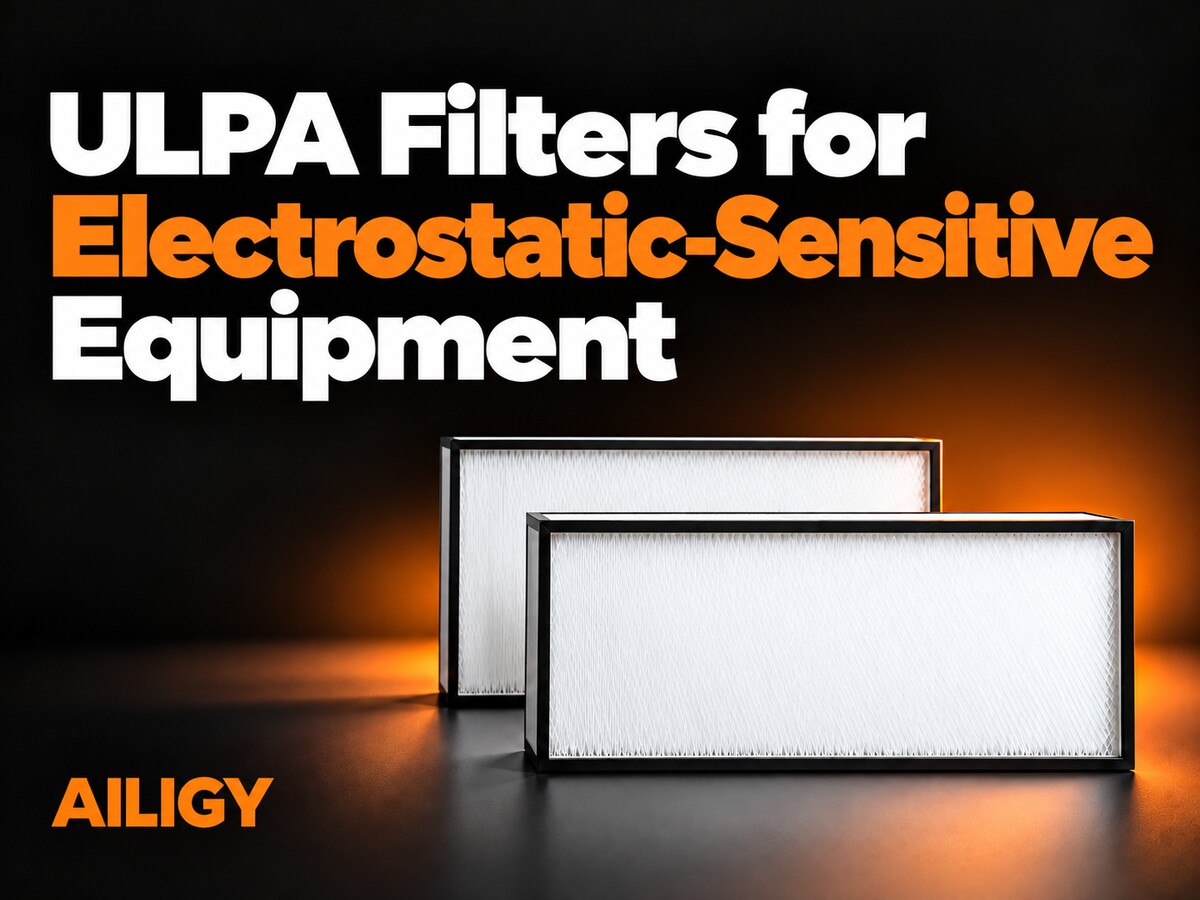 When configuring ULPA for static-sensitive equipment, the filtration performance and static control must be designed separately. A metal frame or a high filtration rating alone does not prove that the entire machine meets the electrostatic protection requirements.
