

Chemical Filters and AMC Molecular Contamination Control
Target gas selection | Adsorption and reaction medium configuration | MAU, FFU and equipment matching
Aili industrial chemical filters are used to reduce the concentration of specified gaseous pollutants in the air and provide gas-phase filtration products for clean rooms, air treatment systems and local areas of equipment.
For different pollutants, physical adsorption, chemical adsorption or reaction medium configuration can be used. The selection is based on the target gas, inlet concentration, outlet requirements and operating conditions, and also confirms the treatment air volume, resistance, installation space and maintenance methods.
Aili Industry covers air filter manufacturing, fan and motor matching, control system development, sheet metal processing and complete machine assembly. It can jointly confirm the structure and operating conditions of chemical filters and air treatment equipment.

| name | content | name | content |
| Control object | Specified gaseous and molecular pollutants | media direction | Adsorption type, impregnation type and reactive type |
| Product structure | Box type, V type, flat type | Supporting location | MAU, AHU, FFU and device side |
| critical operating conditions | Concentration, air volume, temperature, humidity | Performance requirements | Removal efficiency, capacity and export limits |
| Interface configuration | Dimensions, sealing, fixing and replacement structures | Custom support | Media combinations, non-standard sizes and equipment matching |
| Compare items | chemical filter | HEPA/ULPA filter |
| main object | Designated gas, vapor and molecular pollutants | particulate matter in air |
| Main mechanism | Adsorption, chemical adsorption or reaction | Interception, inertial collision, diffusion, etc. |
| Performance confirmation | Efficiency, capacity and breakthrough performance of specified gases | Particle filtration performance under corresponding detection conditions |
| Replace judgment | Downstream concentration, breakthrough trend and medium status | Pressure difference, air volume, leakage and maintenance requirements |
| System cooperation | Control gas phase pollution | Control particulate pollution |
product catalog


| Pollutant direction | Examples of typical objects | Key points in selection |
| acid gas | Hydrogen chloride, hydrogen fluoride, sulfur dioxide, etc. | Immersion or reaction media suitable for the target gas |
| alkaline gas | Ammonia and some amines | Media selection for alkaline molecular contaminants |
| VOC and organic vapor | Toluene and other designated organic substances | Molecular properties, concentration, humidity and adsorption capacity |
| organic acid | Acetic acid, formic acid, etc. | Suitability and performance data for specific species |
| oxidizing gas | Ozone, etc. | Dedicated media configuration and response suitability |
| corrosive contaminants | Hydrogen sulfide, etc. | Export requirements, media capacity and monitoring plan |
| Process specific AMC | Condensables or other process sensitive molecules | Configuration after clarifying specific species and limits |
| Sealing method | Sealing form between filter and mounting structure | Check gasket compression or tank and knife edge conditions |
| Conditions of use | Allowable temperature, humidity and other environmental conditions | Confirm filter media, frames, adhesives and seals |
| Test data | Corresponding product performance and testing information | Match the model, serial number and testing conditions to confirm |
| media direction | Selection ideas | Check conditions |
| activated carbon adsorption media | Adsorption of suitable gas molecules through pores and surfaces | Specify species, concentration and temperature and humidity |
| impregnated activated carbon media | Enhanced control of specific gases | Compatibility of impregnation system and target gas |
| reactive media | Capture pollutants through designated reaction processes | Reaction objects, capacity and usage conditions |
| Composite or layered media | Compatible with different contaminants and treatment stages | Medium combination, sequence and total resistance |
| index | meaning | Pay attention when purchasing |
| removal efficiency | The reduction ratio of inlet and outlet concentrations under specified conditions | Gas, concentration, air volume and measurement time |
| dynamic capacity | Cumulative amount of pollutants removed under specified test and termination conditions | Working conditions, measurement methods and termination conditions |
| breakout curve | Changes in downstream concentration or penetration ratio with time and load | Breakthrough criteria and performance change trends |
| initial pressure drop | Resistance of new filter at specified air volume | Test air volume and system allowable resistance |
| Service life | Running time to reach replacement conditions under actual working conditions | Pollution loads, environment and export requirements |
| Installation location | Main tasks | Configuration focus |
| MAU fresh air section | Control of specified gaseous contaminants entering the system | Changes in inlet concentration, treatment air volume and capacity |
| AHU filter section | Cooperate with air treatment system for gas phase filtration | Filter section space, resistance and maintenance conditions |
| FFU supporting location | Controlling Molecular Pollutants in Circulating Air | Fan margin, space and replacement structure |
| Device local area | Protect designated process locations | Process limits, materials and installation interfaces |
| Circulation filter box | Handle corresponding circulating air | Pollution sources, circulating air volume and sealing |
| project | Confirm content |
| media dust | Powder loss control, fixation methods and downstream protection requirements |
| material release | Dielectric, Adhesive, Gasket, and Encapsulating Material Requirements |
| Interface seal | Avoid air bypass without media treatment |
| environment adaptation | Temperature, humidity, condensation and detergent contact conditions |
| Packaging and transportation | Moisture, pollution and mechanical protection |
| Installation operation | Avoid media damage, spillage or interface contamination |
| Data items | need clear information |
| test subject | Media sample, or complete filter? |
| test gas | Specific species and single or mixed gases |
| challenge concentration | Concentration values and units |
| airflow conditions | Air volume, wind speed and corresponding test structure |
| environmental conditions | Temperature and relative humidity |
| Performance results | Efficiency, capacity, breakthrough curve and termination conditions |
| Sample correspondence | Model, media configuration and sample information |
| Basis for judgment | Maintenance purpose |
| Downstream gas concentration | Determine if process or project limits are approached |
| break trend | Observe changes in removal performance |
| Media Sampling Assessment | Assists in determining media status when the method is applicable |
| Pollution load record | Analyze concentration anomalies and usage cycle changes |
| Pressure difference and air volume | Check for blockage, airflow and operating status |
| Installation check | Check for moisture, damage, bypass and fixation abnormalities |
| Application areas | control needs |
| Semiconductor manufacturing | Process Dependent AMC Control |
| Display panel manufacturing | Process Sensitive Gas Control |
| laboratory | Specified Vapor Phase Pollution Control |
| Data Center and Control Room | corrosive gas control |
| Pressure difference and air volume | Check for blockage, airflow and operating status |
| Installation check | Check for moisture, damage, bypass and fixation abnormalities |
| Supporting capabilities | Project support |
| air filter manufacturing | Confirm structure, media and product interface |
| Fan and motor matching | Check the air volume and resistance after adding the filter section |
| Sheet metal and box processing | Coordinate installation, sealing and maintenance spaces |
| Control system development | Coordinate with equipment speed regulation, operation and linkage requirements |
| Components and whole machine synergy | Supports joint selection of filters and equipment |
| Non-standard project support | Confirm dimensions, interfaces and delivery requirements according to drawings |
| collaborative projects | Supporting content |
| Filters and fans | Check the total resistance and target air volume after adding the chemical filtration section |
| Filter and box | Matching installation dimensions, support structure and perimeter sealing to reduce bypass air leakage |
| Media and Maintenance Structure | Confirm the replacement direction, operating space and maintenance methods |
| Equipment and controls | Confirm speed regulation, start-stop and linkage conditions according to operating requirements |
| Prototype and series manufacturing | Implement the verified dimensions, interfaces and configurations into the confirmation drawings |

Fan and motor matching
For FFU, EFU, BFU and other equipment, check the filter resistance, design air volume and fan static pressure conditions together.
Related: air volume, static pressure, filter resistance

Control system collaboration
Equipment projects can simultaneously confirm speed regulation, operation control and communication requirements, so that filters and air supply equipment can communicate according to the same working conditions.
Related: Equipment operation and control requirements

Sheet metal and structural processing
The box, frame and related structural parts can be confirmed according to the installation space and equipment interface, and manufacturing support is provided for standard and non-standard sizes.
Related: Dimensions, interfaces, installation structures

Filter independent production system
Covering HEPA, ULPA, chemical filters and other air filtration products, the grade, filter material, size, frame and sealing method can be confirmed by project.
Related: Filter production and project selection

Assembly and process inspection
Quality inspection covers core components, production processes and complete machine assembly, and corresponding inspections are carried out according to product type.
Associations: parts, processes, assemblies

Product testing and delivery
Conduct corresponding performance and operation tests according to product type, and confirm specifications, materials, packaging and delivery arrangements in conjunction with project requirements.
Related: testing, information, packaging, delivery
Project support advantages for large factories
Aili Industry has a 30,000-square-meter production base. The production area covers motors, fans, filters, control systems, sheet metal processing, complete machine assembly, product testing, and finished product management. For HEPA and ULPA filter projects, complete site and manufacturing zoning provide the organizational basis for raw material entry, filter production, structural component processing, process inspection, finished product storage and packaging delivery.
The project value of large-scale production bases is mainly reflected in multi-category collaboration, parallelization of standard and non-standard products, batch project organization, and supporting communication of filters and clean equipment.


Sheet metal processing

Whole machine assembly
Product testing

Finished product area
Chemical Filter FAQ
From target gases and filter media to equipment matching and customization, the following are the issues that customers often pay attention to when choosing chemical filters.
Q1: Is a chemical filter an activated carbon filter?
A: Activated carbon filter is one of them, and impregnation or reaction media can also be used, which should be selected according to the target gas.
Q2: Can HEPA or ULPA replace chemical filters?
A: No. Particle filtering and designated gas control need to be configured separately. For details, seeHEPA/ULPA air filter。
Q3: Can one chemical filter handle all VOCs?
A: This cannot be directly judged. The specific species, concentration and working conditions need to be clarified.
Q4: Can chemical filters handle ammonia?
A: It is necessary to select a medium suitable for ammonia and check the air volume, temperature, humidity and outlet requirements.
Q5: What is the difference between MAU and FFU chemical filters?
A: The installation location, air volume, space and pollution load are different. Can be viewed separatelyMAU box products andFFU supporting products.
Q6: The pressure difference is normal, does it still need to be replaced?
A: Yes, the impact method is related to the medium and gas, and should be confirmed based on the actual temperature and humidity.
Q7: Will humidity affect filtration performance?
A: HEPA mainly filters particulate matter. Odor and gas pollutants require gas phase filtration products configured according to the type of pollutants.
Q8: Can the chemical filter be cleaned or regenerated by itself?
A: You should not clean or regenerate yourself if the corresponding procedures are not clearly provided.
Q9: Can the installation size be customized?
A: It can be evaluated and customized based on the medium, air volume, resistance and interface requirements.
Q10: What parameters are required for inquiry?
A: Please provide the target gas, concentration, outlet requirements, air volume, temperature and humidity, size and operating time. For more equipment selection and maintenance content, please view Aili IndustryClean Equipment FAQ and Selection Guide。
Customized chemical filter solutions for your special needs
Aili Industry - From air filters to clean air supply equipment, it provides product matching and technical support for clean rooms and production equipment.
-
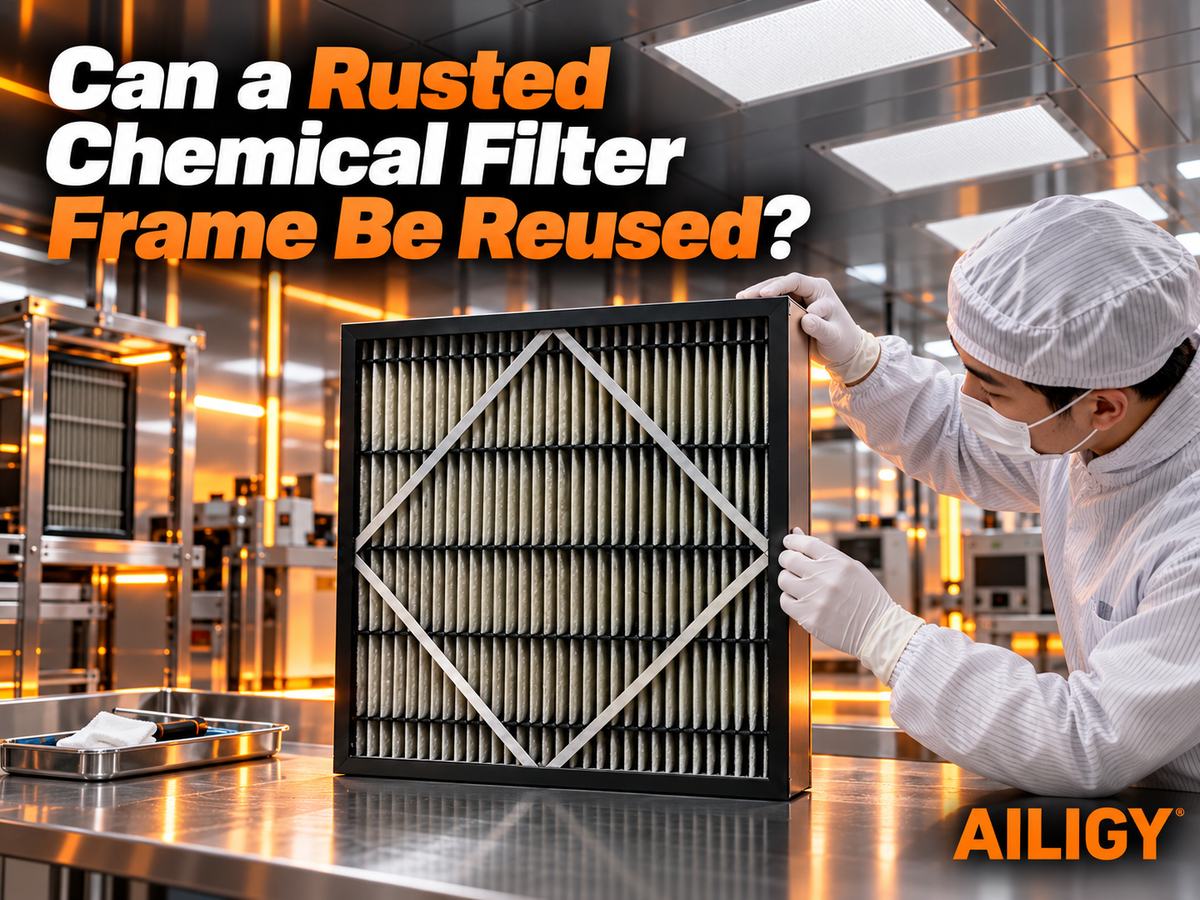 This article explains whether the rusted old frame of a chemical filter can continue to be used. It is necessary to check the corrosion degree, structural strength, sealing contact surface and cleanliness requirements. It cannot be considered that the original frame still has reliable support and sealing capabilities just by removing visible rust. The article starts with four steps: first finding the cause of corrosion, confirming the structure and sealing status, applying check points, verification and subsequent use. It points out that corrosion of the sealing surface may cause bypass and affect the actual filtration effect.
-
 This article explains that when the photoresist is sensitive to alkaline gases, the filtration target should be determined based on the specific photolithography process, material and equipment requirements. General deodorization standards or some universal AMC values cannot be directly regarded as requirements for the entire photolithography area. The article follows four steps: clarifying sensitive objects and detection calibers, assigning targets to actual protection locations, applying check points, verification and subsequent use. It points out that ammonia and amines should be distinguished and the actual use location of photoresist should be verified.
-
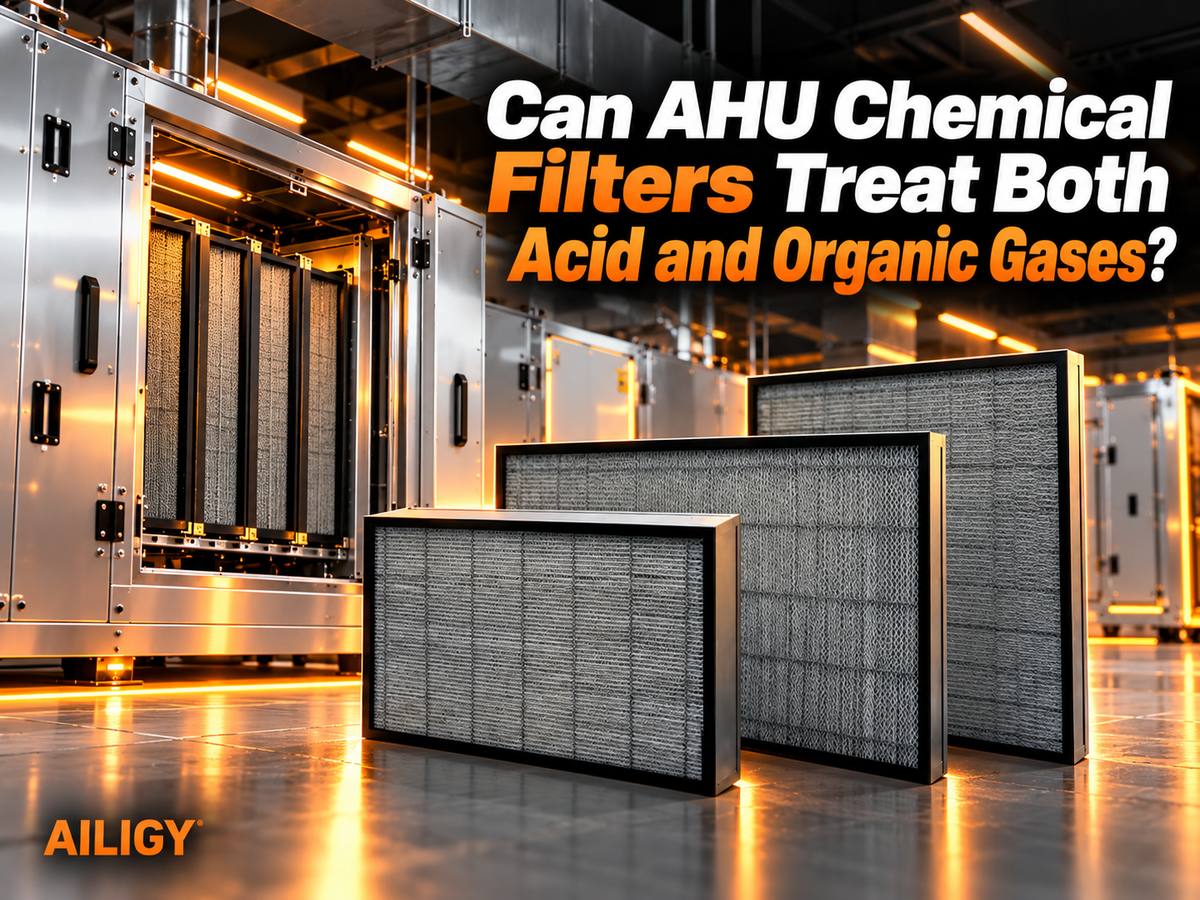 This article explains that the chemical filtration section of the air conditioning box can be evaluated to handle acid gases and organic gases at the same time, but the media must be configured for specific components and the mixing load must be checked. The multi-gas name alone cannot guarantee that all acid gases and organic matter are effective. The article starts with four steps: first determining whether the filter has passed through the same filter section, comparing combinations and system conditions, application check points, verification and subsequent use, and points out that internal and external gas sources should be handled separately when they come from different sources.
-
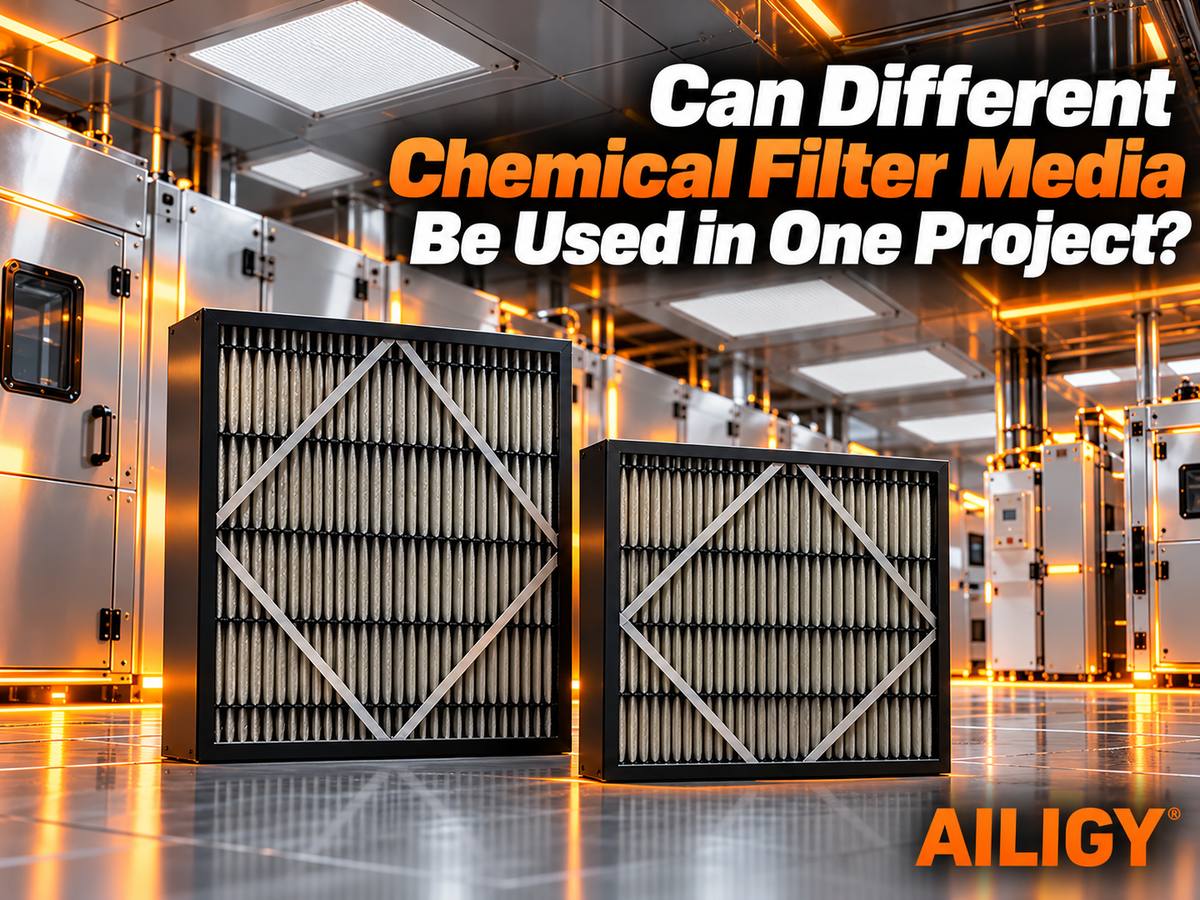 This article explains that the same project can evaluate the use of different chemical filter media, but their respective goals, combination sequence, environmental suitability and maintenance methods should be clearly defined. Putting different media together does not mean that the efficiency and capacity of mixed gases can be simply added. The article is divided into four links: distinguishing stratified and mixed configurations, verifying target gases item by item, application check points, verification and subsequent use, and points out that the combined configuration needs to be confirmed separately for each target gas.
-
 This article explains that cleaning agent safety data sheets can provide clues to the composition and properties of chemical filters, but they cannot replace on-site air testing. When selecting, you also need to understand the cleaning method, temperature, dosage, exhaust air and the actual gas entering the filter section. The article follows four steps: forming an investigation direction from chemical information, connecting documents with actual use, applying check points, verification and subsequent use. It points out that the occupational exposure limits in SDS cannot be used as filter outlet concentration targets.
-
 This article explains that there is still an odor after installing a high-efficiency filter in a clean room. The common reason is that the odor comes from gas or steam, and HEPA is mainly responsible for particle filtration. The article is divided into four links: qualified particles do not mean gas control, locating the source along the air path, application check points, verification and subsequent use. It points out that increasing the particle filtration level cannot automatically solve molecular pollution, and requires separate detection objects and treatment plans.
-
 Pharmaceutical shop chemical filters can be configured for matching gaseous contamination, such as specific organic gases or external odors. It is not a substitute for the respective control measures required for particulate, biofouling and process emissions.
-
 The air volume in the chemical filter quotation may be the rated air volume of a single module, or it may be the designed processing capacity of the entire set. The caliber needs to be clearly stated in the quotation. The number of modules, series-parallel relationship and actual allocation determine the system capability and cannot simply be added up by quantity.
-
 After the clean room is expanded, whether the original chemical filtration capacity is sufficient requires rechecking the treatment air volume, gas load, area sensitivity and air path. The increase in area is not necessarily proportional to the load, but the original plan cannot be used directly.
-
 The chemical filter procurement specification should include target gas, air volume, environmental conditions, structural interfaces, performance basis and acceptance method. A complete description will allow the supply to correspond to project requirements, and avoid just writing about dimensions and general removal rates.
-
 When evaluating chemical filtration effects in a clean booth with surrounding open areas, it is necessary to focus on checking the entry of untreated air and local airflow coverage. Good performance at the outlet of the filter section does not necessarily mean that the gas concentration in the entire open area has been controlled.
-
 Check the chemical filter manufacturer's selection recommendations and correspond to the target gas, air volume, environment, interface and acceptance requirements one by one. Recommended models or brand experience cannot replace performance and adaptation evidence with clear conditions.
-
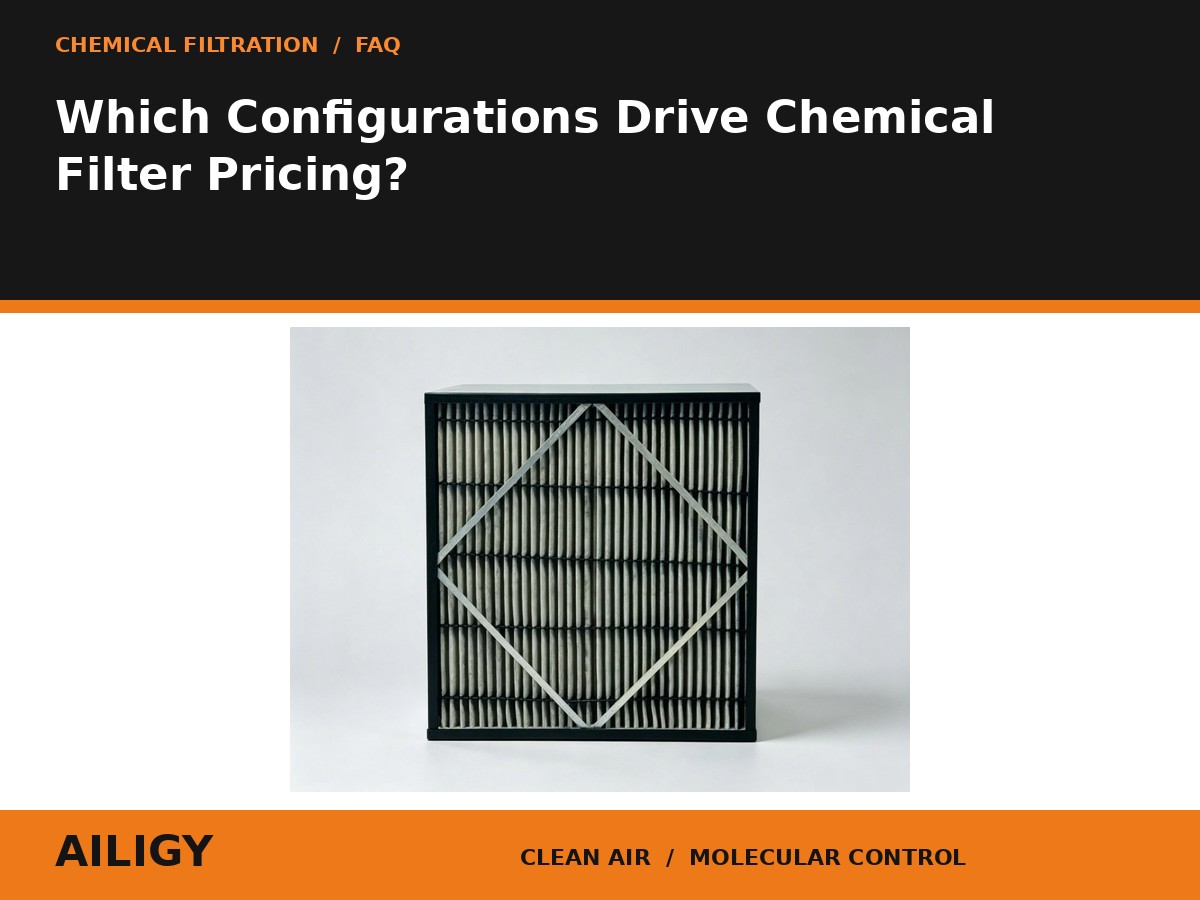 The price of chemical filters is mainly affected by the type and quantity of media, structural size, effective area, sealing method and scope of supply. Quotation comparison should be based on the same target gas and usage conditions, and cannot just compare each price.
-
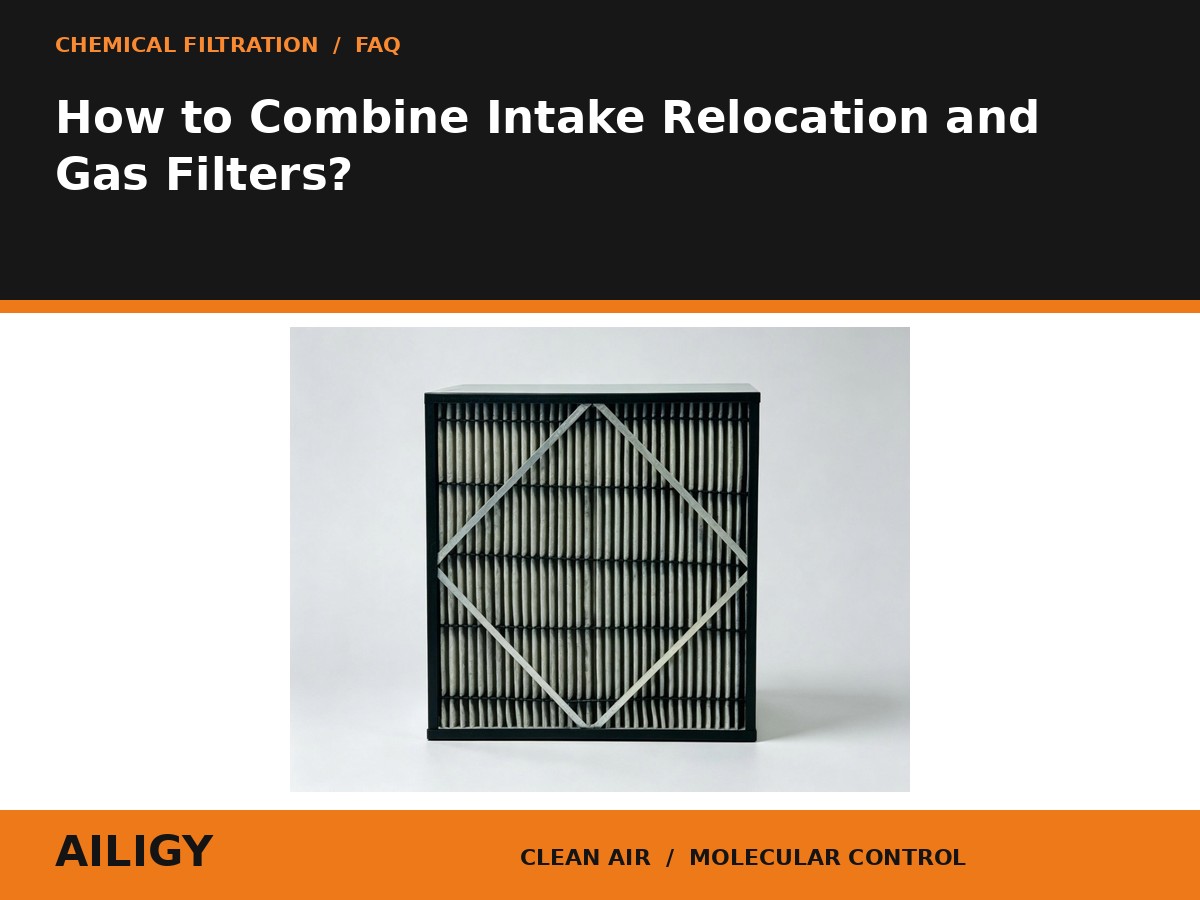 When the factory is close to the pollution source, the air inlet migration and chemical filtration should be compared with the measured load at the inlet, wind direction and system conditions. Improving the input location can reduce partial loads, but increased distance alone does not guarantee a solution to the gas problem.
-
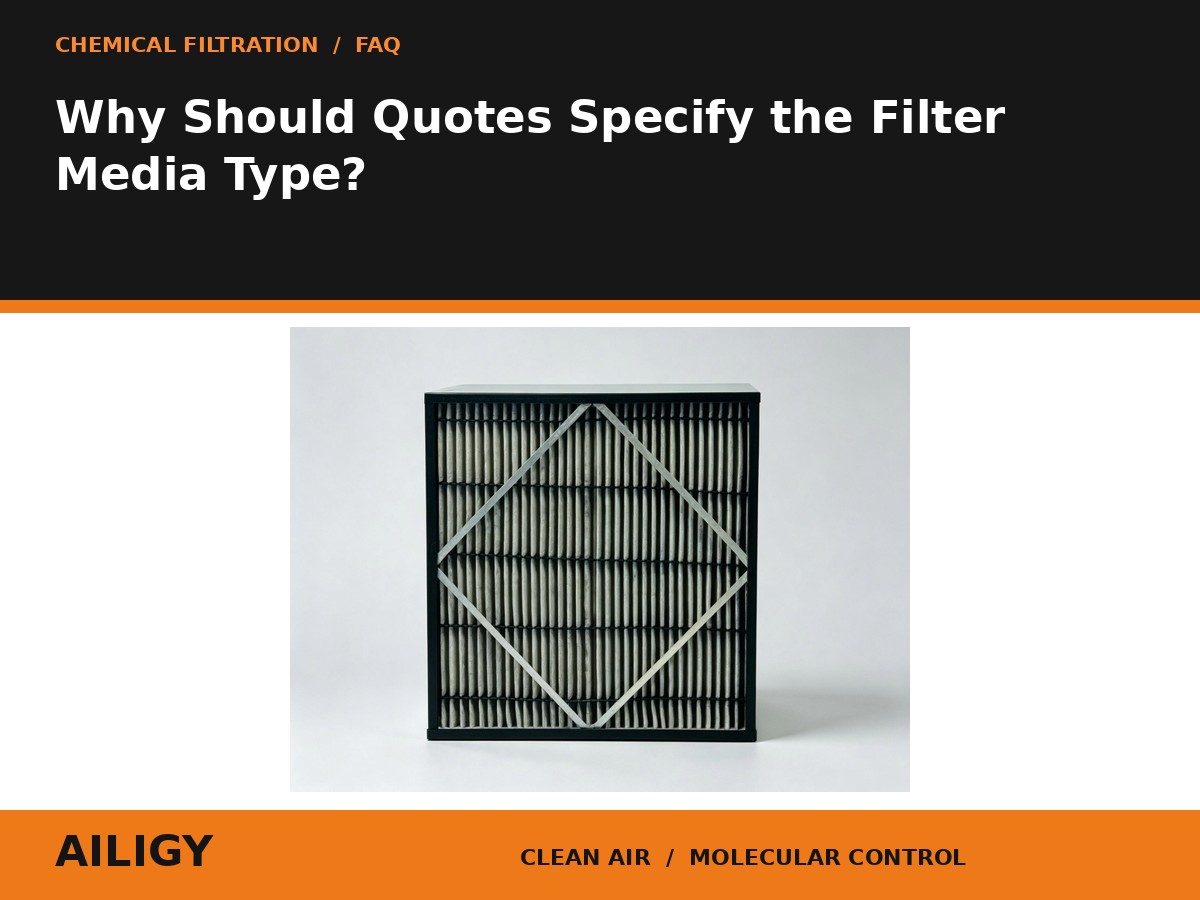 The chemical filter quotation indicates the type of filter material, which helps to confirm the target gas, capacity and usage conditions, and avoids comparing inequivalent products based only on appearance and price. Quotes should also be understood in conjunction with media configuration and relevant performance data.
-
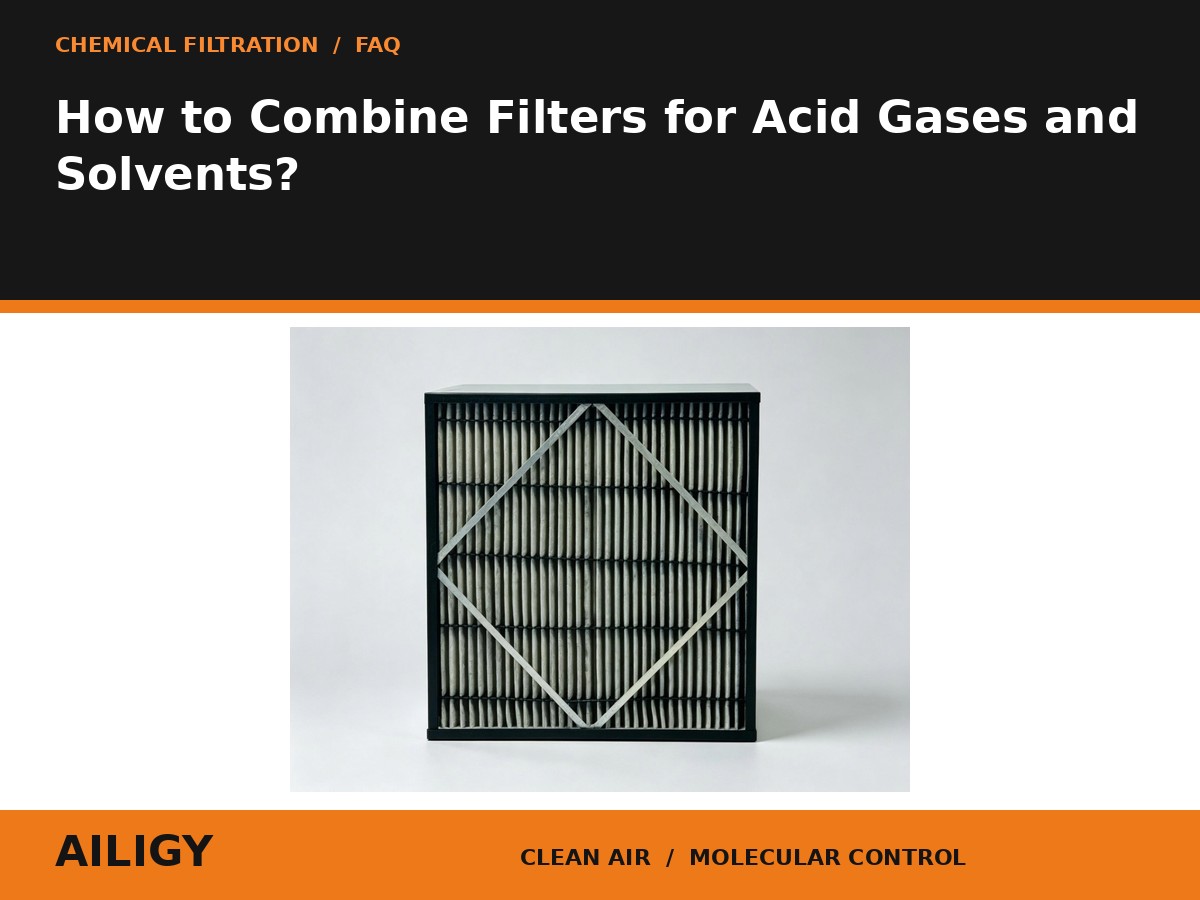 When there is acid gas and solvent contamination in the clean room at the same time, the specific components, loads and sources should be identified respectively, and then stratified, series or partitioned treatment should be evaluated. The multi-gas label cannot be taken as proof that all acid gases and organics meet the requirements.
-
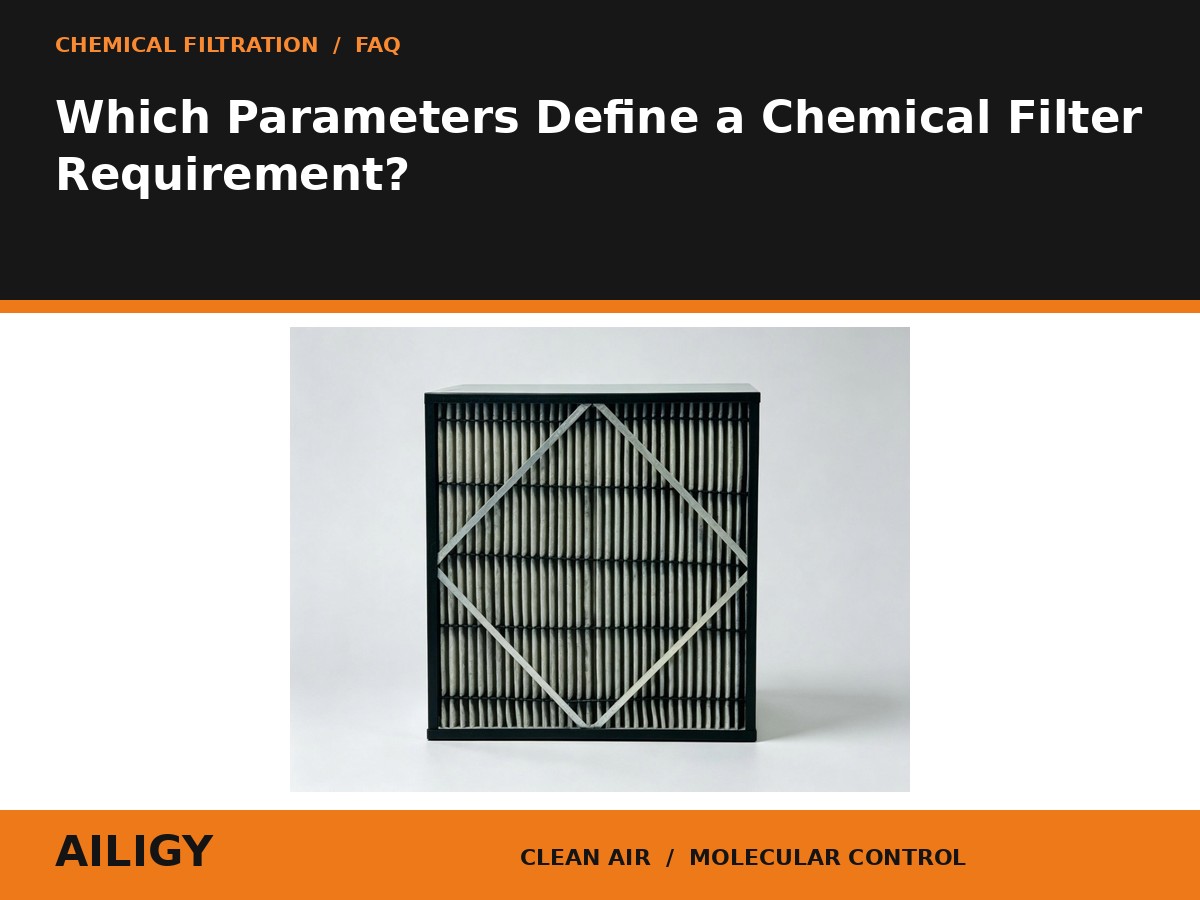 Comparing chemical filter plans and prices requires clarifying the target gas, concentration range, processing air volume, size interface and usage environment. Only with complete parameters can we compare whether different configurations serve the same protection goal.
-
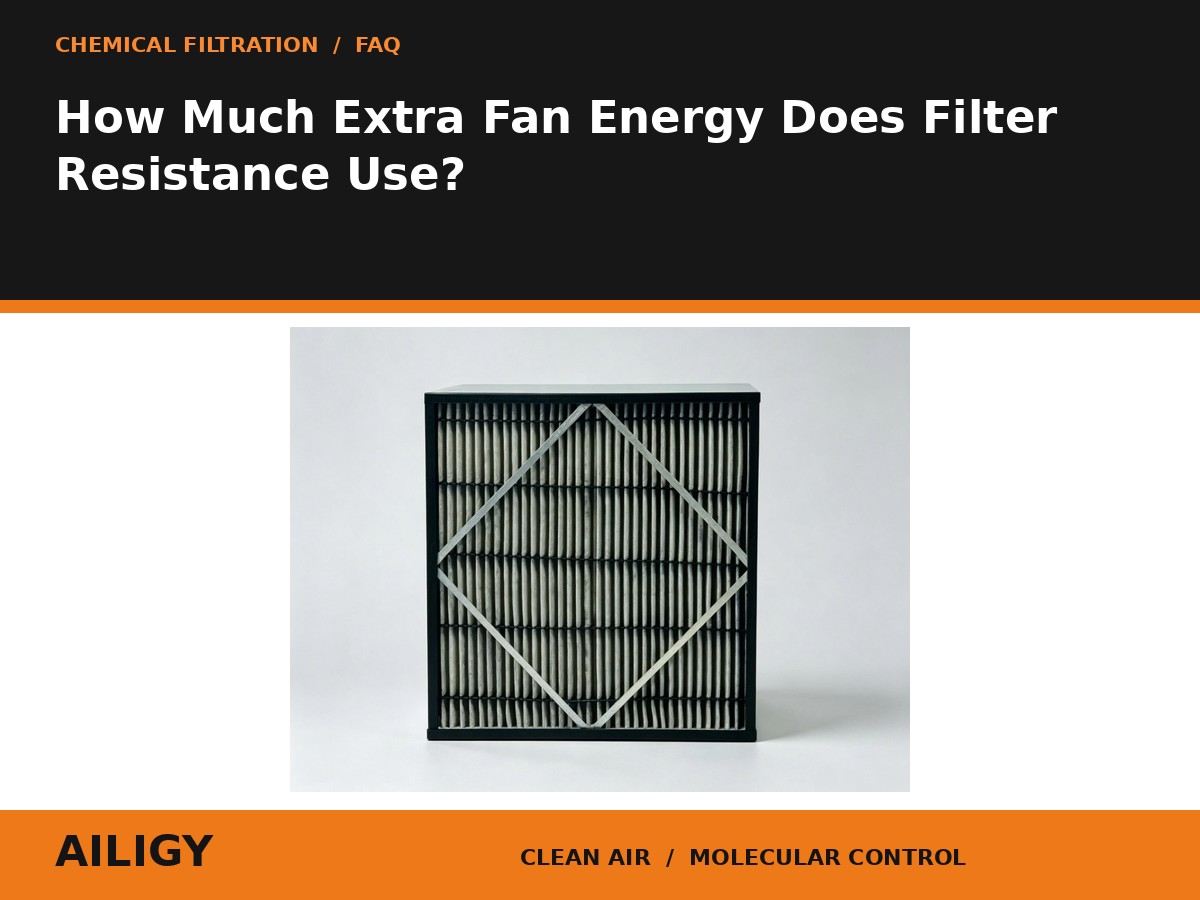 The amount of fan power consumption increased by the new resistance of the chemical filter needs to be calculated or measured based on the actual air volume, fan efficiency, control method and operating time. You cannot promise a uniform increase in power consumption based on just one pressure difference value.
-
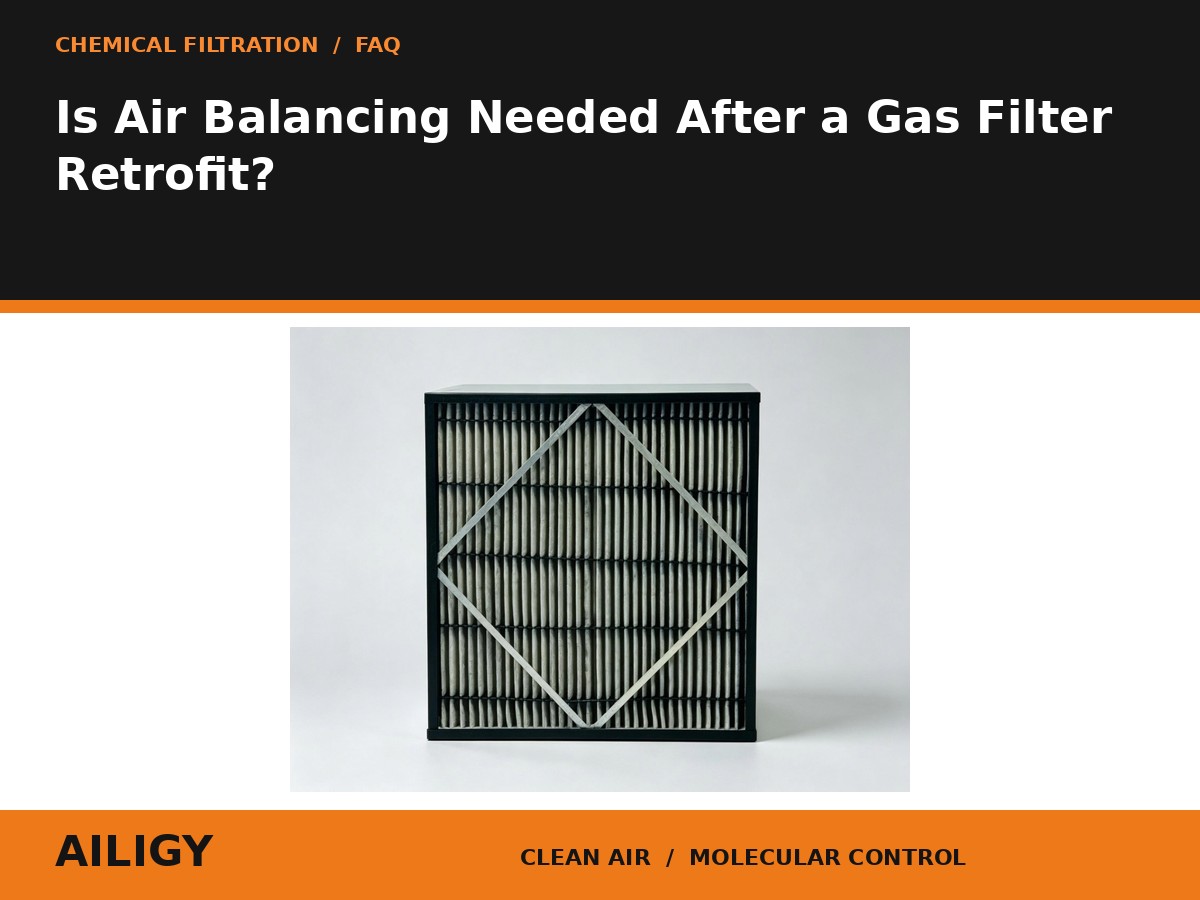 When chemical filtration modifications change system resistance or branch distribution, it is often necessary to recheck the air volume balance. Even if the total air volume does not change much, the supply air, return air and pressure difference in each area may still change.
-
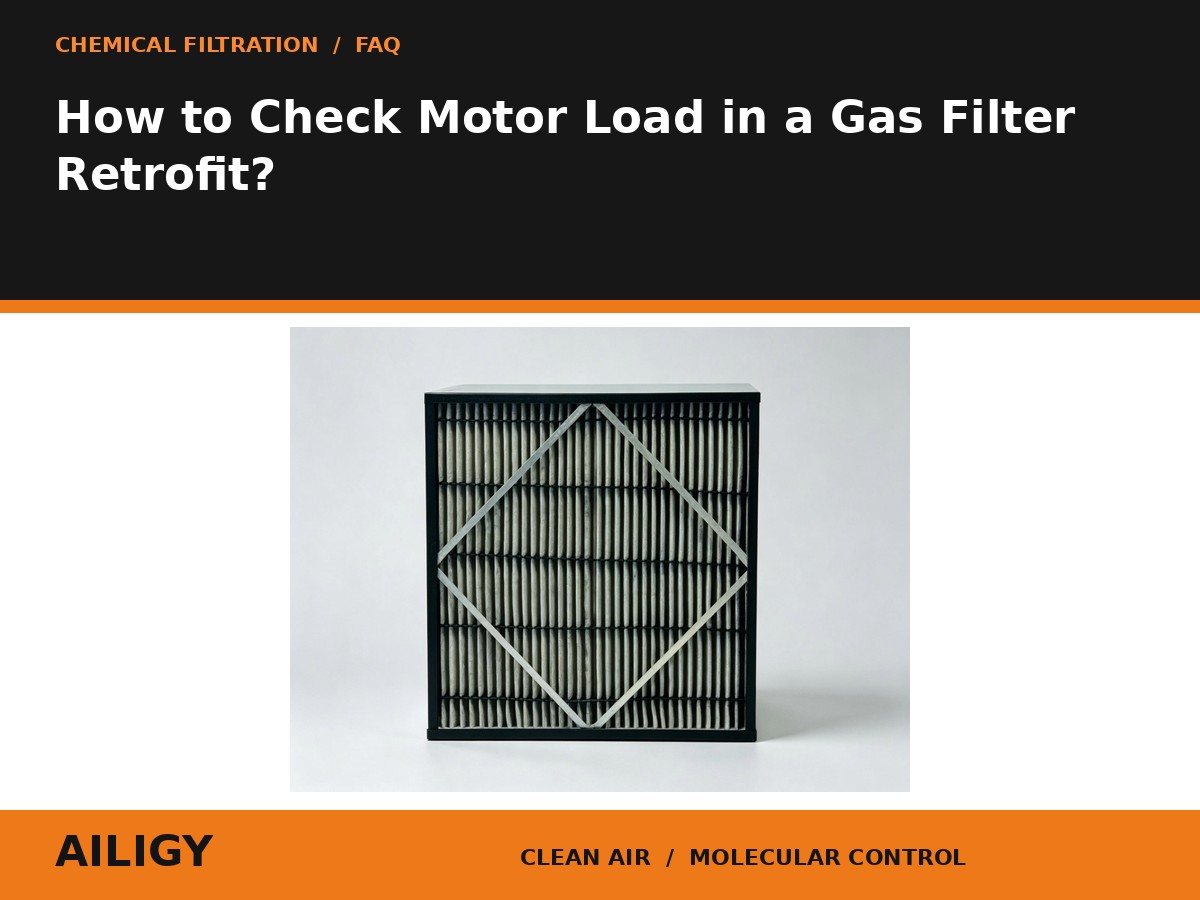 Checking the original motor load for chemical filter modification requires a combination of fan performance, control settings and actual operating measurements. The changes in air volume and power after adding resistance are affected by the fan type and control method, and cannot simply be assumed to be overloaded or power-saving.
-
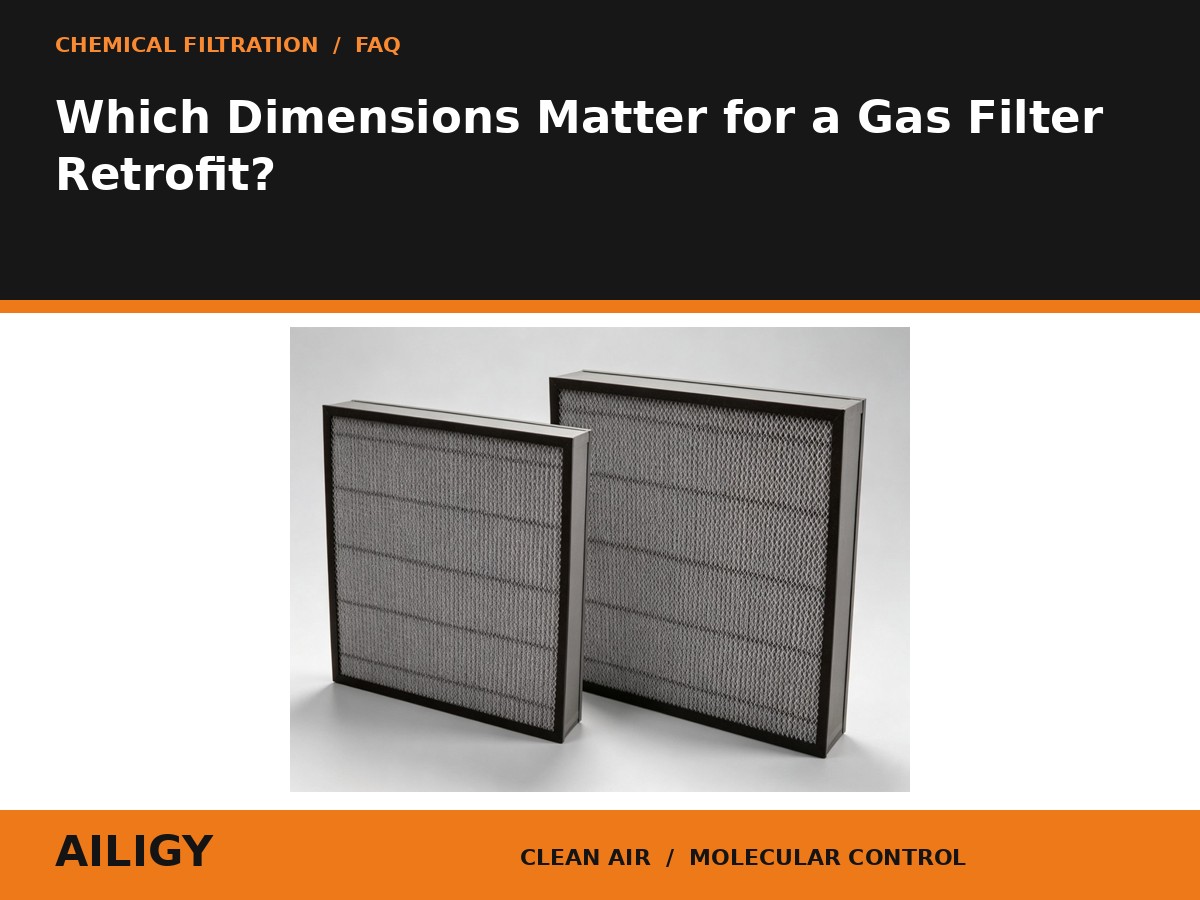 Chemical filtration modification measurements should cover the clear opening of the filter frame, installation depth, sealing contact surface, compression structure and removal path. It is also necessary to pay attention to the wind path, load-bearing and peripheral equipment, and should not just measure the length, width and height.
-
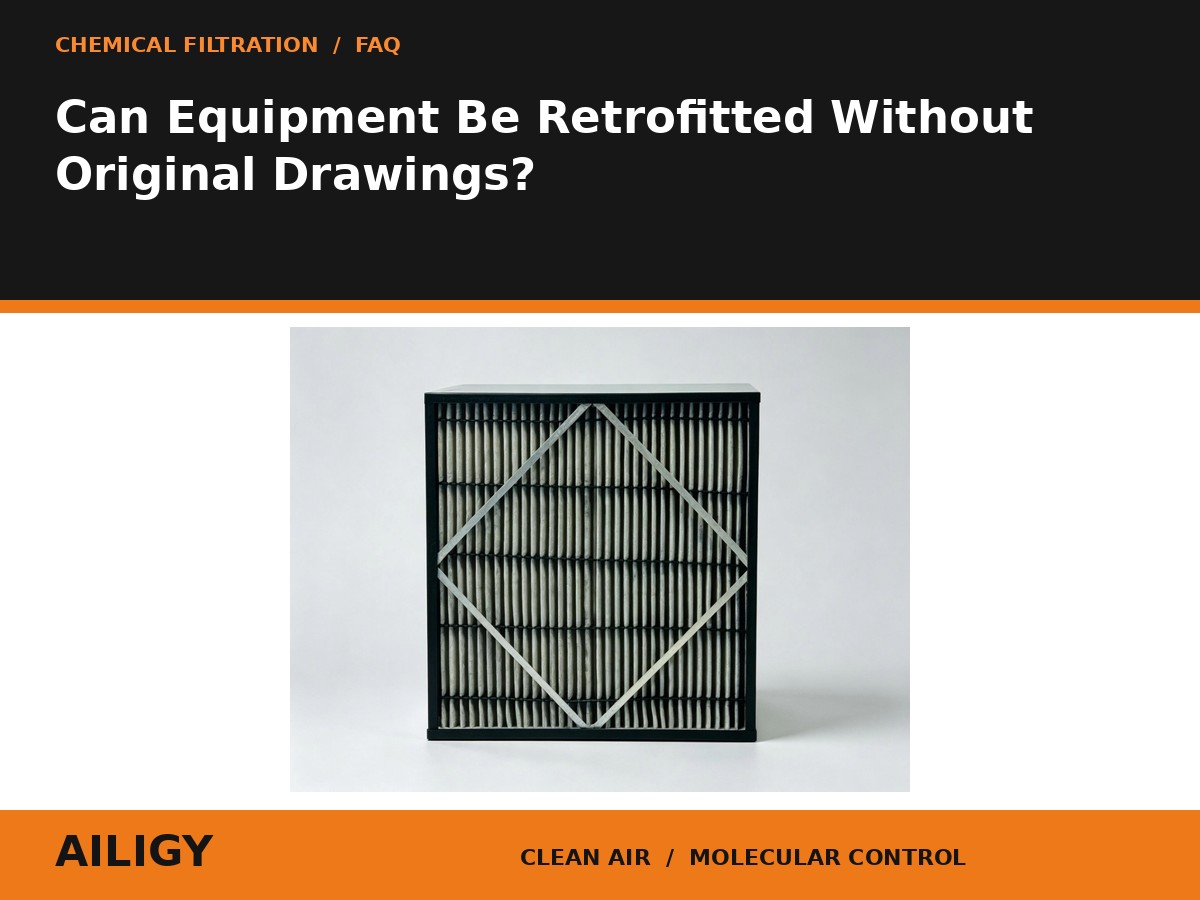 Old equipment without drawings can still evaluate chemical filtration modifications through on-site measurements and operational surveys, but interface, fan and structural verification cannot be skipped. Hidden spaces and conditions that cannot be confirmed should be clarified before design.
-
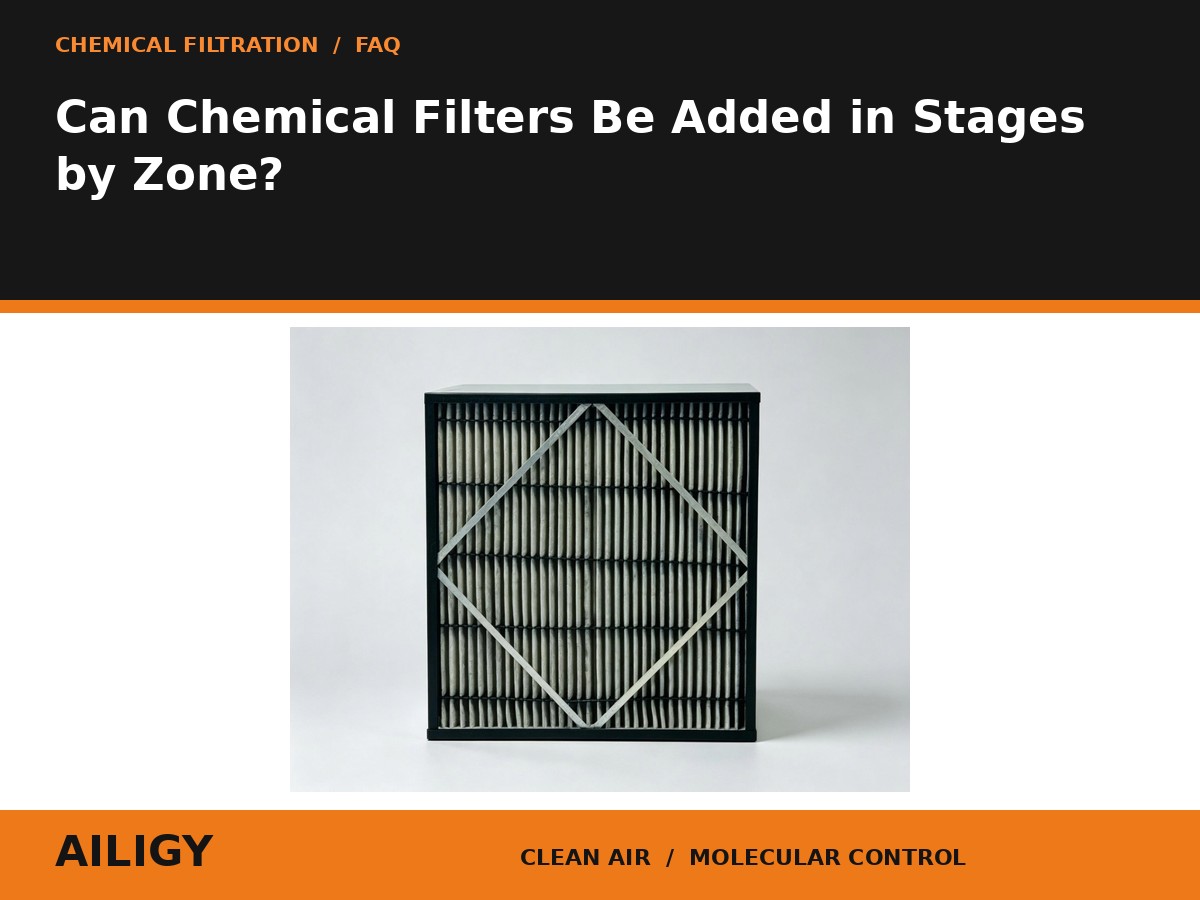 Chemical filters can be evaluated and installed incrementally by area, provided that the pollution paths and ventilation connections in each area are clear. Phased implementation does not mean that the areas are completely independent. Shared return air or external input may still affect the overall effect.
-
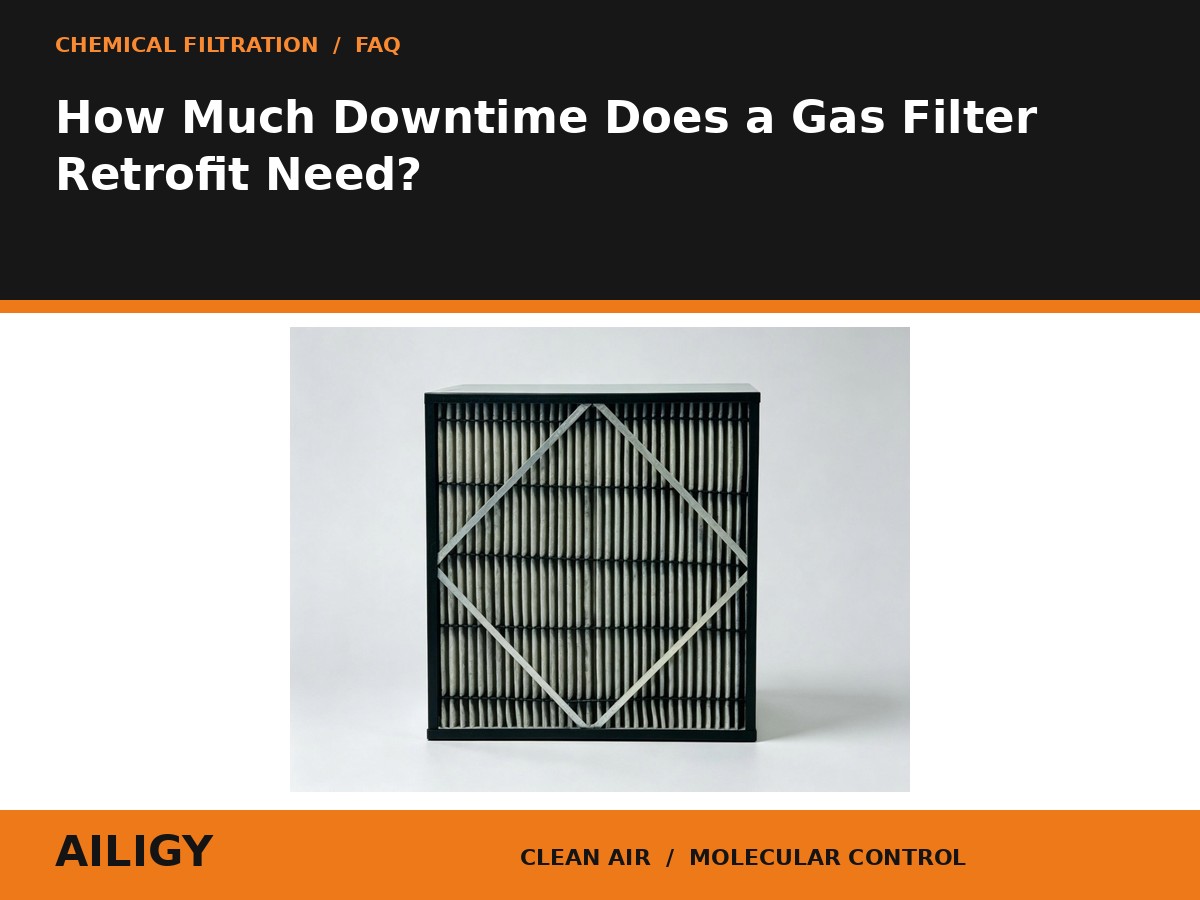 Chemical filtration retrofit downtime depends on the scope of work, installation location, cleaning recovery and acceptance steps, and there is no universal set number of hours. A plan including construction, cleaning, commissioning and verification should be given after the on-site verification is completed.
-
 To avoid affecting the room pressure difference, the chemical filter modification needs to check the balance of supply air, return air and exhaust air at the same time. Adding new resistance may change the air supply volume, and you cannot just rely on restoring a certain fan speed to ensure a stable room pressure difference.
-
 Chemical filtration modifications can usually be evaluated to retain the original HEPA, but only if the original filter element and seal meet particle requirements, and the new filter section does not damage the air volume and structure. The division of labor between gas phase filtration and HEPA is different. Adding a chemical filter layer does not mean that the original HEPA can be canceled at will.
-
 Adding a chemical filter to an old air conditioning system does not necessarily require replacing the fan, but the operating point and target air volume under the new resistance must be checked. Being able to increase the speed or continue running does not mean that the motor load, noise and air supply are all suitable.
-
 What conditions should be evaluated first before adding a chemical filter to an existing clean room?Before adding a chemical filter to an existing clean room, the source and target of pollution should be clarified first, and then the filter position, fan margin, installation space and maintenance conditions should be checked. The modification plan cannot be determined solely based on the size of the existing filter frame.
