EFU – equipment fan filter unit

Clean air, designed for equipment

Aili Industrial EFU is a fan filter unit for semiconductor equipment, electronic manufacturing equipment, automation equipment and other local clean applications. Product configuration is carried out according to the equipment installation space, air volume, wind speed, filtration requirements and control methods, and standard EFU and equipment-specific customized solutions can be provided.


Ultra-thin EFU |Small size EFU |DC EFU |Equipment matching customization

ailigongyeEFUshebeiduanfengjiguolvdanyuan

What are the requirements for EFU for different devices?

EFU is mainly used for clean air filtration and air supply inside the equipment or in local areas. The internal space, process requirements and control methods of different equipment are different, so the EFU needs to be configured based on the installation size, air volume, wind speed, filtration requirements and equipment control methods.

Installation space is limited

The internal space of the equipment is usually limited by the mechanical structure, electrical components and process modules.


EFU requires structural design based on actual installation height, length and width.

Air volume and wind speed requirements are different

Different equipment and different processes have different requirements for clean air.


EFU can configure the power system according to the target air volume, wind speed and filter resistance.

Need to be linked with equipment

Some equipment requires EFU to be linked with the equipment control system.


Control methods such as start-stop, speed regulation, and communication can be configured according to project requirements.

Different cleaning requirements

According to the cleanliness requirements inside the equipment, EFU can be equipped with corresponding HEPA or ULPA filters.

When selecting EFU, consider these 6 items first

EFU needs to be used in conjunction with the structure of the production equipment, process areas and control systems. When selecting a model, first confirm the installation conditions and target air supply requirements, and then determine the filter, power system and control configuration, which will help reduce subsequent structural adjustments and on-site debugging.
Selection itemsWhat needs to be confirmedImpact on EFU configuration
Device available spaceConfirm the length, width, and height of the EFU installation location, as well as the space required for upper air inlet, lower air supply, cable layout, and peripheral components. When space is limited, provide internal dimensional drawings or three-dimensional structural drawings of the equipment.Determine the overall dimensions, overall height, and arrangement of fans and filters of the EFU. Projects with limited space on top of the equipment can further evaluate ultra-thin EFUs or small size EFUs.
Installation openingConfirm the length, width, hole position, load-bearing conditions, installation direction and sealing requirements of the reserved opening for the equipment; if there are equipment drawings, mark the location where the EFU is connected to the equipment.Determine the cabinet structure, installation frame, fixing method and connection size. For the modification of existing equipment, the adaptation plan can be evaluated based on the actual opening.
Target air volume/wind speedExplain the area that needs air supply, the effective air supply area, and the target air volume or target wind speed; if there are different operating states such as working and standby, also explain them together.Determine the fan, motor, filter area and speed adjustment plan. The air volume and wind speed need to be determined comprehensively based on the filter resistance, the internal air duct of the equipment and the actual installation conditions.
filter levelDescribe the target cleanliness requirements, the particulate matter or process environment of concern, and whether there are any specified HEPA, ULPA filter grades or filter media requirements.Decide on filter type and configuration. The filter grade, size and operating resistance will affect the air volume, wind speed and structural design of the entire machine.
Power supply and control interfaceConfirm the voltage, frequency, wiring method that the equipment can provide, and whether start/stop, speed adjustment, status feedback, fault alarm, or communication with the equipment control system is required.Determine motor, controller, wiring and communication configurations. The specific interface and control logic should be confirmed together with the equipment electrical scheme.
Maintenance methodAfter confirming the EFU installation, from which direction personnel can access the equipment, whether filters and electrical components need to be replaced regularly, and the maintenance space that can be reserved around the equipment.Determine the filter disassembly and assembly direction, maintenance structure and installation location to make subsequent maintenance compatible with the existing structure of the equipment.

Aili Industrial EFU equipment-side fan filter unit EFU product series

According to different equipment structures and clean air requirements, Aili Industrial provides EFU products with different structures and configurations, which can be selected according to installation space, air volume, wind speed, filters and control methods.

How to choose different EFU products?

The equipment space, installation method and control requirements are different, and the suitable EFU structures are also different. The following product comparison can be used as a preliminary selection entry; the specific size, air volume, filtration configuration and interface are subject to the corresponding product and project confirmation plan.

product typeMain applicable scenariosParameters to be confirmed firstDetailed entry
Regular EFUThe interior of the equipment or local process areas require independent filtering and air supply, and the installation space is sufficient.Installation size, air supply area, target air volume or speed, and filtration level.View regular EFU →
Ultra-thin EFUSemiconductor equipment, equipment top mezzanine and other scenarios with limited installation height. Some products can achieve an overall height of 70 mm.Available total height, air inlet space, installation opening, target air volume, filter configuration.View ultra-thin EFU →
Small size EFUThe equipment has small openings, compact internal space, or only needs to cover a partial process area.Opening length and width, available height, effective air supply range, and mounting hole locations.View small size EFU →
DC EFUEquipment that requires speed regulation, equipment linkage, or long-term energy consumption concerns.Power supply conditions, target air volume, speed range, start and stop logic and control interface.View DC EFU →
Snap-on EFUThe equipment structure is suitable for snap-on connections, or there are clear requirements for assembly and disassembly methods.Butt structure, buckle position, installation tolerance, sealing method and maintenance space.View snap-on EFU →
Anti-static EFUElectronic manufacturing, semiconductor and other equipment areas that require static electricity control.Static control objectives, equipment grounding conditions, installation space, filtering configuration and control methods.View anti-static EFU →
Special FFU/EFU for SMT placement machinesLocal clean air supply for placement machines and related electronic manufacturing equipment.Equipment brand and model, head space, installation location, air supply range and electrical interface.View SMT equipment supporting products →
Custom EFUProjects where standard construction makes it difficult to match equipment size, air volume, filtration or control requirements.Equipment drawings, installation openings, available space, target air supply requirements and control interfaces.Inquire about customized EFU →
Not sure which EFU to choose? Provide equipment installation drawings, available space and target air supply requirements, and Aili Industrial can help sort out the structure and configuration direction of the EFU. Submit equipment request, consult EFU program→

Why does the equipment need independent clean air supply?

Integral air control of the clean room is oriented to the entire production space. The process area of ​​some equipment is located in a hood, cavity or other relatively independent structure. The air supply position, air flow direction and cleanliness requirements need to be determined in conjunction with the equipment itself. The EFU can be installed at a designated location on the equipment to provide filtered air to a local area.

Why does the equipment need EFU to provide independent clean air supply?
Local air supply needsWhat to pay attention to when configuring EFU
Cover designated process areasDetermine the air supply location, effective air supply range and target air volume according to the area that needs to be protected.
Adapt to the internal space of the deviceDetermine the product structure based on the installation height, opening size, peripheral components and maintenance space.
Work with equipmentAccording to the power supply and control conditions of the equipment, determine the start, stop, speed regulation and linkage methods.

How does Aili Industrial build an EFU?

From core components to complete machine assembly, product design and manufacturing are carried out according to equipment requirements.

From core components to EFU complete machine

The overall dimensions, air supply performance and control method of the EFU need to match each other. Aili Industrial configures motors, fans, control systems, boxes and filters based on equipment installation conditions, completes assembly and debugging of the entire machine, and provides manufacturing support for standard products and equipment supporting projects.


Motors and Fans | Control Systems | Box Structure

Aili Industrial Motor R&D and Production(1)(1)

Match power according to target working conditions

Select the motor and fan configuration based on the target air volume, filter resistance and installation space, and conduct corresponding operation tests.

Aili Industrial Control System Testing

Cooperate with equipment control needs

Configure start-stop, speed regulation, status feedback and communication methods according to project requirements, and confirm the connection conditions with the equipment control system.

Real shots of Aili Industrial sheet metal processing

Design structure according to device interface

Determine the box size and installation method based on the reserved opening, installation hole position, overall height and maintenance space.

Aili industrial filter production

Filter manufacturing and configuration

According to the particle control requirements, air supply area and resistance conditions, configure the corresponding HEPA or ULPA filter.

Aili Industrial EFU assembly production

Whole machine assembly

Assemble the power, filtration, control and cabinet components according to the confirmed product plan, and check the installation and connection status.

Aili Industrial FFU Vibration Detection

Overall machine performance testing

Check the operating status and related performance parameters according to product requirements.

For projects with specific air volume, wind speed, noise or control requirements, the test items and acceptance conditions will be clarified when the plan is confirmed; specific product performance shall be subject to the corresponding model information and project test results.
Panoramic view of Aili Industrial EFU and clean equipment manufacturing workshop (1)
Aili Industrial's 30,000㎡ production base covers motors, sheet metal, filters, complete machine assembly and testing, and provides manufacturing support for EFU and FFU products and equipment supporting projects.

The creation of high-performance EFU is not just a simple assembly of parts, but also the collaborative design of core components to achieve overall optimization of aerodynamic performance.

Aili Industrial relies on its independent R&D and manufacturing system to systematically match and strictly test key components to ensure stable performance, consistent quality and long-term reliable operation of products from the source.

The core components of EFU are independently developed and produced by Aili Industrial

There is a relationship between EFU size, air volume, air speed and control method. Aili Industrial incorporates the production links of motors, fans, automatic control system software and hardware, sheet metal and filters into its own manufacturing system. During the EFU development process, parts can be matched according to product needs.

Aili Industrial Motor R&D and Production(1)(1)

Independently developed motor

Provide core power for stable operation

The motor is the core of the stable operation of FFU. Aili Industrial independently develops and produces AC, EC, DC and other motors, which can be configured according to product operating parameters. While ensuring sufficient power, it achieves higher efficiency, lower energy consumption, lower noise and longer service life, laying a solid foundation for the performance of the entire machine.


Aili industrial fan production

Independently designed centrifugal fan

Achieve efficient and uniform air supply

The fan directly affects the air supply efficiency and air flow uniformity of the FFU. Aili Industrial independently designs the centrifugal fan and air duct structure. By optimizing the impeller design and aerodynamic layout, it improves the air volume output efficiency, reduces operating noise, and enables clean air to cover the entire work area more evenly and stably.

Aili Industrial Intelligent Group Control System

Self-developed intelligent control system

Achieve precise air volume control

The control system determines the stability and intelligence level of FFU operation. Aili Industrial independently developed the control system software and hardware, supporting various control methods such as PWM speed regulation, RS485 communication, Modbus protocol, PLC joint control and intelligent group control. The control method can be configured according to the equipment requirements.

Aili Industrial FFU production sheet metal production

Precision sheet metal manufacturing

Create a strong and reliable body structure

The FFU body structure directly affects the sealing, strength and long-term stable operation of the equipment. Aili Industry has complete sheet metal processing capabilities. Through processes such as laser cutting, CNC bending, welding and surface treatment, it can carry out structural design according to the equipment installation dimensions.

Aili Industrial FFU high-efficiency filter production workshop

Independent production of air filters

Ensure clean air quality

The filter is the core component of FFU for air purification. Aili Industrial independently produces HEPA and ULPA filters, strictly controls raw materials, production processes and testing procedures to ensure filtration efficiency, resistance performance and product consistency, and configures corresponding filtration solutions according to cleanliness requirements.

Introduction to Aili Industrial FFU production

Precision assembly

Make every part work together

The overall performance of the machine comes from the precise matching of each core component. Aili Industrial uses standardized assembly processes to optimize and integrate independently developed motors, fans, control systems and filters, making the entire machine more stable, airflow more uniform, and more reliable in long-term use.

Aili Industrial FFU strict testing

Multiple rigorous tests

Ensure that each EFU is stable and reliable

EFU must undergo strict testing before leaving the factory to ensure that the product meets design standards and can operate stably in various clean environments for a long time.

tonglanbeijingtu2

EFU joint development for equipment manufacturers


Focusing on equipment space, air supply performance and control requirements, let the fan, control system and overall machine structure work together.


The EFU needs to be compatible with the installation space, air supply area and control system of the customer's equipment. Aili Industrial has the capabilities of motor manufacturing, independent research and development and production of fans, control system software and hardware development, filter manufacturing and complete machine design. It can organize relevant engineers to participate and implement equipment requirements into component configuration, box structure and control scheme.

Aili Industrial FFU disassembly diagram, detailing each component

Aili Industrial Engineering customizes FFU/EFU according to your requirements:


Structure and air supply configurationControl and supporting configuration
Overall dimensions and installation openingsStart, stop and speed adjustment methods
Overall height and installation structureCommunication interfaces and protocols
Air volume, wind speed and wind speed uniformityHEPA/ULPA filter configuration
Motor type and fan configurationBox material and surface treatment
Inlet and outlet air direction and air supply rangePower supply conditions and special voltage
Filter disassembly and maintenance methodsOEM/ODM equipment matching
The specific configuration shall be confirmed based on the equipment drawings, usage conditions and project requirements.

Core components are self-developed and produced, and jointly developed within EFU

Motors and fans | Control system software and hardware | Air filters | Sheet metal and complete machines

Customers put forward equipment requirements, and internal engineers jointly adjust components and complete machines.


Aili Industrial has the capabilities of motor manufacturing, independent research and development and production of fans, control system software and hardware development, filter manufacturing and complete machine design. How to configure the fans, how to adjust the control parameters, and how to modify the box structure can all be directly communicated and promoted jointly by the company's internal engineers who master the relevant design and parameters.

When equipment requirements change, we can start from the core components and make adjustments so that the fan, control, filtration and overall machine design work together around the same goal.。


Air supply performance: fan, control and box are adjusted together
Faced with the target air volume, wind speed or uniformity requirements, the company's internal fan, control system and equipment R&D personnel jointly participate in the joint evaluation of fan configuration, speed control parameters, filter resistance and box air path. The modification of relevant components is carried out simultaneously with the performance adjustment of the entire machine, reducing the need for repeated relaying and coordination of technical information among multiple parties.


Installation structure: component configuration and cabinet design are advanced simultaneously

When the installation height, openings or internal space of the equipment are limited, the structural design, fan and filtration configuration are jointly evaluated . If the size of the box needs to be changed, relevant engineers can simultaneously check the component layout, air inlet and outlet conditions, fixing methods and maintenance space, and coordinate installation requirements and air supply performance.


Control interface: direct internal connection between software and hardware engineers
The control system software and hardware are independently developed by the company . In response to requirements for start-stop, speed regulation, status feedback or communication linkage, internal control system engineers and equipment developers directly confirm the interface and operating logic to connect control modifications, fan debugging and complete machine solutions to cooperate with the electrical design of customer equipment.


Problem improvement: joint analysis and verification by relevant R&D personnel
When an operating abnormality occurs, relevant internal R&D personnel will jointly check the control signals, component operating status, and complete machine matching relationship based on on-site working conditions. After confirming the cause, targeted adjustments can be made starting from parameters, component configuration or structural design, and the improvement effect can be verified, and the analysis results can be used for subsequent product optimization.


Development response: direct internal communication, relevant modifications are promoted simultaneously

After customers put forward new performance, structure or control requirements, relevant engineers within the company can directly evaluate them together, and the fan configuration, control parameters and cabinet design can be adjusted simultaneously, reducing the time of multi-party reporting, step-by-step confirmation and waiting for coordination.。

From demand communication to plan modification and prototype verification, relevant R&D and manufacturing personnel are directly connected, which helps shorten the communication and modification cycle during development and improves project advancement efficiency.


Project cost: Reduce duplication of investment, coordinate and optimize from components to complete machine

During the development stage, joint assessment of fan, control, filtration and structural requirements can help identify matching problems in advance and reduce the time and expense caused by repeated selection, repeated proofing and structural rework.

In the manufacturing stage, relying on the independent manufacturing of core components and supporting capabilities in sheet metal, assembly, and testing , we coordinate component configuration and production arrangements, taking into account product performance, manufacturing costs, and rapid batch delivery requirements.


Core components are independently developed and manufactured through collaborative development ,by internal engineers , allowing for a more direct connection between performance adjustment, solution confirmation and manufacturing delivery, reducing the time and cost consumption caused by repeated coordination and repeated modifications.


You are welcome to provide equipment installation drawings, reserved openings, available heights, target air volume or speed, uniformity requirements, filtration configurations and control interfaces. Already available measurement locations, test conditions or acceptance requirements can also be provided.
Aili Industry will organize relevant engineers to jointly evaluate according to project needs, clarify the components, structures and control configurations that need to be adjusted, and provide support for prototype development and subsequent batch matching.

What industries and equipment is EFU used in?

EFU is mainly used for clean air filtration and air supply inside the equipment or in local areas. According to the installation conditions of different production industries and equipment, Aili Industrial can configure EFU products based on equipment space, air volume, wind speed, filtration requirements and control methods.

Aili Industrial Semiconductor Air Purification Solution

Semiconductor equipment

Semiconductor equipment has different requirements for local clean environment, air parameters and internal space of the equipment. EFU can be configured according to the equipment installation location, air volume, wind speed, filtration requirements and control method.


Pay attention to: cleanliness/wind speed/air flow uniformity/installation space

Air purification solution application in the lithium battery industry

Lithium battery equipment

Lithium battery production equipment has different requirements for the air conditions of the local environment. For applications that require clean air supply inside the equipment, corresponding EFU products can be configured according to process requirements.


Pay attention to: air volume/wind speed/cleanliness/equipment space

Application of Aili Industrial FFU in photovoltaics

Photovoltaic equipment

Photovoltaic production involves a variety of process equipment, and a corresponding clean air environment needs to be maintained inside some equipment. EFU can be configured according to the equipment structure and local air supply needs.


Focus on: clean air/air volume/wind speed/equipment space

Application of Aili industrial products in panel display industry

Panel display device

Panel display production equipment often has larger equipment structures and different clean area requirements. EFU can be configured according to the internal space of the equipment, air supply location and cleanliness requirements.


Pay attention to: cleanliness/air volume/wind speed/air flow uniformity

Application of Aili Industrial FFU in data center

Automation equipment

The structures of automation equipment vary greatly, and the clean air supply unit needs to be configured according to the internal space of the equipment and actual operation requirements. EFU can adjust its structure and parameters for different installation positions.


Pay attention to: structural size/installation method/air volume/control

Aili industrial products are used in precision electronic assembly, optical lens manufacturing, microelectromechanical systems (MEMS) packaging, sensor production, relay connector assembly, etc. (1)

Precision testing equipment

Some precision testing equipment needs to control the internal air environment to prevent particles in the air from affecting the operation of the equipment or the testing process. EFU can configure corresponding filtration solutions based on equipment space and cleanliness requirements.


Focus on: cleanliness/filter/air volume/low-noise operation

From clean rooms to inside equipment, EFU is suitable for different clean air supply needs

Whether it is semiconductor, photovoltaic, lithium battery, panel display and other production equipment, or placement machines, automation equipment and precision testing equipment, the product configuration of EFU needs to be determined based on the specific installation space and usage conditions. Aili Industrial can design and configure products based on equipment size, air volume, air speed, filtration requirements and control methods.

Production base to provide manufacturing support for EFU projects

From product development to mass production, Aili Industry has established a complete production and manufacturing system. The nearly 30,000 square meters production base covers sheet metal processing, component production, filter manufacturing, complete machine assembly and product testing, providing corresponding manufacturing support for EFU and other clean equipment.

Aili Industrial 30,000 square meters modern industrial plant
Aili Industrial FFU production sheet metal production

Sheet metal processing

Aili Industrial FFU production

Whole machine assembly

Aili Industrial FFU strict testing

Product testing

Aili Industrial FFUEFU and other purification equipment warehouse

Finished product area

For EFU products of different specifications and application conditions, Aili Industrial can rely on the existing R&D, production and assembly systems to manufacture corresponding products.

Quality control, starting from core components

A truly stable FFU does not just rely on final inspection, but controls every key link starting from core component manufacturing. Aili Industrial incorporates motors, fans, control systems and filters into its own quality management system, and continuously controls product performance and consistency through component testing and complete machine testing.

Aili Industrial Motor Testing

Motor performance testing

Test the motor's operating performance, electrical parameters and operating status to ensure that the power system meets the long-term operation requirements of FFU.

Aili Industrial Fan Testing

Fan performance testing

Test the operating status, air volume and related performance of the centrifugal fan to provide stable aerodynamic performance for the entire equipment.

Aili Industrial Control System Testing

Control system function test

Test the control board, speed control function, communication function and control logic to ensure that the FFU can respond stably to different control instructions.

Aili Industrial Filter Testing

Filter performance testing

Conduct relevant performance testing of HEPA and ULPA filters according to product requirements to ensure that the filters meet design and application requirements.

Aili Industrial FFU strict testing

Overall machine comprehensive performance test

After completing the assembly of core components, the FFU will be tested for complete machine operation and comprehensive performance to confirm that the coordinated operation of each system is normal.

From parts to finished products, how is each step inspected?

Through whole-process quality control, we reduce overall machine performance fluctuations caused by differences in component performance and ensure that EFU and other purification equipment have stable operating performance and good batch consistency.

Aili Industrial Motor Testing
Core component testing
Aili Industrial FFU production delivery process (1)
Aili Industrial FFU production process inspection
Production process inspection
Aili Industrial FFU production delivery process (1)
Aili Industrial FFU complete machine inspection
Whole machine assembly inspection
Aili Industrial FFU production delivery process (1)
Aili Industrial conducted air volume, wind speed uniformity, noise and operational stability tests on FFU samples to verify whether the product performance meets the application requirements of clean rooms and industrial equipment.
Air volume test
Aili Industrial FFU and other purification equipment custom delivery process (1)
Aili Industrial FFU shipment inspection
Factory inspection
Aili Industrial Product Process (1)
Aili Industrial FFU strict testing
Whole machine operation test
Aili Industrial Product Process (1)
Aili Industrial FFU Vibration Detection
Noise and Vibration Testing
Aili Industrial Product Process (1)
Aili Industrial conducted air volume, wind speed uniformity, noise and operational stability tests on FFU samples to verify whether the product performance meets the application requirements of clean rooms and industrial equipment.
Wind speed uniformity test
When the motor, fan, control system, filter and complete machine are all controlled by its own manufacturing system, when performance deviations occur in the product, the problem can be quickly located and optimized, rather than relying on repeated coordination with multiple external suppliers.


For each EFU, from the motor, fan, control system and filter to the final EFU machine, Aili Industrial has verified the product performance at all levels through full-process quality management and multiple performance tests. We are not only concerned about whether the EFU can operate normally, but also whether it can operate stably for a long time in a clean environment.

From manufacturing capabilities to customer value


Independent research and development, full industry chain manufacturing and engineering customization capabilities are not only different production methods, but also directly affect EFU's performance, customization, quality and project delivery.


Aili Industrial Motor R&D and Production(1)
Aili Industrial FFU production
01|Performance is more controllable - starting from core components, mastering FFU performance

Core links such as motors, fans, control systems and filters are manufactured independently, allowing each component to be matched around the needs of the entire machine and reducing performance differences between different suppliers.

Motor|Fan|Filter|Control system


02|Customization is more flexible - not restricted by standard products


Aili Industry can adjust the structure, power, filtration and control to provide customized solutions for special applications.

Size | Structure | Air volume | Wind speed | Filtration | Control


03|More stable quality - from parts to complete machine, layer-by-layer control


Aili Industrial combines core component testing, production process control and complete machine performance testing, not only focusing on the final product, but also controlling the performance and consistency of the EFU from the source.

Component inspection|Process control|Complete machine testing


04|More reliable delivery - complete manufacturing system supports project delivery


The 30,000-square-meter modern production base covers core component manufacturing, sheet metal, filters and FFU complete machine assembly, providing stable production and delivery support for standard products and mass customization projects.

Independent production | Mass manufacturing | Stable delivery

Only when core capabilities are in your own hands can you truly achieve controllable performance, flexible solutions, stable quality, and reliable delivery.

This is also the basis for Aili Industries to continue to provide solutions from standard EFU to special application customization.

Regarding EFU, you may also want to know

From product selection, performance configuration to customized development, the following are the issues that customers are most frequently concerned about when choosing EFU.

01|What is EFU?

EFU is the abbreviation of Equipment Fan Filter Unit, which is the equipment-side fan filter unit. EFU is usually used for clean air filtration and air supply inside the equipment or in local areas. It consists of a fan, motor, filter, box and control components. According to the installation space and cleanliness requirements of different equipment, the corresponding product structure and parameters can be configured.

02|What is the difference between EFU and FFU?

FFU is mainly used for air filtration and circulating air supply in clean rooms, clean work areas and other spaces, while EFU is mainly used for clean air supply inside equipment or local areas of equipment. Both can use a combination of fans and high-efficiency filters, but EFU usually requires more consideration of equipment installation space, structural size, and equipment control requirements.

03|Can EFU make ultra-thin structures?

Can be designed according to specific product structure. The overall height of the EFU is affected by factors such as motors, fans, filters, and internal structures. The height of some EFU products of Aili Industrial can reach about 70mm. The specific size needs to be determined according to product conditions such as air volume, filter, and installation space.

04|What equipment is EFU suitable for?

EFU can be used in equipment and applications that require local clean air supply, such as semiconductor equipment, photovoltaic equipment, lithium battery equipment, panel display equipment, electronic manufacturing equipment, placement machines, automation equipment, precision testing equipment and optoelectronic equipment, etc. The specific product configuration needs to be determined based on the equipment installation space, cleanliness requirements and air parameters.

05|Can EFU be customized?

Can. Aili Industrial's EFU can be configured according to requirements such as equipment installation space, product size, air volume, wind speed, filters, fans, motors and control methods. For projects with special installation conditions, solutions can be communicated based on equipment drawings or relevant technical parameters.

06|Can EFU be equipped with HEPA or ULPA filter?

Corresponding filters can be configured according to cleanliness requirements. Common options include high-efficiency filters such as HEPA and ULPA. The actual selection needs to be comprehensively determined based on parameters such as cleanliness level, filter size, air volume, and filter resistance.

07|How to determine the air volume and wind speed of EFU?

The air volume and speed of the EFU need to be determined based on the internal space of the equipment, air supply location, cleanliness requirements and actual process conditions. It is also necessary to consider the filter resistance and match the corresponding motor and fan parameters accordingly.

08|Can EFU be connected to the equipment control system?

Corresponding control methods can be configured according to equipment control requirements, such as start-stop control, wind speed adjustment, communication and equipment linkage, etc. The specific control method needs to be determined according to the control system of the equipment itself and the project requirements.

09|What types of EFU can Aili Industrial produce?

Aili Industrial produces EFU products with different structures and configurations, including ultra-thin EFU, standard EFU, high air volume EFU, and customized EFU configured according to equipment installation conditions. Products can be designed according to requirements such as installation size, air volume, wind speed, filters and control methods.

10|What is the difference between Aili Industrial’s EFU and ordinary EFU?

Aili Industrial not only assembles EFU complete machines, but also independently develops and manufactures core components such as motors, fans, control systems, sheet metal and filters. From core components to complete machine testing, we have established a complete R&D, manufacturing and quality control system, and support customization of standard products and special applications.


Not sure which EFU is right for your application?

Customize your own EFU solution for your special needs

Provide your installation dimensions, air volume/wind speed requirements and usage environment, and the Aili industrial engineering team can assist you in matching the solution.

Want to know more about EFU technical issues?

View more EFU products, selections and technical issues, and obtain more complete FFU knowledge and solutions.
When does a knock-down EFU need to be customized? Structural boundaries, technical protocols and acceptance points
When does a knock-down EFU need to be customized? Structural boundaries, technical protocols and acceptance points

This article focuses on 'When does the drop-down EFU need to be customized?' It explains the judgment method of whether customization is needed, structural boundary freezing, technical agreement, sealing structure, prototype verification and acceptance points, and gives the key points of drawing confirmation, prototype testing and batch curing for direct verification by equipment design, procurement and maintenance personnel. Ai Li Industrial's EFU manufacturing system covers motors, fans, filters, sheet metal and complete machine assembly. The structure, sealing and complete machine performance of the detachable EFU can be checked according to the equipment drawings in the same system. When customizing the detachable EFU, you can refer to the structure and performance supporting instructions provided by Ai Li Industrial according to the model.
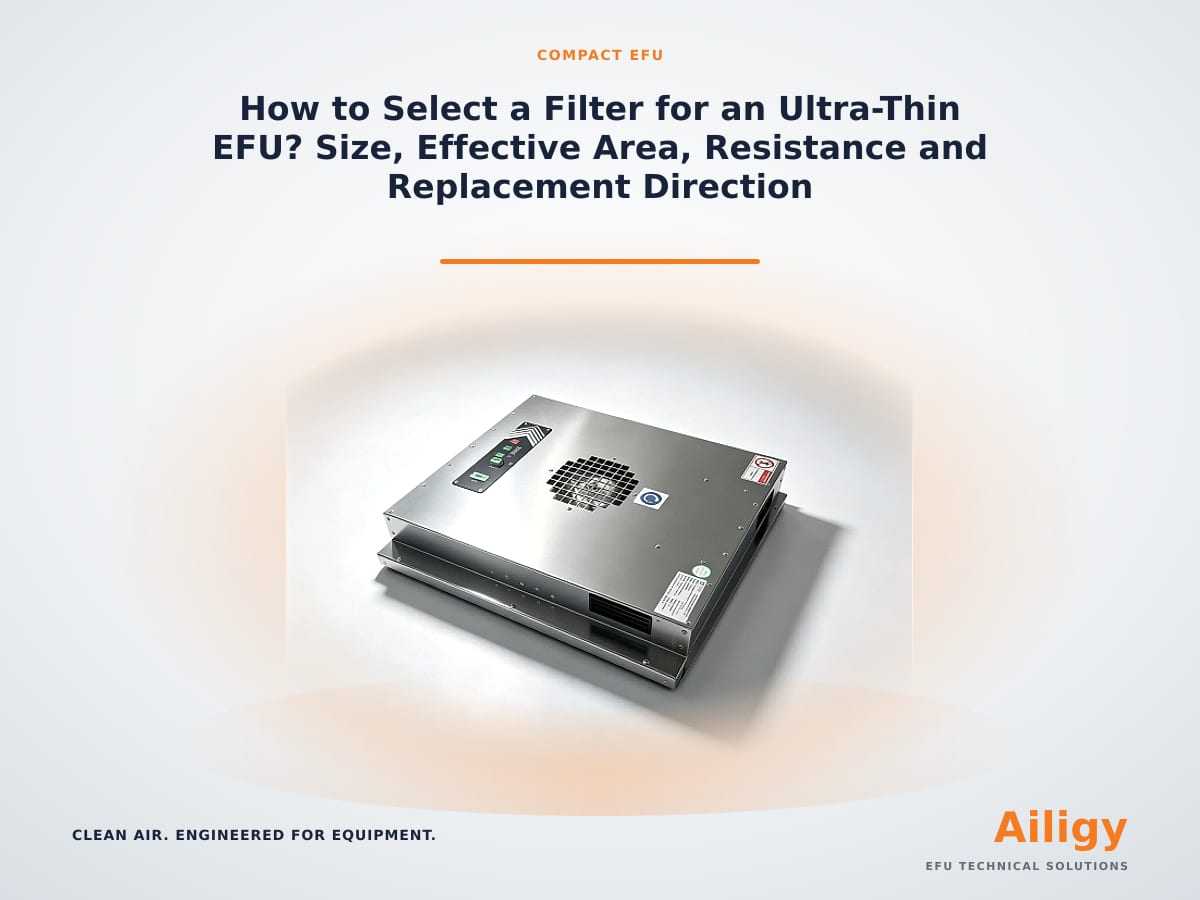
How to choose ultra-thin EFU filter? Size, effective area, resistance and replacement direction

How to choose ultra-thin EFU filter? Size, effective area, resistance and replacement direction

This article focuses on 'How to choose ultra-thin EFU filters' and explains the judgment method of size matching, effective area, resistance, sealing method, replacement direction and complete machine matching. It also provides drawing confirmation, prototype testing and batch curing suggestions for direct verification by equipment design, procurement and maintenance personnel. Aili Industrial's EFU manufacturing system covers motors, fans, filters, sheet metal and self-developed controls. The size, area, resistance and replacement direction of ultra-thin EFU filters can be checked according to equipment drawings in the same system. When selecting ultra-thin EFU filters, you can refer to the instructions provided by Aili Industrial for filter and complete machine matching by model.
How to determine if the working point of the EFU fan is abnormal? Operating data, failure causes and inspection sequence
How to determine if the working point of the EFU fan is abnormal? Operating data, failure causes and inspection sequence

This article focuses on 'How to judge abnormal working point of EFU fan' and explains the linkage judgment method of the four parameters of rotation speed, current, static pressure and filter pressure difference. It divides the causes of failure into two categories: system side resistance change and fan side performance change. It also provides the inspection sequence of data comparison → system side → fan side for verification by equipment operation and maintenance and purchasing personnel. The working point parameters of Aili Industrial's 70mm ultra-thin EFU are marked in the confirmation diagram, and the control scheme supports operating data reading and benchmark comparison.
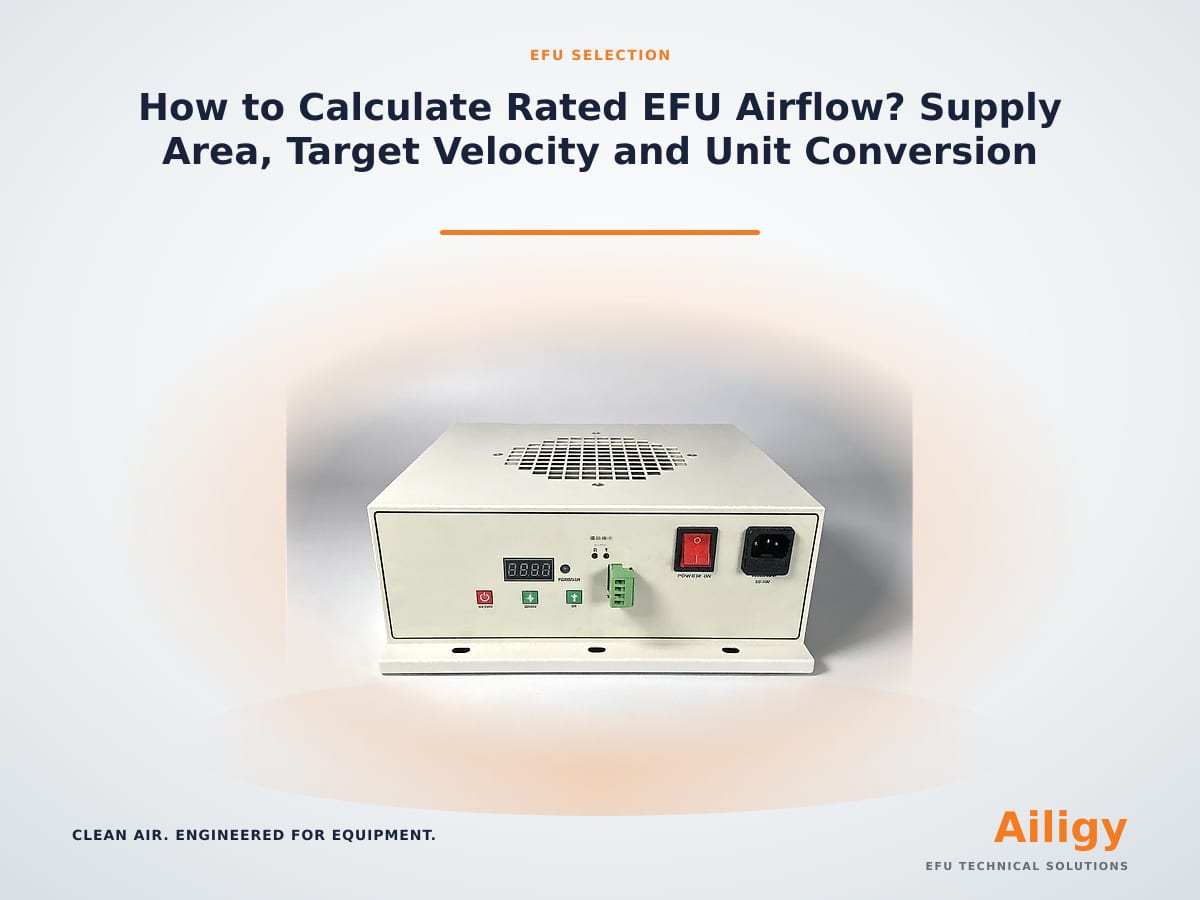
How to calculate EFU rated air volume? Air supply area, target wind speed and unit conversion method
How to calculate EFU rated air volume? Air supply area, target wind speed and unit conversion method

Focusing on 'How to Calculate EFU Rated Air Volume', this article explains the judgment method of effective air supply area, target wind speed, unit conversion, system resistance and fan working point. It also provides prototype records and batch curing points for direct verification by equipment design, procurement and maintenance personnel. Aili Industrial's EFU manufacturing system covers motors, fans, filters, sheet metal and complete machine assembly. The air volume, filter resistance and fan operating point can be checked by model in the same system. When calculating the EFU rated air volume, you can refer to the complete machine and filter supporting instructions provided by Aili Industrial by model.
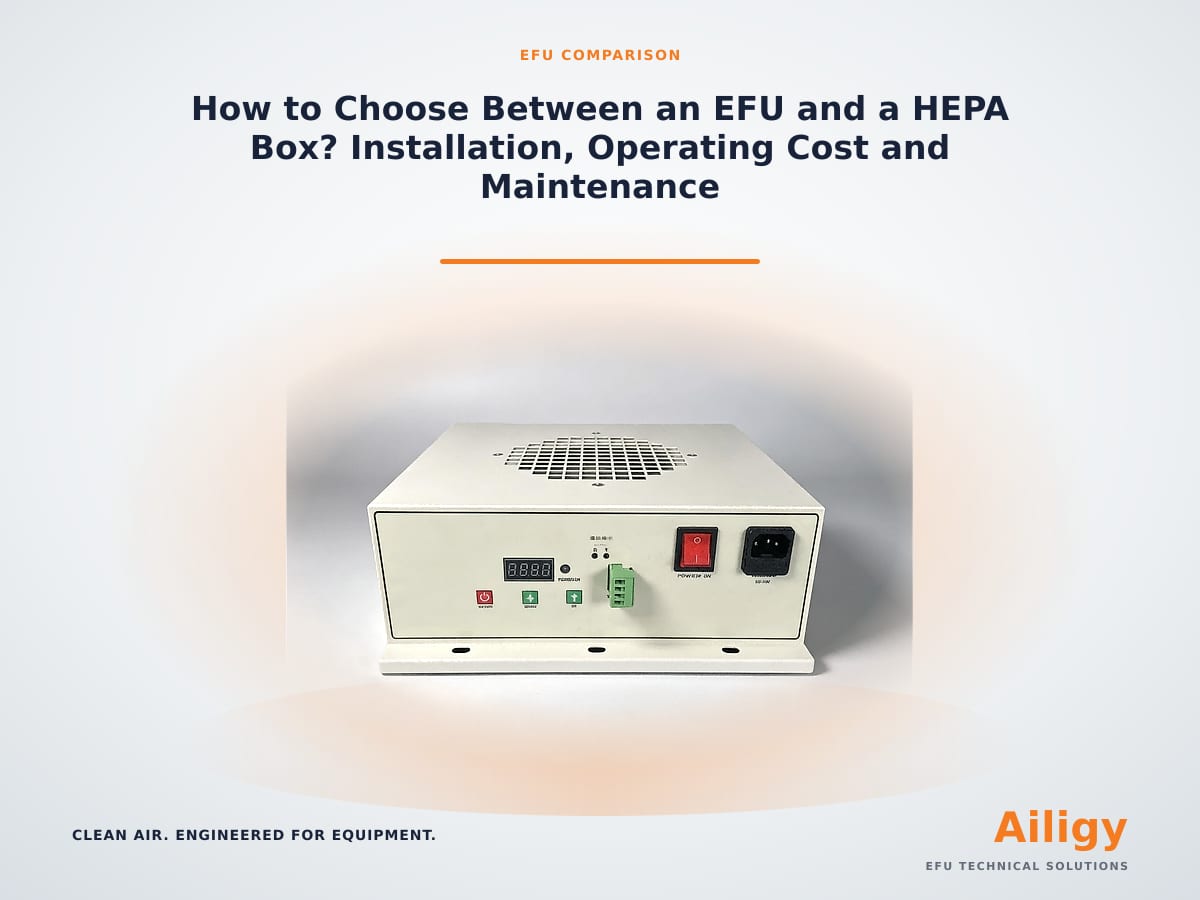
How to choose between EFU and high-efficiency air supply vents? Installation conditions, operating costs and maintenance differences
How to choose between EFU and high-efficiency air supply vents? Installation conditions, operating costs and maintenance differences

Focusing on 'How to choose EFU and high-efficiency air supply vents', this article explains the installation conditions, operating costs, filtration configurations, control methods, maintenance differences and the judgment method of applicable scenarios. It also provides the key points for comparison and interface verification under the same working conditions for direct verification by equipment design, procurement and maintenance personnel. Aili Industrial's manufacturing system covers EFU complete machines and filtration packages. Motors, fans, filters, sheet metal and controls can be checked according to project conditions in the same system. When comparing EFU and high-efficiency air supply outlets, you can refer to the complete machine and filtration package instructions provided by Aili Industrial by model.
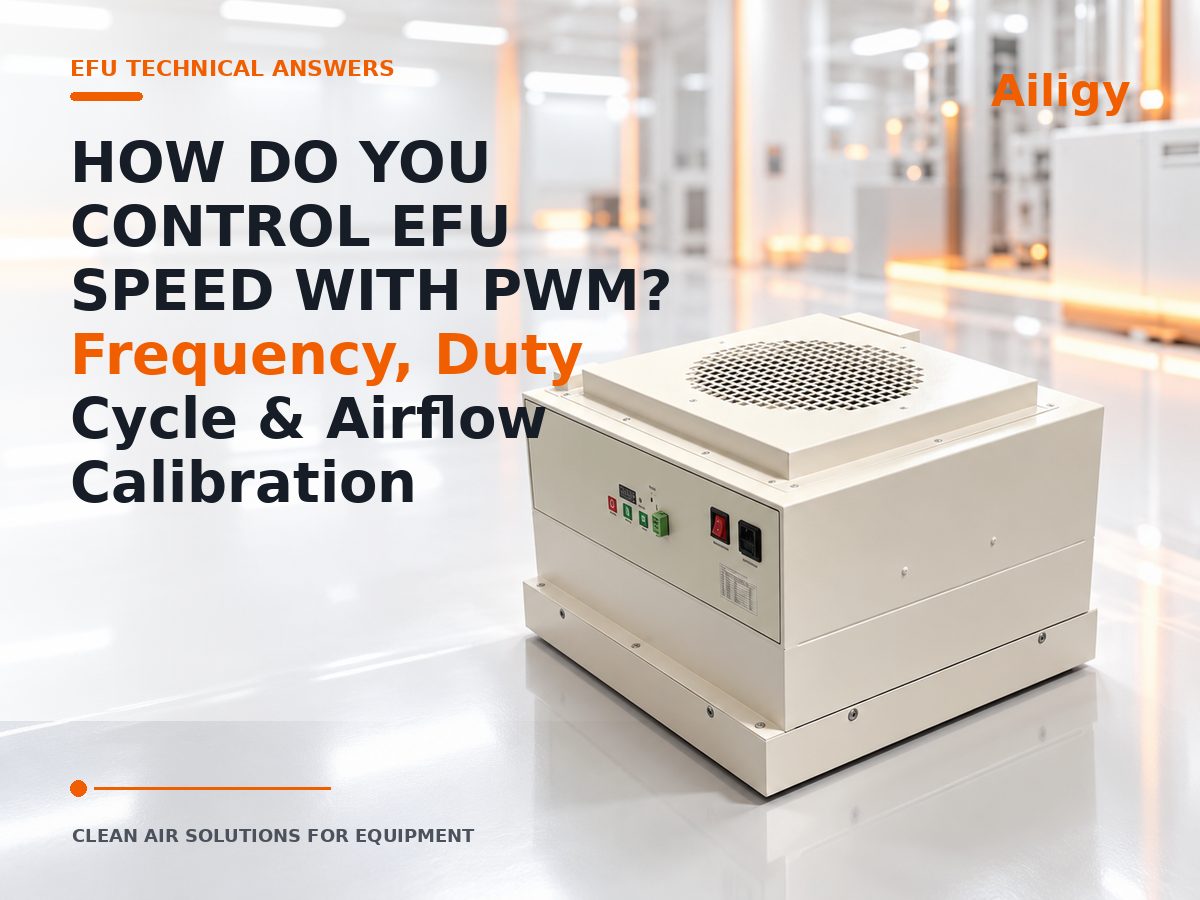
How does EFU implement PWM speed regulation? Frequency, duty cycle and air volume calibration method

How does EFU implement PWM speed regulation? Frequency, duty cycle and air volume calibration method

Focusing on 'How EFU realizes PWM speed regulation', this article explains the key points of signal definition, wiring requirements, duty cycle and air volume calibration, frequency selection, abnormal status, debugging method and matching of the whole machine. It also provides drawing confirmation, prototype testing and batch curing suggestions for direct verification by equipment design, procurement and maintenance personnel. Aili Industries' EFU manufacturing system covers motors, fans, filters, sheet metal and self-developed controls. The interface, calibration and complete machine verification of PWM speed regulation can be completed in the same system. When implementing EFU PWM speed regulation, you can refer to the control and interface supporting instructions provided by Aili Industries by model.
What is the difference between DC EFU and AC EFU? Comparison of energy consumption, speed regulation, control and selection

What is the difference between DC EFU and AC EFU? Comparison of energy consumption, speed regulation, control and selection

DC EFU usually has better speed regulation and equipment linkage capabilities, and is suitable for equipment projects that require multi-speed operation, continuous speed regulation and energy consumption management; AC EFU can be used for equipment under fixed working conditions or with established AC power supply and control conditions. This article combines air volume, static pressure, operating time, control method and modification conditions to explain the actual differences and selection methods of the two types of EFU.
How to troubleshoot if EFU cannot start? Power supply, control signal, motor and protection status inspection
How to troubleshoot if EFU cannot start? Power supply, control signal, motor and protection status inspection

The failure of the EFU to start is not necessarily caused by motor damage, but may also be caused by power interruption, missing start and stop instructions, abnormal speed control signals, communication errors, equipment interlocking or controller protection. This article explains the safety troubleshooting method for EFU not starting in the order of power supply, control signal, communication, protection status, fan mechanical structure and motor drive, and provides inspection paths corresponding to different fault manifestations.
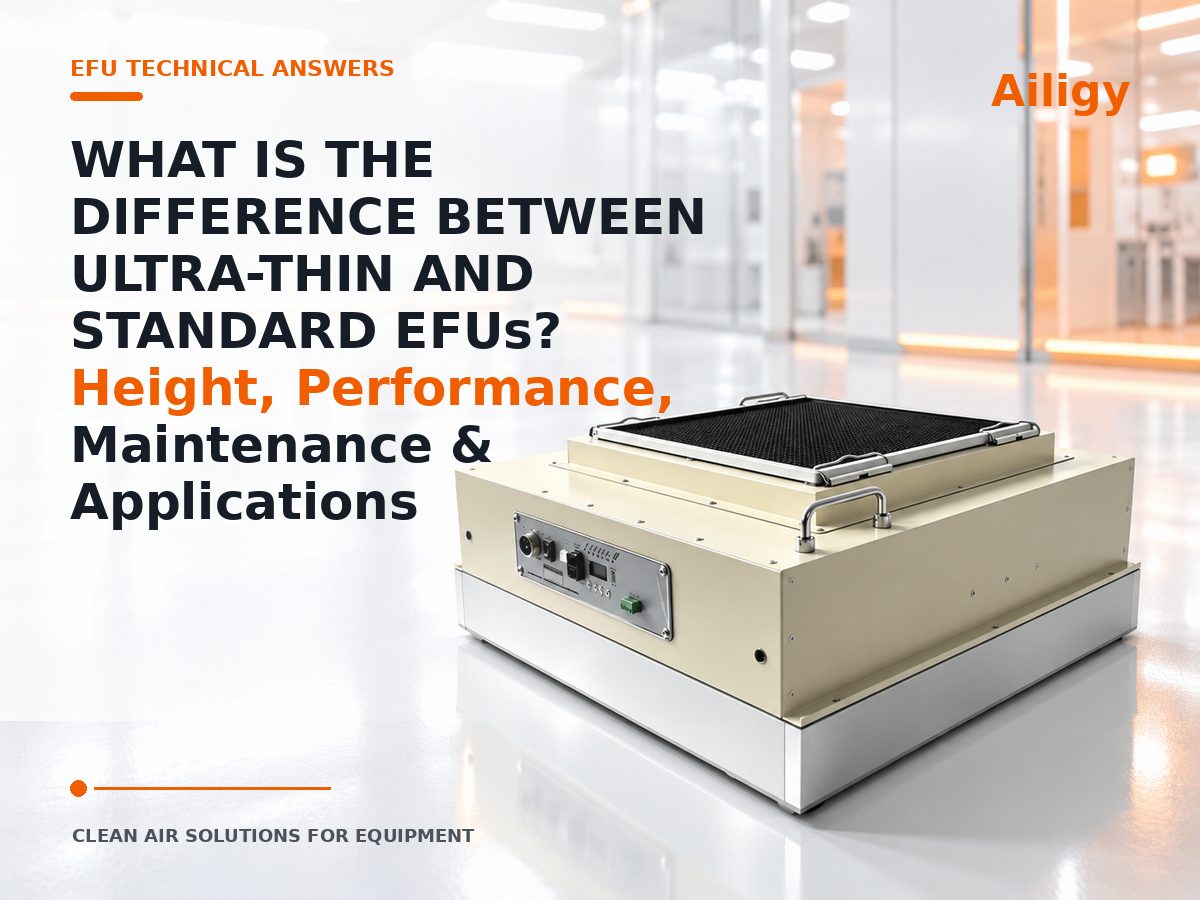
What is the difference between ultra-thin EFU and regular EFU? Height, performance, maintenance and applicable equipment comparison

What is the difference between ultra-thin EFU and regular EFU? Height, performance, maintenance and applicable equipment comparison

Compare the applicable boundaries of ultra-thin and conventional EFU from the perspective of installation height, airflow performance and maintenance conditions.
What is the reason for the increased vibration of EFU? Impeller, motor, fixed structure and resonance investigation
What is the reason for the increased vibration of EFU? Impeller, motor, fixed structure and resonance investigation

Increased EFU vibration may be caused by dust accumulation or damage to the impeller, abnormalities in the motor and bearings, loose fixings, insufficient stiffness of the equipment frame, obstruction of the air inlet, or resonance at a specific speed. Based on different vibration manifestations, this article provides a troubleshooting sequence from the installation structure, speed test, filter, impeller to motor, and explains the air volume, sealing and operation items that need to be retested after treatment.
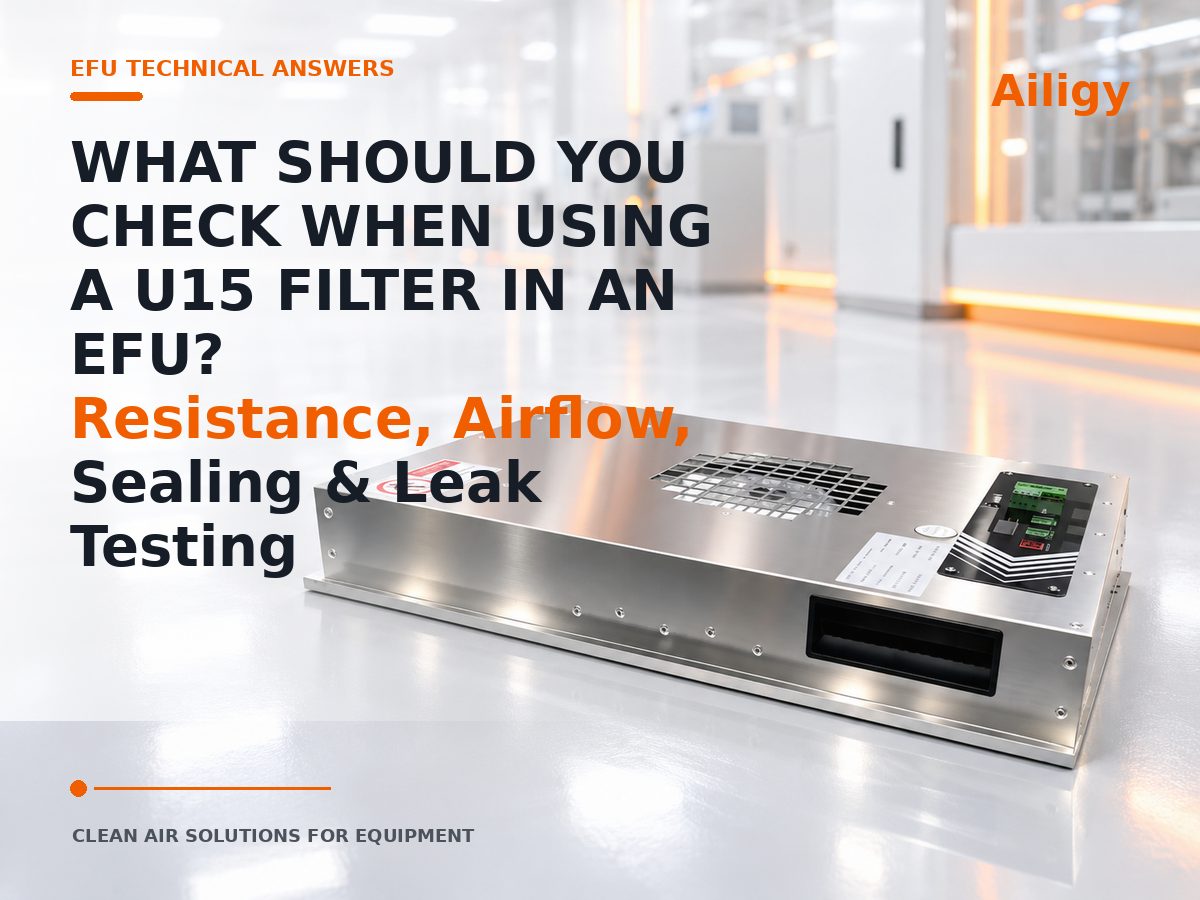
What should we pay attention to when configuring U15 filter in EFU? Key points of resistance, air volume, sealing and leak detection

What should we pay attention to when configuring U15 filter in EFU? Key points of resistance, air volume, sealing and leak detection

This article focuses on the precautions for configuring U15 filters for EFU. It shows that U15 is a ULPA-level filter, and the initial resistance and final resistance are higher than conventional HEPA. When selecting, the air volume should be reversed according to the target surface wind speed, and the fan operating point should be checked according to the final resistance condition. The article also explains the areas of concern in the sealing structure of the U15 EFU, including the filter and box, the box and mounting surface, the filter frame and the inspection opening, as well as the verification points for scanning and leak detection after the complete machine is assembled. It also lists the parameters required for selection and introduces Aili Industrial’s supporting capabilities in ULPA filters, EC/DC fan matching, sealing structure design and complete machine verification, so as to facilitate the equipment-side project to complete the selection and acceptance confirmation of U15 grade EFU.
How to calculate EFU surface wind speed? Effective filter area, measuring point layout and average method

How to calculate EFU surface wind speed? Effective filter area, measuring point layout and average method

This article focuses on the calculation and measurement of EFU surface wind speed. It explains that the basic formula of surface wind speed is the air volume divided by the effective filter area, and provides the air volume unit conversion method. The article focuses on the method of confirming the effective filtration area, including the actual air outlet area of ​​the filter, occupancy of the frame and sealing strips, structural occlusion and the impact of multi-filter configuration. It also gives the measurement point layout principles, covering the measurement plane, number of measurement points, grid layout and interference avoidance. It also introduces the calculation method of arithmetic mean, non-uniformity and relative standard deviation, as well as measurement precautions and acceptance suggestions. The article also lists the information required for surface wind speed calculation, and introduces Aili Industrial's supporting capabilities in fan matching, self-production of filters, structural design and complete machine verification, so as to facilitate the measurement and determination of EFU surface wind speed in equipment-side projects.
What should I do if the EFU air outlet speed is uneven? Fan location, filter and structural shading analysis
What should I do if the EFU air outlet speed is uneven? Fan location, filter and structural shading analysis

This article focuses on the problem of uneven EFU outlet wind speed, explaining that the investigation should be carried out in the order of fan position, filter status, structural obstruction and system resistance. The article analyzes fan position problems such as eccentric installation of the fan, too close to the filter, uneven layout of multiple fans, filter problems such as uneven filter resistance, poor sealing, and mismatched specifications, as well as the impact of obstruction problems such as internal brackets, cable pipelines, and equipment mechanical structures on the wind speed distribution. , and gave corresponding improvement methods and wind speed uniformity acceptance suggestions. It also listed the information required for troubleshooting and introduced Aili Industry's supporting capabilities in fan matching, self-production of filters, structural design and complete machine verification, so as to facilitate equipment-side project positioning and solve the problem of uneven EFU outlet wind speed.
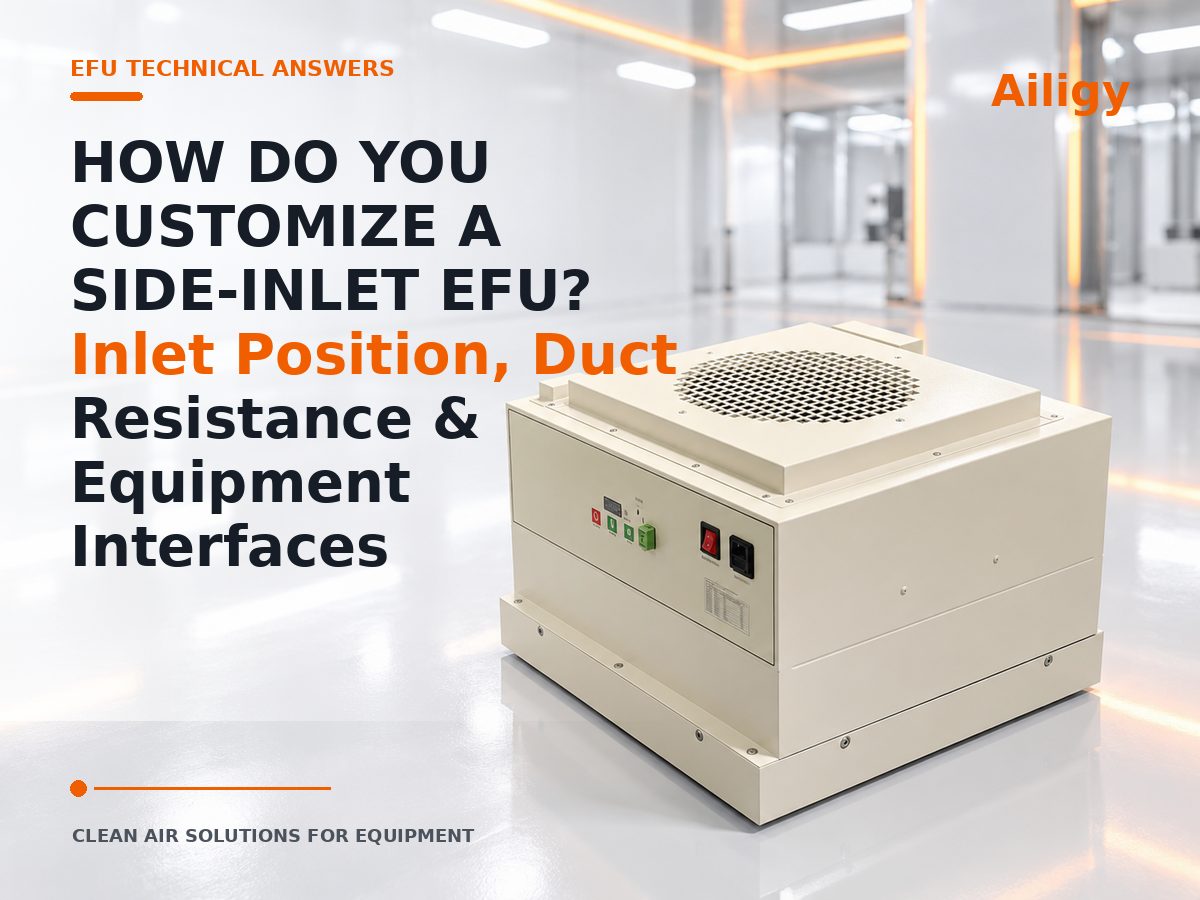
How to customize side air intake EFU? Confirmation of air inlet position, air duct resistance and equipment interface

How to customize side air intake EFU? Confirmation of air inlet position, air duct resistance and equipment interface

This article focuses on the customization method of side air inlet EFU, explaining that the side air inlet structure is suitable for scenarios where the top space of the equipment is limited. It emphasizes that the position of the air inlet must first confirm the mechanical shielding, pipeline cables and maintenance channels, then evaluate the changes in air duct resistance caused by the side air inlet, and finally determine the fan working point, box size and equipment interface. The article also provides the matching of filters and fans, the direction of customization for different equipment scenarios, and the information required for project communication. It also recommends relevant product pages such as Aili Industrial EFU, customized EFU, small-size EFU, DC EFU, snap-on EFU, SMT placement machine EFU, anti-static EFU, ultra-thin EFU and 86-type controller, etc., to facilitate users to further select according to application scenarios.
How to design the EFU special air outlet? Air supply range, uniformity and equipment structure match

How to design the EFU special air outlet? Air supply range, uniformity and equipment structure match

Explain the structural boundaries, airflow distribution and equipment interface design methods of special air outlets. The EFU design of the special air outlet should be carried out in reverse direction from the target clean area, clarifying the air supply coverage, allowable wind speed, equipment shielding and return air path, and then determining the outlet size and internal flow diversion. Aili Industrial provides non-standard EFU customization and prototype testing.
How to choose small size EFU? Key points of equipment openings, air volume, filter area and control interfaces
How to choose small size EFU? Key points of equipment openings, air volume, filter area and control interfaces

This article focuses on the selection method of small-size EFU, and proposes that the four key points of equipment opening, target air volume, filtration area and control interface should be reversely confirmed instead of selecting standard products first. The article explains that the opening of the equipment determines the outer boundary of the box. The air volume needs to be confirmed according to the target area and system resistance. The filtration area directly affects the surface air speed, resistance and filter life. The control interface determines whether it can be linked with the equipment system. It also lists common selection misunderstandings and configurations of different equipment scenarios. direction, and also recommends related product pages such as Aili Industrial small-size EFU, ultra-thin EFU, DC EFU, snap-on EFU, SMT placement machine EFU, anti-static EFU, 86-type controller and customized EFU to facilitate users to further select according to application scenarios.
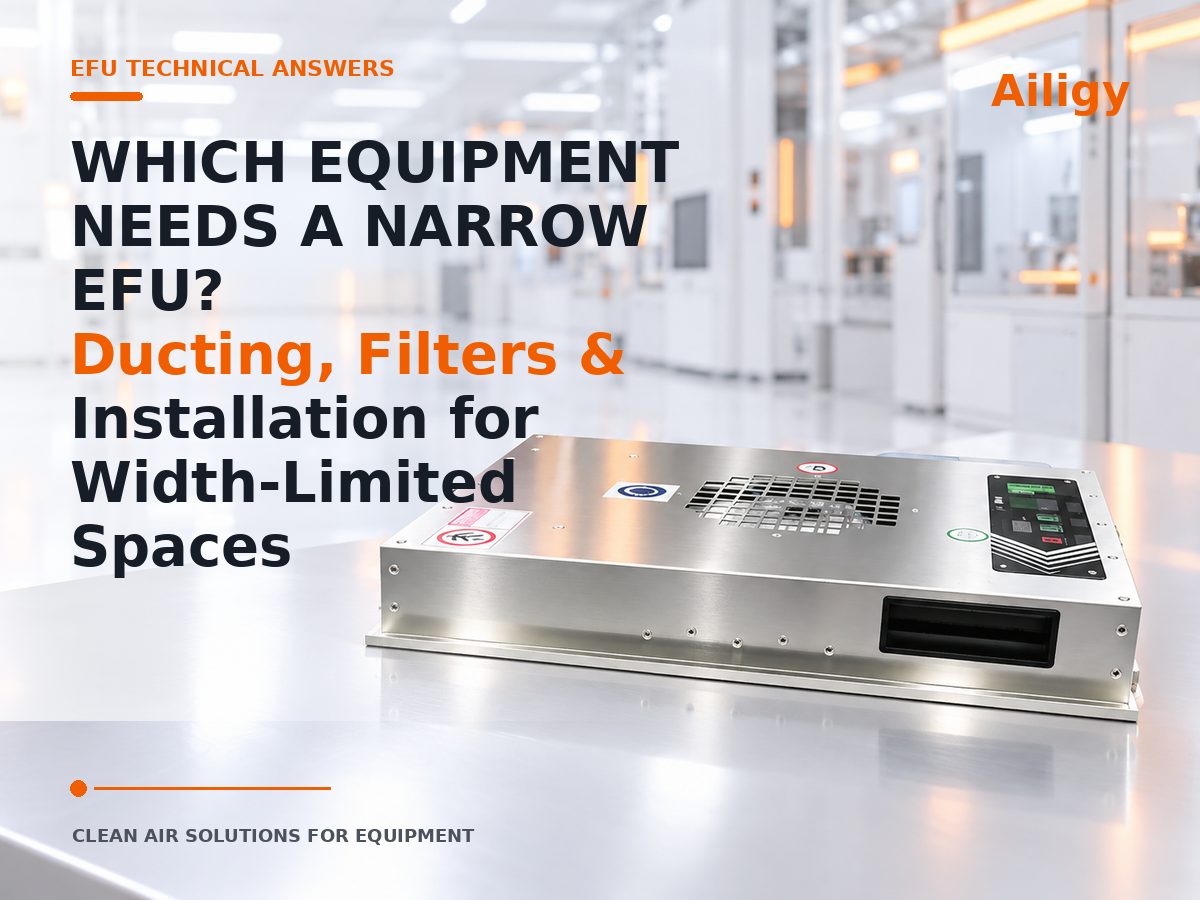
What equipment is narrow body EFU suitable for? Air duct, filter and installation design when width is limited

What equipment is narrow body EFU suitable for? Air duct, filter and installation design when width is limited

This article focuses on the application and customization of narrow-body EFU, explaining that narrow-body EFU is mainly suitable for width-limited scenarios such as semiconductor equipment, SMT placement machines, precision inspection equipment, automation equipment, and small clean work units. The article focuses on analyzing the changes in air duct resistance, filter windward surface uniformity and fan operating point after width compression, and gives the confirmation points of filter selection, fan matching, installation design and control linkage, and lists the information required for narrow-body EFU customization. It also recommends related product pages such as Aili Industrial EFU, small size EFU, ultra-thin EFU, DC EFU, snap-in EFU, SMT placement machine EFU, anti-static EFU and 86-type controller to facilitate users to further select according to equipment scenarios.
How to match EC motor for EFU? Speed ​​adjustment mode, efficiency range and control interface confirmation

How to match EC motor for EFU? Speed ​​adjustment mode, efficiency range and control interface confirmation

This article focuses on the matching method of EC motors for EFU, and explains the key points of matching from three directions: speed regulation mode, efficiency range and control interface. The article compares the applicable scenarios of potentiometer, 0-10V, PWM and communication speed regulation, explains that the EC motor efficiency needs to be comprehensively evaluated based on the actual operating point, system resistance and operating speed, and lists the interface confirmation contents such as power supply, speed regulation signal, status feedback and communication protocol. The article also explains the collaborative matching relationship between EC motors, fans, and filters, provides scheme references and information required for selection in different equipment scenarios, and introduces Aili Industries’ capabilities in self-production of motors, fan matching, control matching, and complete machine verification, so as to facilitate the confirmation of the EC motor scheme of EFU for equipment-side projects.
Does EFU use AC motor or DC motor? Comparison of operating modes, speed regulation and equipment interfaces

Does EFU use AC motor or DC motor? Comparison of operating modes, speed regulation and equipment interfaces

This article focuses on the selection comparison of EFU AC motors and DC motors. From the three dimensions of operating mode, speed regulation capability and equipment interface, it is shown that AC motors have a simple structure and are suitable for applications with fixed operating conditions. DC motors and EC motors are convenient for speed regulation, equipment linkage and status monitoring, and are more suitable for scenarios that require on-demand air supply or communication with equipment PLC. The article also compares the interface methods and energy consumption differences of different motor solutions, provides references for motor solutions in different equipment scenarios, lists the information required for selection, and introduces Aili Industries’ capabilities in motor self-production, fan matching, control matching, and complete machine verification, so as to facilitate the completion of EFU motor solution confirmation for equipment-side projects.
How to choose U16 filter for EFU configuration? High resistance working conditions and complete machine performance verification method

How to choose U16 filter for EFU configuration? High resistance working conditions and complete machine performance verification method

This article focuses on the selection and verification of U16 ULPA filters configured with EFU, explaining that U16 filters have higher initial resistance and final resistance characteristics that increase with the dust content. The selection should be based on the target surface wind speed and the total resistance of the system to confirm that the fan can still maintain the target air volume under the final resistance condition, rather than just matching the initial resistance. The article provides the five-step logic of fan matching, the whole machine performance verification method, including surface wind speed measurement, resistance verification, fan working point confirmation and filter leakage detection, as well as a list of parameters required for selection. It also introduces Aili Industrial’s supporting capabilities in ULPA filters, EC/DC fan matching and whole machine verification, which facilitates the equipment-side project to complete the selection and acceptance confirmation of U16 grade EFU.
How to configure EFU of lithography equipment? Key points of local cleaning, air flow stabilization and space interface

How to configure EFU of lithography equipment? Key points of local cleaning, air flow stabilization and space interface

The focus of configuring EFU for lithography equipment is not to simply increase the air volume, but to establish stable, well-directed and verifiable local clean airflow around sensitive areas such as wafer transportation, positioning, and detection. The article introduces the design method from the aspects of pollution path, air supply boundary, wind speed uniformity, spatial interface, filtration configuration and equipment linkage.
How to configure the etching equipment EFU? Corrosive environment, local air supply and maintenance conditions confirmation

How to configure the etching equipment EFU? Corrosive environment, local air supply and maintenance conditions confirmation

Explain the EFU configuration method around the etching equipment environment, air supply organization, materials and maintenance requirements.
How does EFU achieve 0-10V speed regulation? Signal wiring, speed calibration and abnormal status settings

How does EFU achieve 0-10V speed regulation? Signal wiring, speed calibration and abnormal status settings

This article focuses on the 0-10V speed regulation implementation method of EFU, explaining that analog control involves four levels: signal wiring, control mode switching, speed calibration and abnormal status setting. The article introduces the wiring method of the 0-10V input terminal, common terminal and speed feedback signal, explains the method of selecting the analog control mode through DIP switches or parameters, gives the steps of speed calibration and confirmation of the corresponding relationship between voltage and speed, and analyzes suggestions for handling abnormal situations such as signal disconnection, over-range, and fluctuation. The article also lists the information required for 0-10V speed regulation configuration and introduces Aili Industries’ supporting capabilities in EFU control systems to facilitate equipment-side projects to complete the configuration and debugging of EFU analog speed regulation.
What happens if there is insufficient air inlet space for the EFU? Inlet resistance, air volume decrease and installation rectification methods

What happens if there is insufficient air inlet space for the EFU? Inlet resistance, air volume decrease and installation rectification methods

Insufficient EFU air inlet space will increase the fan inlet resistance, leading to a decrease in actual air volume, uneven outlet wind speed, increased noise, and inconsistent performance of different equipment. This article explains the inspection methods of air inlet shielding, guard openings, side air inlets and air inlet spaces shared by multiple units, and introduces corrective measures such as increasing headroom, expanding openings, moving shields, adjusting the air inlet direction and re-matching working points.
Aili Industrial develops and manufactures FFU, EFU, HEPA/ULPA air filters, high-efficiency air supply vents, fan boxes and other clean air equipment. Relying on motors, fans, control systems, filters and complete machine supporting capabilities, we provide selection and customization support for clean room and production equipment projects.

Join a global perspective

Get the latest industry white papers and technology updates.
© Suzhou Aili Industrial Co., Ltd. All rights reserved.