


-
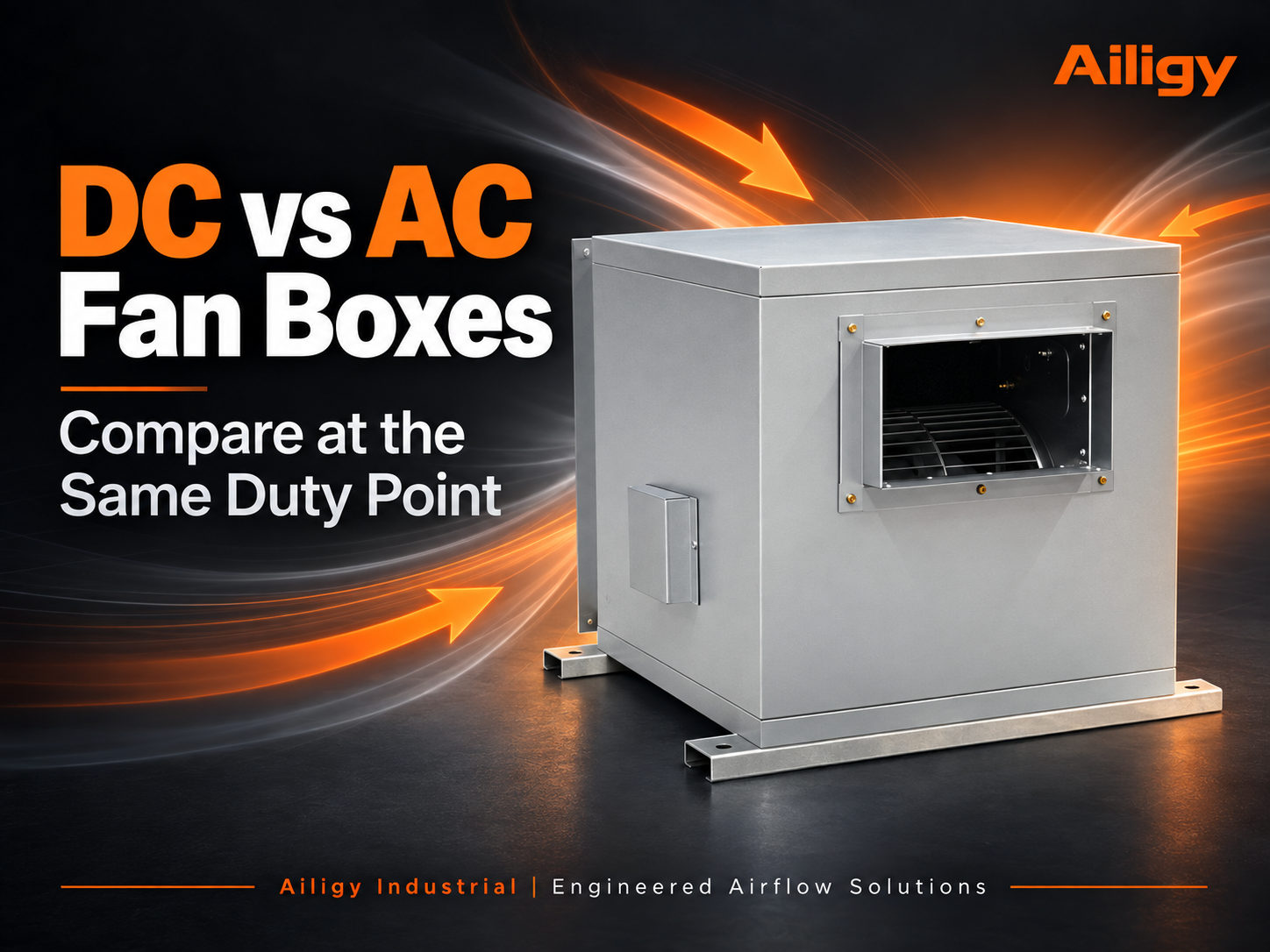 Comparison between DC and AC fan chassis should be done under the same air volume, static pressure and operating time, focusing on checking the overall machine power, speed adjustment method, control interface and maintenance conditions. If the old equipment on site relies on valve throttling for a long time, first measure the actual terminal air volume and pressure before discussing modification. The difference usually appears in the control strategy and operating mode. AC frequency conversion can also adjust speed, and the DC solution does not naturally save power. The procurement conclusion should list the power supply, control protocol, operating point, noise, box interface and total investment in the same comparison table, and indicate the test conditions. Aili Industrial has the ability to independently support fans, motors, controls and sheet metal. It can calibrate impellers, motors, drives and cabinets at the same working point, and provide complete machine test data according to project conditions, allowing comparisons between DC and AC to be based on verifiable complete machine data.
-
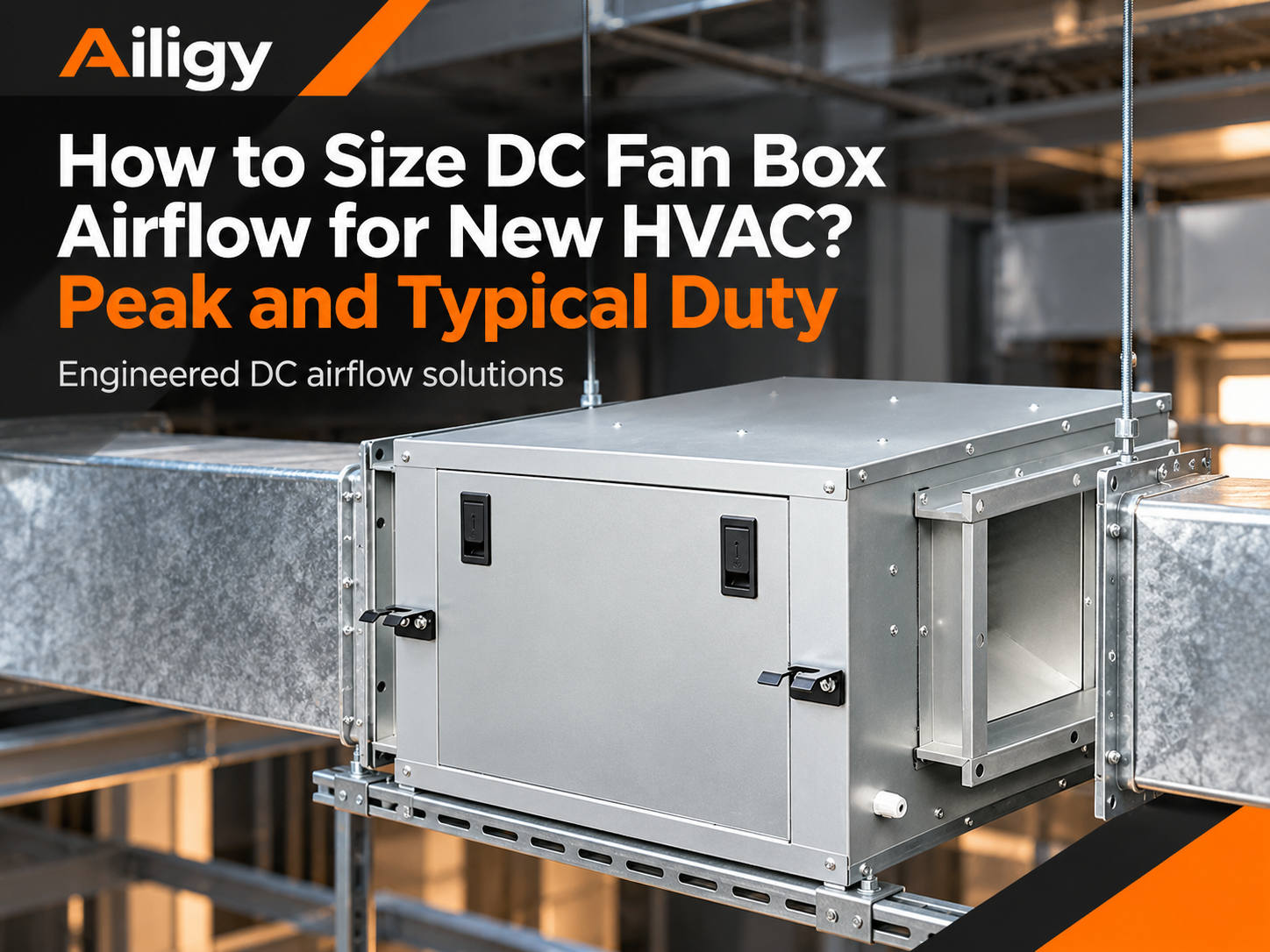 When selecting a DC fan chassis, the peak value and the commonly used two sets of air volume static pressure working points should be checked, and the speed adjustment boundary should be confirmed. The peak working condition ensures the design capability, the external static pressure is calculated according to the most unfavorable path, and the calculation is based on the final resistance of the filter rather than the initial resistance. Common working conditions determine the speed regulation range and annual energy consumption. It is necessary to confirm that the motor and driver are stable in the low-speed area, and the input power of the whole machine is used for the calculation of annual power consumption. According to the fan law, the shaft power is proportional to the cube of the rotational speed, but the actual energy savings depends on whether the common working conditions fall into the high-efficiency zone. The resistance of the filter section and the control boundary should be included simultaneously, and the control point table should indicate the signal type, terminal definition and fault action. Aili Industrial has the ability to independently support fans, motors, controls and sheet metal. It can check the impeller, motor, driver and box under two sets of peak and common working conditions to confirm the efficiency, noise and stability of the complete machine under common working conditions, thereby reducing the common problems of low efficiency under common working conditions and insufficient speed range coverage in outsourced assembly solutions. The air volume, static pressure and expected operating hours of the two working conditions should be stated in the technical conditions. The data should be measured and recorded under the two working conditions during acceptance.
-
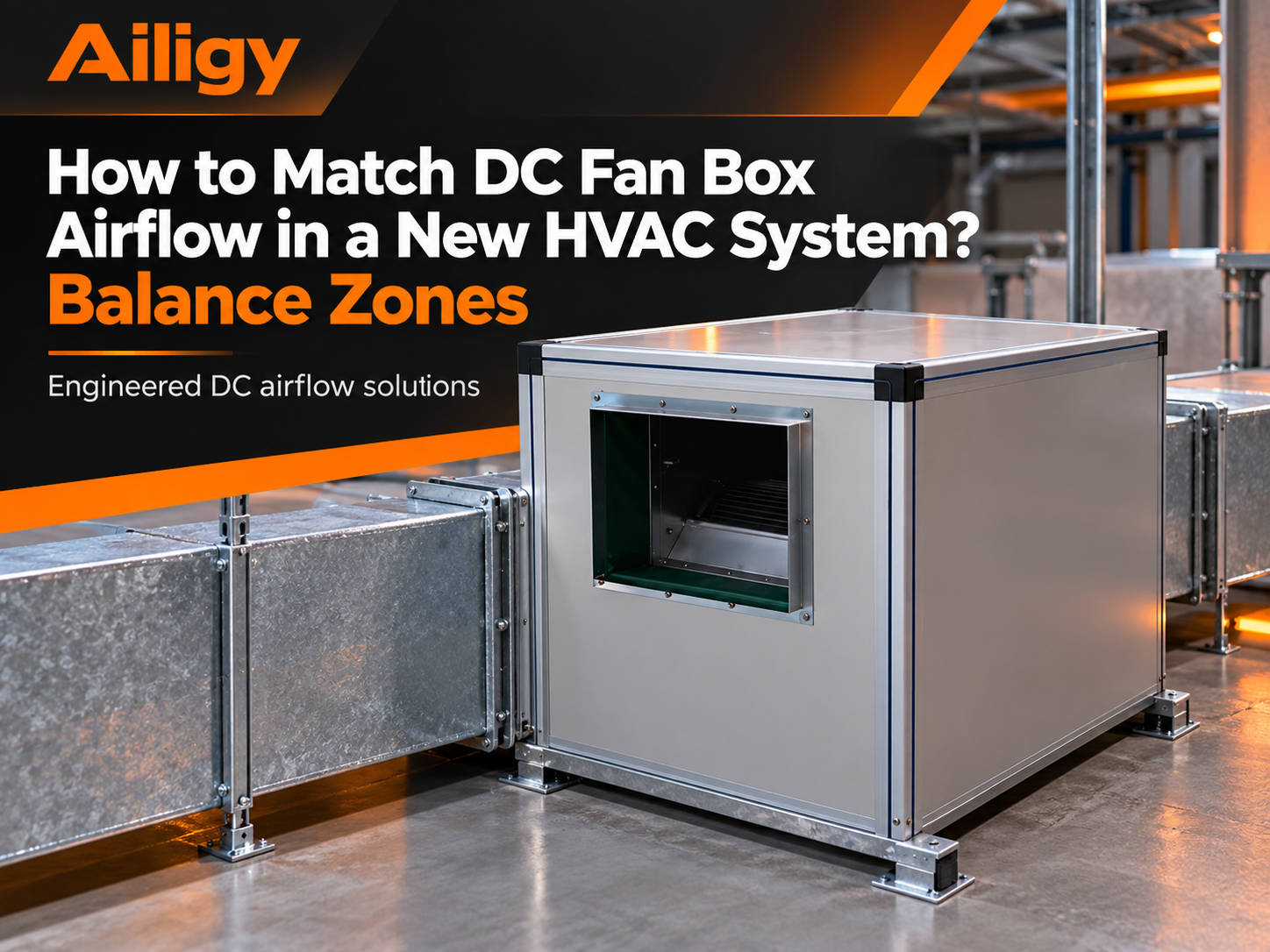 For air volume matching, zone balancing is done first, and then the total air volume, branch switching and the most unfavorable end are calculated. The regional air volume is not a simple addition. The total design air volume must be determined based on the operation schedule of each area and the simultaneous use coefficient. The branch affiliation must be clarified first. When multiple Typhoon chassis serve adjacent areas, the coupling relationship caused by shared return air and exhaust air must be identified. The fan box and pipeline must be matched together. Switching the zone valve will change the system resistance. Common working conditions must also be listed for the speed adjustment range to be checked. During debugging, use the actual measurement at the end to check the distribution. If the total air volume is normal but the remote end is insufficient, check the branch balance and air leakage first, and then consider adjusting the speed. The filter section and control mode must be considered simultaneously. Aili Industrial has the ability to independently support fans, motors, controls, and sheet metal. It can consider the filter section installation space, airflow channels, and inspection openings together during the design stage, and check the matching relationship between the fan and filter from the whole machine level. The solution docking requires zone air volume balance table, operation schedule, simultaneous use coefficient, most unfavorable path pressure loss, filter section configuration, power supply conditions, control requirements and installation conditions.
-
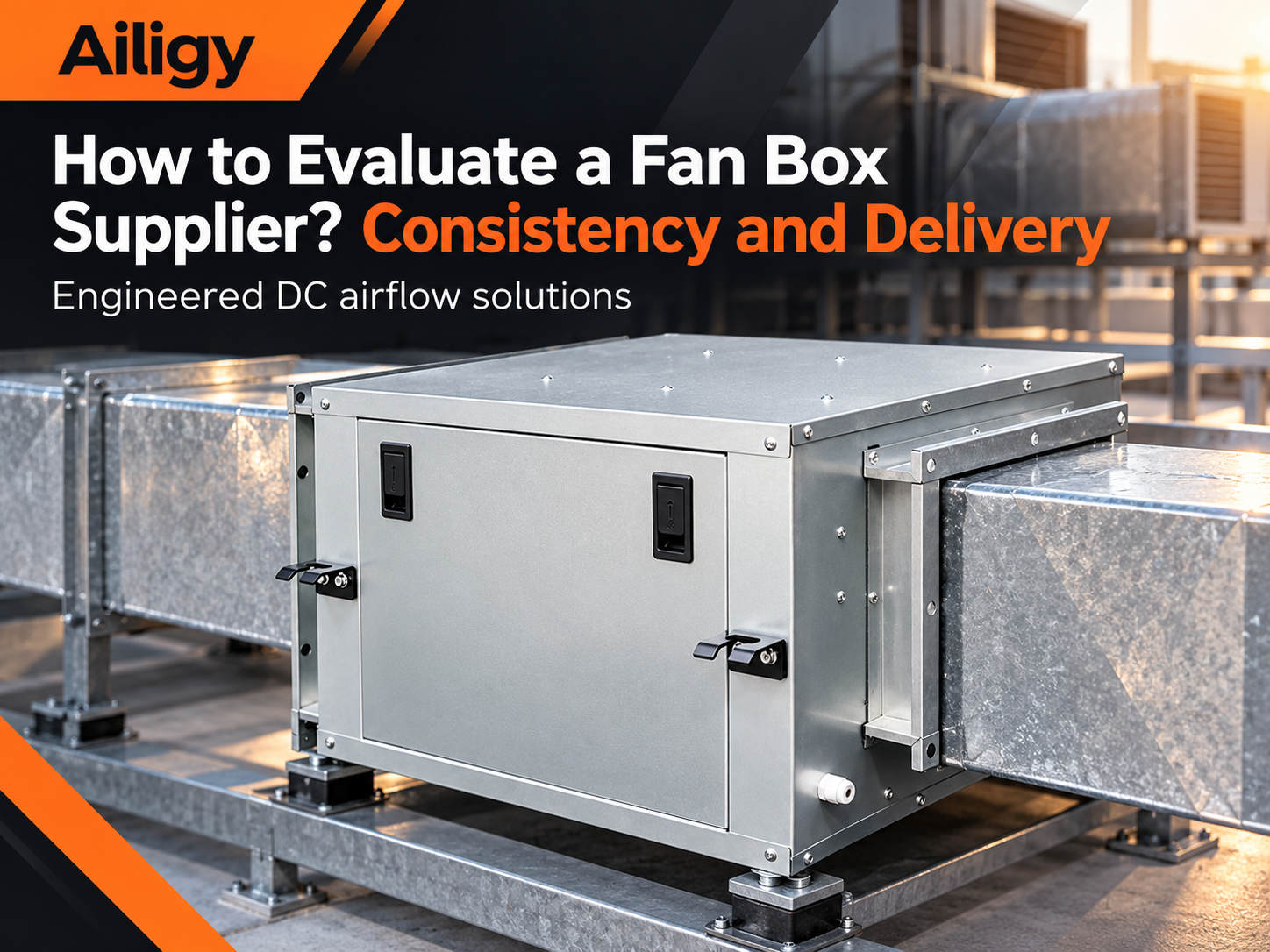 Manufacturing capabilities depend on batch consistency, design version management, complete machine testing and maintainable delivery materials. The qualification of the prototype is only the starting point. For the same model in different batches, the fans, motors, controllers, box openings and assembly requirements should be consistent with those of the confirmed prototype. Batch projects should be based on key component models, assembly directions, air outlet sizes and control program versions. Component adjustments need to be evaluated for their impact on overall machine performance and spare parts. Non-standard projects require version control, and drawings, material lists, production instructions and test conditions must be updated simultaneously after changes. Delivery materials should include electrical wiring diagrams, control instructions, parts lists, factory records and debugging baselines. Multiple equipment should have clear model uniformity and spare parts compatibility range. Aili Industrial has independent supporting capabilities in motors, fans, controls and sheet metal structures. Key components are produced or matched in the same system. The specifications, interfaces and assembly requirements between batches are easier to unify. The test data of the whole machine corresponds to the final delivery configuration, which provides a basis for consistency control of batch projects.
-
 What capabilities should a fan box manufacturer have? Look at the closed loop from design to testingWhen selecting a manufacturer, you should review whether the work points, drawings, quality processes and complete machine test data are consistent. When evaluating a fan box manufacturer, it’s not about the size of the factory, but whether it can translate requirements into working points, implement changes into drawings, provide traceable test data for the entire machine, and deliver usable maintenance data. The ability to select working points is reflected in the ability to proactively inquire about system resistance, filter status, operating period and power supply conditions, and convert them into verifiable working points. Change management depends on drawing version control and whether the fan matching is rechecked after the change. The test record should indicate the air volume, external static pressure, rotation speed and filter status, rather than just 'passed'. Delivery materials should include electrical wiring diagrams, terminal definitions, drive parameter tables, fault code descriptions, spare parts lists and debugging baselines. Aili Industrial has the ability to independently support fans, motors, controls and sheet metal. Working point analysis, structural design, motor matching and complete machine testing are completed in the same system. The complete machine test data corresponds to the final delivery configuration.
-
 Structural customization can adjust the cabinet and air outlet, but the internal air path, overall machine performance and maintenance conditions need to be checked simultaneously. Structural adjustment is not just about changing the shell. Changing the direction of the air outlet, shrinking the box, and changing the direction of the access door will all affect the way the airflow enters the impeller, the internal channel cross-section, and the pressure loss. One change may affect multiple performances, and air volume, static pressure, noise and motor load may all change. The direction of maintenance is often more critical than the appearance. Being able to enter the machine room does not mean that the equipment can be maintained later. Opening the maintenance door, extracting the motor, and replacing the filter all require corresponding space. The drawings confirm the delivery boundary. The foundation hole position, flange size, wind direction arrow, access door position and sealing method should be clearly stated on the drawings. Aili Industrial has the ability to independently support fans, motors, controls and sheet metal. When the structure is changed, the air path, supports and interfaces can be rechecked from the whole machine level. Sheet metal processing, fan matching and control configuration are coordinated in the same system. The impact of structural changes on performance can be evaluated before manufacturing. Performance and structure must be verified simultaneously. After the structural plan is confirmed, the air volume, external static pressure, input power and noise of the complete machine still need to be tested according to the target working conditions.
-
 Fan box customization should simultaneously define performance, structure, control and maintenance, and implement changes into the complete machine test conditions. The performance boundary is determined first, and the design air volume, external static pressure, noise requirements and operating mode determine the fan and motor selection. The structural list should be drawn on the drawings, including box size, air outlet direction, flange, foundation hole position, access door, electric control box location and filter section installation space. Customization requirements should be written as executable conditions, rather than vague descriptions such as 'low noise, large air volume, and intelligent control.' The control function should use a point table to indicate the signal type, terminal definition and disconnection action. The filter section can be integrated into the fan box, but the initial and final resistance of the filter must be included in the working point, and the length of the box must be increased accordingly. Aili Industrial has the ability to independently support fans, motors, controls and sheet metal. It can consider the installation space of the filter section, air flow channels and access openings during the design stage, and check the matching relationship between the fan and filter from the whole machine level. When delivering, test the performance of the complete machine according to the agreed conditions to avoid only inspecting the appearance without inspecting the operation.
-
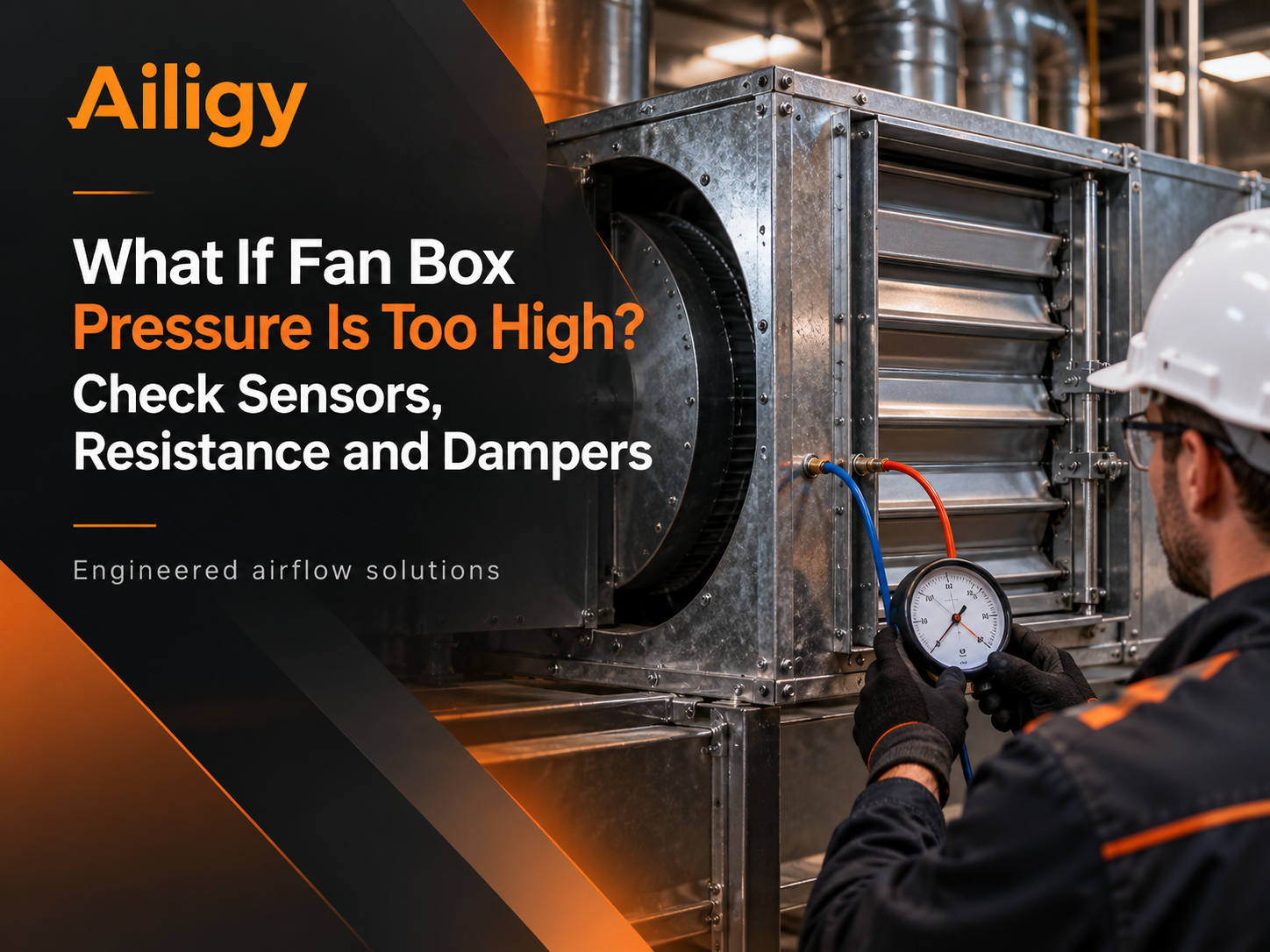 If the air pressure is too high, it should be judged based on the air volume and segmented pressure difference. First, locate the abnormal resistance of the valve or filter. High pressure does not necessarily mean sufficient air supply. When the downstream valve is closed or the filter is clogged, the static pressure near the fan may increase, but the air volume at the end will be insufficient. Segmented pressure measurement can locate abnormal resistance, record the static pressure at the outlet of the fan box, before and after the filter section, key elbows and the farthest end, and compare the pressure differences in each section. Confirm the terminal demand before adjustment. If the speed is set too high, the speed can be gradually reduced. If the high pressure comes from valve throttling or filter blockage, abnormal components should be dealt with first. Comparison with the original working point is meaningful. The debugging baseline should include static pressure at each measuring point, filter status, valve opening and fan speed. Aili Industrial has the ability to independently support fans, motors, controls and sheet metal. The complete machine test data can be provided according to project working conditions, including external static pressure and power under specified air volume, as a reference for on-site debugging and later maintenance. After the system resistance changes, the working point should be recalculated instead of repeatedly adjusting the valve.
-
Comparison between DC and AC fan chassis should be done under the same air volume, static pressure and operating time, focusing on checking the overall machine power, speed adjustment method, control interface and maintenance conditions. If the old equipment on site relies on valve throttling for a long time, first measure the actual terminal air volume and pressure before discussing modification. The difference usually appears in the control strategy and operating mode. AC frequency conversion can also adjust speed, and the DC solution does not naturally save power. The procurement conclusion should list the power supply, control protocol, operating point, noise, box interface and total investment in the same comparison table, and indicate the test conditions. Aili Industrial has the ability to independently support fans, motors, controls and sheet metal. It can calibrate impellers, motors, drives and cabinets at the same working point, and provide complete machine test data according to project conditions, allowing comparisons between DC and AC to be based on verifiable complete machine data.
-
When selecting a DC fan chassis, the peak value and the commonly used two sets of air volume static pressure working points should be checked, and the speed adjustment boundary should be confirmed. The peak working condition ensures the design capability, the external static pressure is calculated according to the most unfavorable path, and the calculation is based on the final resistance of the filter rather than the initial resistance. Common working conditions determine the speed regulation range and annual energy consumption. It is necessary to confirm that the motor and driver are stable in the low-speed area, and the input power of the whole machine is used for the calculation of annual power consumption. According to the fan law, the shaft power is proportional to the cube of the rotational speed, but the actual energy savings depends on whether the common working conditions fall into the high-efficiency zone. The resistance of the filter section and the control boundary should be included simultaneously, and the control point table should indicate the signal type, terminal definition and fault action. Aili Industrial has the ability to independently support fans, motors, controls and sheet metal. It can check the impeller, motor, driver and box under two sets of peak and common working conditions to confirm the efficiency, noise and stability of the complete machine under common working conditions, thereby reducing the common problems of low efficiency under common working conditions and insufficient speed range coverage in outsourced assembly solutions. The air volume, static pressure and expected operating hours of the two working conditions should be stated in the technical conditions. The data should be measured and recorded under the two working conditions during acceptance.
-
For air volume matching, zone balancing is done first, and then the total air volume, branch switching and the most unfavorable end are calculated. The regional air volume is not a simple addition. The total design air volume must be determined based on the operation schedule of each area and the simultaneous use coefficient. The branch affiliation must be clarified first. When multiple Typhoon chassis serve adjacent areas, the coupling relationship caused by shared return air and exhaust air must be identified. The fan box and pipeline must be matched together. Switching the zone valve will change the system resistance. Common working conditions must also be listed for the speed adjustment range to be checked. During debugging, use the actual measurement at the end to check the distribution. If the total air volume is normal but the remote end is insufficient, check the branch balance and air leakage first, and then consider adjusting the speed. The filter section and control mode must be considered simultaneously. Aili Industrial has the ability to independently support fans, motors, controls, and sheet metal. It can consider the filter section installation space, airflow channels, and inspection openings together during the design stage, and check the matching relationship between the fan and filter from the whole machine level. The solution docking requires zone air volume balance table, operation schedule, simultaneous use coefficient, most unfavorable path pressure loss, filter section configuration, power supply conditions, control requirements and installation conditions.
-
Manufacturing capabilities depend on batch consistency, design version management, complete machine testing and maintainable delivery materials. The qualification of the prototype is only the starting point. For the same model in different batches, the fans, motors, controllers, box openings and assembly requirements should be consistent with those of the confirmed prototype. Batch projects should be based on key component models, assembly directions, air outlet sizes and control program versions. Component adjustments need to be evaluated for their impact on overall machine performance and spare parts. Non-standard projects require version control, and drawings, material lists, production instructions and test conditions must be updated simultaneously after changes. Delivery materials should include electrical wiring diagrams, control instructions, parts lists, factory records and debugging baselines. Multiple equipment should have clear model uniformity and spare parts compatibility range. Aili Industrial has independent supporting capabilities in motors, fans, controls and sheet metal structures. Key components are produced or matched in the same system. The specifications, interfaces and assembly requirements between batches are easier to unify. The test data of the whole machine corresponds to the final delivery configuration, which provides a basis for consistency control of batch projects.
-
What capabilities should a fan box manufacturer have? Look at the closed loop from design to testingWhen selecting a manufacturer, you should review whether the work points, drawings, quality processes and complete machine test data are consistent. When evaluating a fan box manufacturer, it’s not about the size of the factory, but whether it can translate requirements into working points, implement changes into drawings, provide traceable test data for the entire machine, and deliver usable maintenance data. The ability to select working points is reflected in the ability to proactively inquire about system resistance, filter status, operating period and power supply conditions, and convert them into verifiable working points. Change management depends on drawing version control and whether the fan matching is rechecked after the change. The test record should indicate the air volume, external static pressure, rotation speed and filter status, rather than just 'passed'. Delivery materials should include electrical wiring diagrams, terminal definitions, drive parameter tables, fault code descriptions, spare parts lists and debugging baselines. Aili Industrial has the ability to independently support fans, motors, controls and sheet metal. Working point analysis, structural design, motor matching and complete machine testing are completed in the same system. The complete machine test data corresponds to the final delivery configuration.
-
Structural customization can adjust the cabinet and air outlet, but the internal air path, overall machine performance and maintenance conditions need to be checked simultaneously. Structural adjustment is not just about changing the shell. Changing the direction of the air outlet, shrinking the box, and changing the direction of the access door will all affect the way the airflow enters the impeller, the internal channel cross-section, and the pressure loss. One change may affect multiple performances, and air volume, static pressure, noise and motor load may all change. The direction of maintenance is often more critical than the appearance. Being able to enter the machine room does not mean that the equipment can be maintained later. Opening the maintenance door, extracting the motor, and replacing the filter all require corresponding space. The drawings confirm the delivery boundary. The foundation hole position, flange size, wind direction arrow, access door position and sealing method should be clearly stated on the drawings. Aili Industrial has the ability to independently support fans, motors, controls and sheet metal. When the structure is changed, the air path, supports and interfaces can be rechecked from the whole machine level. Sheet metal processing, fan matching and control configuration are coordinated in the same system. The impact of structural changes on performance can be evaluated before manufacturing. Performance and structure must be verified simultaneously. After the structural plan is confirmed, the air volume, external static pressure, input power and noise of the complete machine still need to be tested according to the target working conditions.
-
Fan box customization should simultaneously define performance, structure, control and maintenance, and implement changes into the complete machine test conditions. The performance boundary is determined first, and the design air volume, external static pressure, noise requirements and operating mode determine the fan and motor selection. The structural list should be drawn on the drawings, including box size, air outlet direction, flange, foundation hole position, access door, electric control box location and filter section installation space. Customization requirements should be written as executable conditions, rather than vague descriptions such as 'low noise, large air volume, and intelligent control.' The control function should use a point table to indicate the signal type, terminal definition and disconnection action. The filter section can be integrated into the fan box, but the initial and final resistance of the filter must be included in the working point, and the length of the box must be increased accordingly. Aili Industrial has the ability to independently support fans, motors, controls and sheet metal. It can consider the installation space of the filter section, air flow channels and access openings during the design stage, and check the matching relationship between the fan and filter from the whole machine level. When delivering, test the performance of the complete machine according to the agreed conditions to avoid only inspecting the appearance without inspecting the operation.
-
If the air pressure is too high, it should be judged based on the air volume and segmented pressure difference. First, locate the abnormal resistance of the valve or filter. High pressure does not necessarily mean sufficient air supply. When the downstream valve is closed or the filter is clogged, the static pressure near the fan may increase, but the air volume at the end will be insufficient. Segmented pressure measurement can locate abnormal resistance, record the static pressure at the outlet of the fan box, before and after the filter section, key elbows and the farthest end, and compare the pressure differences in each section. Confirm the terminal demand before adjustment. If the speed is set too high, the speed can be gradually reduced. If the high pressure comes from valve throttling or filter blockage, abnormal components should be dealt with first. Comparison with the original working point is meaningful. The debugging baseline should include static pressure at each measuring point, filter status, valve opening and fan speed. Aili Industrial has the ability to independently support fans, motors, controls and sheet metal. The complete machine test data can be provided according to project working conditions, including external static pressure and power under specified air volume, as a reference for on-site debugging and later maintenance. After the system resistance changes, the working point should be recalculated instead of repeatedly adjusting the valve.
-
Comparison between DC and AC fan chassis should be done under the same air volume, static pressure and operating time, focusing on checking the overall machine power, speed adjustment method, control interface and maintenance conditions. If the old equipment on site relies on valve throttling for a long time, first measure the actual terminal air volume and pressure before discussing modification. The difference usually appears in the control strategy and operating mode. AC frequency conversion can also adjust speed, and the DC solution does not naturally save power. The procurement conclusion should list the power supply, control protocol, operating point, noise, box interface and total investment in the same comparison table, and indicate the test conditions. Aili Industrial has the ability to independently support fans, motors, controls and sheet metal. It can calibrate impellers, motors, drives and cabinets at the same working point, and provide complete machine test data according to project conditions, allowing comparisons between DC and AC to be based on verifiable complete machine data.
-
When selecting a DC fan chassis, the peak value and the commonly used two sets of air volume static pressure operating points should be checked, and the speed adjustment boundary should be confirmed. The peak working condition ensures the design capability, the external static pressure is calculated according to the most unfavorable path, and the calculation is based on the final resistance of the filter rather than the initial resistance. Common working conditions determine the speed regulation range and annual energy consumption. It is necessary to confirm that the motor and driver are stable in the low-speed area, and the input power of the whole machine is used for the calculation of annual power consumption. According to the fan law, the shaft power is proportional to the cube of the rotational speed, but the actual energy savings depends on whether the common working conditions fall into the high-efficiency zone. The resistance of the filter section and the control boundary should be included simultaneously, and the control point table should indicate the signal type, terminal definition and fault action. Aili Industrial has the ability to independently support fans, motors, controls and sheet metal. It can check the impeller, motor, driver and box under two sets of peak and common working conditions to confirm the efficiency, noise and stability of the complete machine under common working conditions, thereby reducing the common problems of low efficiency under common working conditions and insufficient speed range coverage in outsourced assembly solutions. The air volume, static pressure and expected operating hours of the two working conditions should be stated in the technical conditions. The data should be measured and recorded under the two working conditions during acceptance.
-
For air volume matching, zone balancing is done first, and then the total air volume, branch switching and the most unfavorable end are calculated. The regional air volume is not a simple addition. The total design air volume must be determined based on the operation schedule of each area and the simultaneous use coefficient. The branch affiliation must be clarified first. When multiple Typhoon chassis serve adjacent areas, the coupling relationship caused by shared return air and exhaust air must be identified. The fan box and pipeline must be matched together. Switching the zone valve will change the system resistance. Common working conditions must also be listed for speed adjustment range verification. During debugging, use the actual measurement at the end to check the distribution. If the total air volume is normal but the remote end is insufficient, check the branch balance and air leakage first, and then consider adjusting the speed. The filter section and control mode must be considered simultaneously. Aili Industrial has the ability to independently support fans, motors, controls, and sheet metal. It can consider the filter section installation space, airflow channels, and inspection openings together during the design stage, and check the matching relationship between the fan and filter from the whole machine level. The solution docking requires zone air volume balance table, operation schedule, simultaneous use coefficient, most unfavorable path pressure loss, filter section configuration, power supply conditions, control requirements and installation conditions.
-
Manufacturing capabilities depend on batch consistency, design version management, complete machine testing and maintainable delivery materials. The qualification of the prototype is only the starting point. For the same model in different batches, the fans, motors, controllers, box openings and assembly requirements should be consistent with those of the confirmed prototype. Batch projects should be based on key component models, assembly directions, air outlet sizes and control program versions. Component adjustments need to be evaluated for their impact on overall machine performance and spare parts. Non-standard projects require version control, and drawings, material lists, production instructions and test conditions must be updated simultaneously after changes. Delivery materials should include electrical wiring diagrams, control instructions, parts lists, factory records and debugging baselines. Multiple equipment should have clear model uniformity and spare parts compatibility range. Aili Industrial has independent supporting capabilities in motors, fans, controls and sheet metal structures. Key components are produced or matched in the same system. The specifications, interfaces and assembly requirements between batches are easier to unify. The test data of the whole machine corresponds to the final delivery configuration, which provides a basis for consistency control of batch projects.
-
What capabilities should a fan box manufacturer have? Look at the closed loop from design to testingWhen selecting a manufacturer, you should review whether the work points, drawings, quality processes and complete machine test data are consistent. When evaluating a fan box manufacturer, it’s not about the size of the factory, but whether it can translate requirements into working points, implement changes into drawings, provide traceable test data for the entire machine, and deliver usable maintenance data. The ability to select working points is reflected in the ability to proactively inquire about system resistance, filter status, operating period and power supply conditions, and convert them into verifiable working points. Change management depends on drawing version control and whether the fan matching is rechecked after the change. The test record should indicate the air volume, external static pressure, rotation speed and filter status, rather than just 'passed'. Delivery materials should include electrical wiring diagrams, terminal definitions, drive parameter tables, fault code descriptions, spare parts lists and debugging baselines. Aili Industrial has the ability to independently support fans, motors, controls and sheet metal. Working point analysis, structural design, motor matching and complete machine testing are completed in the same system. The complete machine test data corresponds to the final delivery configuration.
-
Structural customization can adjust the cabinet and air outlet, but the internal air path, overall machine performance and maintenance conditions need to be checked simultaneously. Structural adjustment is not just about changing the shell. Changing the direction of the air outlet, shrinking the box, and changing the direction of the access door will all affect the way the airflow enters the impeller, the internal channel cross-section, and the pressure loss. One change may affect multiple performances, and air volume, static pressure, noise and motor load may all change. The direction of maintenance is often more critical than the appearance. Being able to enter the machine room does not mean that the equipment can be maintained later. Opening the maintenance door, extracting the motor, and replacing the filter all require corresponding space. The drawings confirm the delivery boundary. The foundation hole position, flange size, wind direction arrow, access door position and sealing method should be clearly stated on the drawings. Aili Industrial has the ability to independently support fans, motors, controls and sheet metal. When the structure is changed, the air path, supports and interfaces can be rechecked from the whole machine level. Sheet metal processing, fan matching and control configuration are coordinated in the same system. The impact of structural changes on performance can be evaluated before manufacturing. Performance and structure must be verified simultaneously. After the structural plan is confirmed, the air volume, external static pressure, input power and noise of the complete machine still need to be tested according to the target working conditions.
-
Fan box customization should simultaneously define performance, structure, control and maintenance, and implement changes into the complete machine test conditions. The performance boundary is determined first, and the design air volume, external static pressure, noise requirements and operating mode determine the fan and motor selection. The structural list should be drawn on the drawings, including box size, air outlet direction, flange, foundation hole position, access door, electric control box location and filter section installation space. Customization requirements should be written as executable conditions, rather than vague descriptions such as 'low noise, large air volume, and intelligent control.' The control function should use a point table to indicate the signal type, terminal definition and disconnection action. The filter section can be integrated into the fan box, but the initial and final resistance of the filter must be included in the working point, and the length of the box must be increased accordingly. Aili Industrial has the ability to independently support fans, motors, controls and sheet metal. It can consider the installation space of the filter section, air flow channels and access openings during the design stage, and check the matching relationship between the fan and filter from the whole machine level. When delivering, test the performance of the complete machine according to the agreed conditions to avoid only inspecting the appearance without inspecting the operation.
-
If the air pressure is too high, it should be judged based on the air volume and segmented pressure difference. First, locate the abnormal resistance of the valve or filter. High pressure does not necessarily mean sufficient air supply. When the downstream valve is closed or the filter is clogged, the static pressure near the fan may increase, but the air volume at the end will be insufficient. Segmented pressure measurement can locate abnormal resistance, record the static pressure at the outlet of the fan box, before and after the filter section, key elbows and the farthest end, and compare the pressure differences in each section. Confirm the terminal demand before adjustment. If the speed is set too high, the speed can be gradually reduced. If the high pressure comes from valve throttling or filter blockage, abnormal components should be dealt with first. Comparison with the original working point is meaningful. The debugging baseline should include static pressure at each measuring point, filter status, valve opening and fan speed. Aili Industrial has the ability to independently support fans, motors, controls and sheet metal. The complete machine test data can be provided according to project working conditions, including external static pressure and power under specified air volume, as a reference for on-site debugging and later maintenance. After the system resistance changes, the working point should be recalculated instead of repeatedly adjusting the valve.
-
Comparison between DC and AC fan chassis should be done under the same air volume, static pressure and operating time, focusing on checking the overall machine power, speed adjustment method, control interface and maintenance conditions. If the old equipment on site relies on valve throttling for a long time, first measure the actual terminal air volume and pressure before discussing modifications. The difference usually appears in the control strategy and operating mode. AC frequency conversion can also adjust speed, and the DC solution does not naturally save power. The procurement conclusion should list the power supply, control protocol, operating point, noise, box interface and total investment in the same comparison table, and indicate the test conditions. Aili Industrial has the ability to independently support fans, motors, controls and sheet metal. It can calibrate impellers, motors, drives and cabinets at the same working point, and provide complete machine test data according to project conditions, allowing comparisons between DC and AC to be based on verifiable complete machine data.
-
When selecting a DC fan chassis, the peak value and the commonly used two sets of air volume static pressure working points should be checked, and the speed adjustment boundary should be confirmed. The peak working condition ensures the design capability, the external static pressure is calculated according to the most unfavorable path, and the calculation is based on the final resistance of the filter rather than the initial resistance. Common working conditions determine the speed regulation range and annual energy consumption. It is necessary to confirm that the motor and driver are stable in the low-speed area, and the input power of the whole machine is used for the calculation of annual power consumption. According to the fan law, the shaft power is proportional to the cube of the rotational speed, but the actual energy savings depends on whether the common working conditions fall into the high-efficiency zone. The resistance of the filter section and the control boundary should be included simultaneously, and the control point table should indicate the signal type, terminal definition and fault action. Aili Industrial has the ability to independently support fans, motors, controls and sheet metal. It can check the impeller, motor, driver and box under two sets of peak and common working conditions to confirm the efficiency, noise and stability of the complete machine under common working conditions, thereby reducing the common problems of low efficiency under common working conditions and insufficient speed range coverage in outsourced assembly solutions. The air volume, static pressure and expected operating hours of the two working conditions should be stated in the technical conditions. The data should be measured and recorded under the two working conditions during acceptance.
-
For air volume matching, zone balancing is done first, and then the total air volume, branch switching and the most unfavorable end are calculated. The regional air volume is not a simple addition. The total design air volume must be determined based on the operation schedule of each area and the simultaneous use coefficient. The branch affiliation must be clarified first. When multiple Typhoon chassis serve adjacent areas, the coupling relationship caused by shared return air and exhaust air must be identified. The fan box and pipeline must be matched together. Switching the zone valve will change the system resistance. Common working conditions must also be listed for the speed adjustment range to be checked. During debugging, use the actual measurement at the end to check the distribution. If the total air volume is normal but the remote end is insufficient, check the branch balance and air leakage first, and then consider adjusting the speed. The filter section and control mode must be considered simultaneously. Aili Industrial has the ability to independently support fans, motors, controls, and sheet metal. It can consider the filter section installation space, airflow channels, and inspection openings together during the design stage, and check the matching relationship between the fan and filter from the whole machine level. The solution docking requires zone air volume balance table, operation schedule, simultaneous use coefficient, most unfavorable path pressure loss, filter section configuration, power supply conditions, control requirements and installation conditions.
-
Manufacturing capabilities depend on batch consistency, design version management, complete machine testing and maintainable delivery materials. The qualification of the prototype is only the starting point. For the same model in different batches, the fans, motors, controllers, box openings and assembly requirements should be consistent with those of the confirmed prototype. Batch projects should be based on key component models, assembly directions, air outlet sizes and control program versions. Component adjustments need to be evaluated for their impact on overall machine performance and spare parts. Non-standard projects require version control, and drawings, material lists, production instructions and test conditions must be updated simultaneously after changes. Delivery materials should include electrical wiring diagrams, control instructions, parts lists, factory records and debugging baselines. Multiple equipment should have clear model uniformity and spare parts compatibility range. Aili Industrial has independent supporting capabilities in motors, fans, controls and sheet metal structures. Key components are produced or matched in the same system. The specifications, interfaces and assembly requirements between batches are easier to unify. The test data of the whole machine corresponds to the final delivery configuration, which provides a basis for consistency control of batch projects.
-
What capabilities should a fan box manufacturer have? Look at the closed loop from design to testingWhen selecting a manufacturer, you should review whether the work points, drawings, quality processes and complete machine test data are consistent. When evaluating a fan box manufacturer, it’s not about the size of the factory, but whether it can translate requirements into working points, implement changes into drawings, provide traceable test data for the entire machine, and deliver usable maintenance data. The ability to select working points is reflected in the ability to proactively inquire about system resistance, filter status, operating period and power supply conditions, and convert them into verifiable working points. Change management depends on drawing version control and whether the fan matching is rechecked after the change. The test record should indicate the air volume, external static pressure, rotation speed and filter status, rather than just 'passed'. Delivery materials should include electrical wiring diagrams, terminal definitions, drive parameter tables, fault code descriptions, spare parts lists and debugging baselines. Aili Industrial has the ability to independently support fans, motors, controls and sheet metal. Working point analysis, structural design, motor matching and complete machine testing are completed in the same system. The complete machine test data corresponds to the final delivery configuration.
-
Structural customization can adjust the cabinet and air outlet, but the internal air path, overall machine performance and maintenance conditions need to be checked simultaneously. Structural adjustment is not just about changing the shell. Changing the direction of the air outlet, shrinking the box, and changing the direction of the access door will all affect the way the airflow enters the impeller, the internal channel cross-section, and the pressure loss. One change may affect multiple performances, and air volume, static pressure, noise and motor load may all change. The direction of maintenance is often more critical than the appearance. Being able to enter the machine room does not mean that the equipment can be maintained later. Opening the maintenance door, extracting the motor, and replacing the filter all require corresponding space. The drawings confirm the delivery boundary. The foundation hole position, flange size, wind direction arrow, access door position and sealing method should be clearly stated on the drawings. Aili Industrial has the ability to independently support fans, motors, controls and sheet metal. When the structure is changed, the air path, supports and interfaces can be rechecked from the whole machine level. Sheet metal processing, fan matching and control configuration are coordinated in the same system. The impact of structural changes on performance can be evaluated before manufacturing. Performance and structure must be verified simultaneously. After the structural plan is confirmed, the air volume, external static pressure, input power and noise of the complete machine still need to be tested according to the target working conditions.
-
Fan box customization should simultaneously define performance, structure, control and maintenance, and implement changes into the complete machine test conditions. The performance boundary is determined first, and the design air volume, external static pressure, noise requirements and operating mode determine the fan and motor selection. The structural list should be drawn on the drawings, including box size, air outlet direction, flange, foundation hole position, access door, electric control box location and filter section installation space. Customization requirements should be written as executable conditions, rather than vague descriptions such as 'low noise, large air volume, and intelligent control.' The control function should use a point table to indicate the signal type, terminal definition and disconnection action. The filter section can be integrated into the fan box, but the initial and final resistance of the filter must be included in the working point, and the length of the box must be increased accordingly. Aili Industrial has the ability to independently support fans, motors, controls and sheet metal. It can consider the installation space of the filter section, air flow channels and access openings during the design stage, and check the matching relationship between the fan and filter from the whole machine level. When delivering, test the performance of the complete machine according to the agreed conditions to avoid only inspecting the appearance without inspecting the operation.
-
If the air pressure is too high, it should be judged based on the air volume and segmented pressure difference. First, locate the abnormal resistance of the valve or filter. High pressure does not necessarily mean sufficient air supply. When the downstream valve is closed or the filter is clogged, the static pressure near the fan may increase, but the air volume at the end will be insufficient. Segmented pressure measurement can locate abnormal resistance, record the static pressure at the outlet of the fan box, before and after the filter section, key elbows and the farthest end, and compare the pressure differences in each section. Confirm the terminal demand before adjustment. If the speed is set too high, the speed can be gradually reduced. If the high pressure comes from valve throttling or filter blockage, abnormal components should be dealt with first. Comparison with the original working point is meaningful. The debugging baseline should include static pressure at each measuring point, filter status, valve opening and fan speed. Aili Industrial has the ability to independently support fans, motors, controls and sheet metal. The complete machine test data can be provided according to project working conditions, including external static pressure and power under specified air volume, as a reference for on-site debugging and later maintenance. After the system resistance changes, the working point should be recalculated instead of repeatedly adjusting the valve.
-
Comparison between DC and AC fan chassis should be done under the same air volume, static pressure and operating time, focusing on checking the overall machine power, speed adjustment method, control interface and maintenance conditions. If the old equipment on site relies on valve throttling for a long time, first measure the actual terminal air volume and pressure before discussing modification. The difference usually appears in the control strategy and operating mode. AC frequency conversion can also adjust speed, and the DC solution does not naturally save power. The procurement conclusion should list the power supply, control protocol, operating point, noise, box interface and total investment in the same comparison table, and indicate the test conditions. Aili Industrial has the ability to independently support fans, motors, controls and sheet metal. It can calibrate impellers, motors, drives and cabinets at the same working point, and provide complete machine test data according to project conditions, allowing comparisons between DC and AC to be based on verifiable complete machine data.
-
When selecting a DC fan chassis, the peak value and the commonly used two sets of air volume static pressure operating points should be checked, and the speed adjustment boundary should be confirmed. The peak working condition ensures the design capability, the external static pressure is calculated according to the most unfavorable path, and the calculation is based on the final resistance of the filter rather than the initial resistance. Common working conditions determine the speed regulation range and annual energy consumption. It is necessary to confirm that the motor and driver are stable in the low-speed area, and the input power of the whole machine is used for the calculation of annual power consumption. According to the fan law, the shaft power is proportional to the cube of the rotational speed, but the actual energy savings depends on whether the common working conditions fall into the high-efficiency zone. The resistance of the filter section and the control boundary should be included simultaneously, and the control point table should indicate the signal type, terminal definition and fault action. Aili Industrial has the ability to independently support fans, motors, controls and sheet metal. It can check the impeller, motor, driver and box under two sets of peak and common working conditions to confirm the efficiency, noise and stability of the complete machine under common working conditions, thereby reducing the common problems of low efficiency under common working conditions and insufficient speed range coverage in outsourced assembly solutions. The air volume, static pressure and expected operating hours of the two working conditions should be stated in the technical conditions. The data should be measured and recorded under the two working conditions during acceptance.
-
For air volume matching, zone balancing is done first, and then the total air volume, branch switching and the most unfavorable end are calculated. The regional air volume is not a simple addition. The total design air volume must be determined based on the operation schedule of each area and the simultaneous use coefficient. The branch affiliation must be clarified first. When multiple Typhoon chassis serve adjacent areas, the coupling relationship caused by shared return air and exhaust air must be identified. The fan box and pipeline must be matched together. Switching the zone valve will change the system resistance. Common working conditions must also be listed for speed adjustment range verification. During debugging, use the actual measurement at the end to check the distribution. If the total air volume is normal but the remote end is insufficient, check the branch balance and air leakage first, and then consider adjusting the speed. The filter section and control mode must be considered simultaneously. Aili Industrial has the ability to independently support fans, motors, controls, and sheet metal. It can consider the filter section installation space, airflow channels, and inspection openings together during the design stage, and check the matching relationship between the fan and filter from the whole machine level. The solution docking requires zone air volume balance table, operation schedule, simultaneous use coefficient, most unfavorable path pressure loss, filter section configuration, power supply conditions, control requirements and installation conditions.
-
Manufacturing capabilities depend on batch consistency, design version management, complete machine testing and maintainable delivery materials. The qualification of the prototype is only the starting point. For the same model in different batches, the fans, motors, controllers, box openings and assembly requirements should be consistent with those of the confirmed prototype. Batch projects should be based on key component models, assembly directions, air outlet sizes and control program versions. Component adjustments need to be evaluated for their impact on overall machine performance and spare parts. Non-standard projects require version control, and drawings, material lists, production instructions and test conditions must be updated simultaneously after changes. Delivery materials should include electrical wiring diagrams, control instructions, parts lists, factory records and debugging baselines. Multiple equipment should have clear model uniformity and spare parts compatibility range. Aili Industrial has independent supporting capabilities in motors, fans, controls and sheet metal structures. Key components are produced or matched in the same system. The specifications, interfaces and assembly requirements between batches are easier to unify. The test data of the whole machine corresponds to the final delivery configuration, which provides a basis for consistency control of batch projects.
-
What capabilities should a fan box manufacturer have? Look at the closed loop from design to testingWhen selecting a manufacturer, you should review whether the work points, drawings, quality processes and complete machine test data are consistent. When evaluating a fan box manufacturer, it’s not about the size of the factory, but whether it can translate requirements into working points, implement changes into drawings, provide traceable test data for the entire machine, and deliver usable maintenance data. The ability to select working points is reflected in the ability to proactively inquire about system resistance, filter status, operating period and power supply conditions, and convert them into verifiable working points. Change management depends on drawing version control and whether the fan matching is rechecked after the change. The test record should indicate the air volume, external static pressure, rotation speed and filter status, rather than just 'passed'. Delivery materials should include electrical wiring diagrams, terminal definitions, drive parameter tables, fault code descriptions, spare parts lists and debugging baselines. Aili Industrial has the ability to independently support fans, motors, controls and sheet metal. Working point analysis, structural design, motor matching and complete machine testing are completed in the same system. The complete machine test data corresponds to the final delivery configuration.
-
Structural customization can adjust the cabinet and air outlet, but the internal air path, overall machine performance and maintenance conditions need to be checked simultaneously. Structural adjustment is not just about changing the shell. Changing the direction of the air outlet, shrinking the box, and changing the direction of the access door will all affect the way the airflow enters the impeller, the internal channel cross-section, and the pressure loss. One change may affect multiple performances, and air volume, static pressure, noise and motor load may all change. The direction of maintenance is often more critical than the appearance. Being able to enter the machine room does not mean that the equipment can be maintained later. Opening the maintenance door, extracting the motor, and replacing the filter all require corresponding space. The drawings confirm the delivery boundary. The foundation hole position, flange size, wind direction arrow, access door position and sealing method should be clearly stated on the drawings. Aili Industrial has the ability to independently support fans, motors, controls and sheet metal. When the structure is changed, the air path, supports and interfaces can be rechecked from the whole machine level. Sheet metal processing, fan matching and control configuration are coordinated in the same system. The impact of structural changes on performance can be evaluated before manufacturing. Performance and structure must be verified simultaneously. After the structural plan is confirmed, the air volume, external static pressure, input power and noise of the complete machine still need to be tested according to the target working conditions.
-
Fan box customization should simultaneously define performance, structure, control and maintenance, and implement changes into the complete machine test conditions. The performance boundary is determined first, and the design air volume, external static pressure, noise requirements and operating mode determine the fan and motor selection. The structural list should be drawn on the drawings, including box size, air outlet direction, flange, foundation hole position, access door, electric control box location and filter section installation space. Customization requirements should be written as executable conditions, rather than vague descriptions such as 'low noise, large air volume, and intelligent control.' The control function should use a point table to indicate the signal type, terminal definition and disconnection action. The filter section can be integrated into the fan box, but the initial and final resistance of the filter must be included in the working point, and the length of the box must be increased accordingly. Aili Industrial has the ability to independently support fans, motors, controls and sheet metal. It can consider the installation space of the filter section, air flow channels and access openings during the design stage, and check the matching relationship between the fan and filter from the whole machine level. When delivering, test the performance of the complete machine according to the agreed conditions to avoid only inspecting the appearance without inspecting the operation.
-
If the air pressure is too high, it should be judged based on the air volume and segmented pressure difference. First, locate the abnormal resistance of the valve or filter. High pressure does not necessarily mean sufficient air supply. When the downstream valve is closed or the filter is clogged, the static pressure near the fan may increase, but the air volume at the end will be insufficient. Segmented pressure measurement can locate abnormal resistance, record the static pressure at the outlet of the fan box, before and after the filter section, key elbows and the farthest end, and compare the pressure differences in each section. Confirm the terminal demand before adjustment. If the speed is set too high, the speed can be gradually reduced. If the high pressure comes from valve throttling or filter blockage, abnormal components should be dealt with first. Comparison with the original working point is meaningful. The debugging baseline should include static pressure at each measuring point, filter status, valve opening and fan speed. Aili Industrial has the ability to independently support fans, motors, controls and sheet metal. The complete machine test data can be provided according to project working conditions, including external static pressure and power under specified air volume, as a reference for on-site debugging and later maintenance. After the system resistance changes, the working point should be recalculated instead of repeatedly adjusting the valve.
What information should I prepare before selecting a fan box?
The fan box must work in the actual air path. Providing the following conditions is more helpful in determining the equipment configuration than just reporting a box size or motor power.
System purpose
Air supply, exhaust, or as a supporting fan section for air-conditioning boxes and equipment
Operation control
On-site power supply, start and stop methods, speed control signals, and operating periods
Installation conditions
The available space of the box, the direction of the air inlet and outlet, the interface size, and the maintenance location
Performance requirements
Design air volume, corresponding static pressure, and common operating conditions
For existing equipment renovation projects, the original equipment nameplate, on-site photos, air duct connection methods, and available air volume, pressure, and power records should also be supplemented. If some parameters have not been measured yet, you can first indicate 'to be reviewed on site' to avoid taking the estimated value as a definite basis for selection.
Why choose Aili industrial fan chassis?
The actual performance of the fan box depends on whether the fan, motor, box and control method can cooperate at the same operating point. Aili Industrial carries out product matching around these links, and can discuss configuration plans based on the air volume, static pressure, installation interface and operation requirements of the project.
Selection based on the working point: Check the target air volume and the corresponding static pressure together, and pay attention to common working conditions, instead of determining the model only based on the maximum air volume or motor rated power.
Cooperate with new construction and renovation projects: For new systems, the fan box configuration can be determined according to design conditions; for existing equipment modifications, the original box space, air path, power supply and control interface must be checked first, and then whether the DC fan box is suitable.
Implement customization requirements into drawings: requirements such as the direction of the air inlet and outlet, box size, access surface and control interface should be confirmed together with the work point to facilitate manufacturing, on-site installation and subsequent maintenance.
Let the delivery conditions be verified: Air volume, pressure, power, control functions and test conditions are clearly defined during project communication, so that procurement, debugging and acceptance personnel can check the equipment based on the same set of information.
Aili Industrial can check the applicable conditions of standard configuration or customized solutions accordingly.

Contact us now
